


TOKYO(Reuters)Four conservatives, 177 upper house seats… More than 166 seats are available for constitutional amendment
There is also a temperature difference between the four conservative parties, including the SDF’s designation in the Constitution. I don’t think it’s easy to reach an agreement
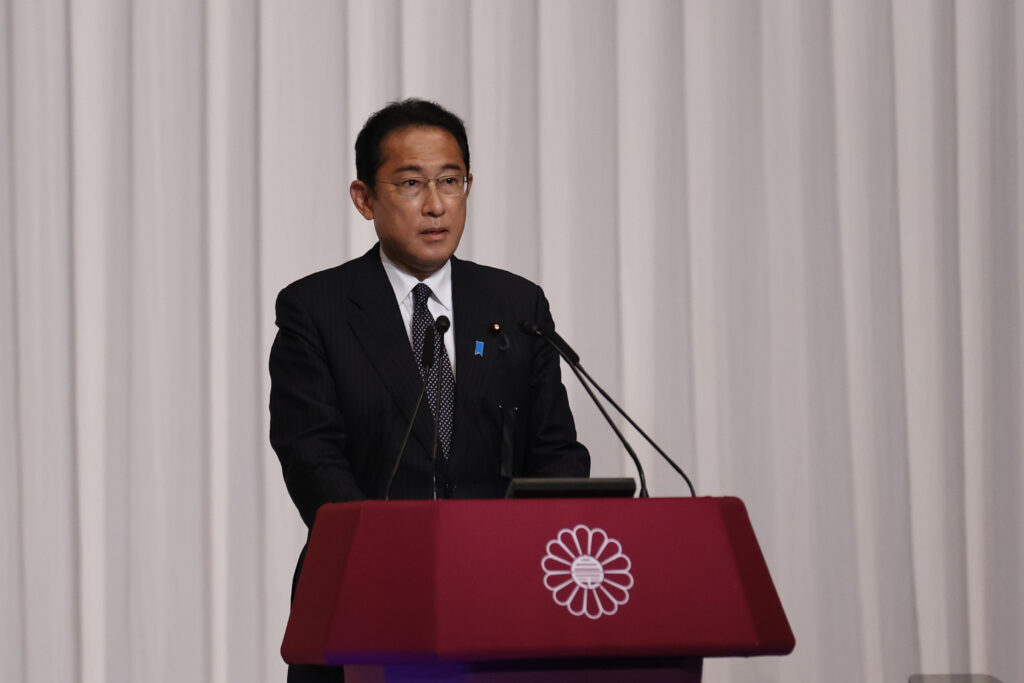
Prime Minister Fumio Kishida, who won a landslide victory in Japan’s upper house election, said on the 11th, “We will discuss the contents of the constitutional amendment at the National Assembly as soon as possible to lead to a referendum.” In the upper house election the previous day, the ruling Liberal Democratic Party, New Komeito, the Japan Restoration Association, and the People’s Democratic Party announced their position to push for a constitutional amendment immediately after securing more than two-thirds of the seats were secured. Prime Minister Kishida said at a press conference on the same day, “We will conduct in-depth discussions on the constitutional revision between the ruling and opposition parties at the National Assembly this fall and make efforts to increase the understanding of the constitution.”
Since 2007, the National Assembly’s Constitutional Review Board, the first stage of constitutional revision, has been established in Japan’s House of Representatives and the House of Councillors, and has been discussing it every year. In the first half of this year, 21 screening sessions were held in both houses, the largest in the past, and considerable legal reviews have accumulated internally. Prime Minister Kishida’s remarks are expected to speed up discussions on constitutional amendment.
The four conservative parties, which pledged to revise the Constitution, secured 93 seats (about 74 percent) out of 125 elected seats in the upper house election on the 10th. Japan replaces the upper house by half every three years, and the four parties have secured 177 seats in the upper house, far exceeding the two-thirds (166 seats) proposed for the amendment. The constitutional amendment also requires the approval of the House of Representatives, with the four parties supporting the constitutional amendment accounting for three-quarters of the House of Representatives.
TOKYO(Reuters)If the four conservative parties agree on the direction and content of the constitutional amendment, they can immediately hold a referendum on the amendment with the approval of more than two-thirds of the lower house and the upper house, respectively. As a result, it is more likely than ever to be revised 76 years after the establishment of the Peace Constitution, which calls for abandoning war, non-power possession, and non-recognition of the right to engage. A leading figure in the Japanese diplomatic community said, “If Prime Minister Kishida, a moderate rather than a hard-line faction, comes to the forefront of the constitutional amendment, public opposition may be reduced,” adding, “The possibility of revising the peace constitution that has prevented Japan from turning right is greater than ever.”
However, some point out that it may not be easy to reach a consensus because there is not a small temperature difference between the four conservative parties. The Liberal Democratic Party is determined to specify the Self-Defense Forces in the Constitution and establish an emergency clause. The late former Prime Minister Abe insisted on specifying the Self-Defense Forces, saying, “The Ukrainian people are protected by the Ukrainian army and the Japanese people are protected by the Self-Defense Forces, but does it make sense for the Self-Defense Forces to have an illegal controversy?” However, New Komeito, the ruling coalition, says, “Do we need to specify that the Self-Defense Forces already exist?” Even in the emergency clause, the Liberal Democratic Party and the Yushin Association hope to “delegate all powers to the government in case of an emergency,” but New Komeito and the National Democratic Party say they should “maintain the function of the National Assembly in case of an emergency.” Other voices also exist within the Liberal Democratic Party. Tatsuo Fukuda, chairman of the Liberal Democratic Party’s general affairs committee, who is classified as a relatively moderate within the Liberal Democratic Party, said, “There is a lot of work to do besides revising the Constitution.”
In fact, Prime Minister Kishida did not give a clear answer to the question at the press conference, “Can you promise to pass the amendment within the term of the president (as of September 24).” Some analysts say that the Kishida administration will prioritize economic policy achievements such as “new capitalism,” his signature policy, rather than “constitutional amendments with both explosive power and risk.”
MIKE CHOI
ASIA JOURNAL

