


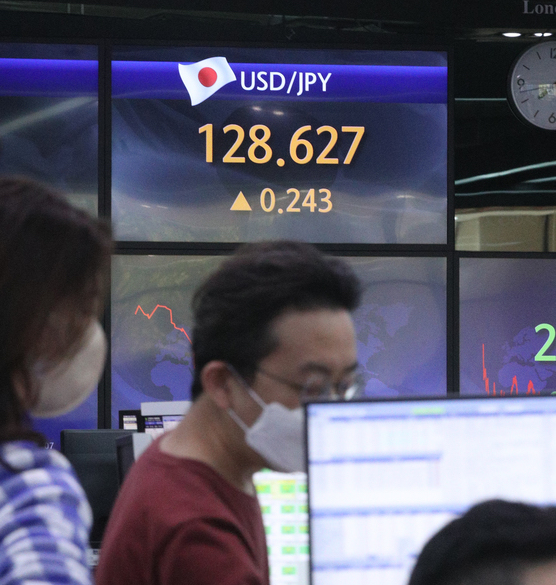
Japan is facing an all-out energy crisis as the yen is weak in the Russia-Ukraine war and an early heat wave.
Japan, which relies on imports for about 90% of its energy, is facing a serious crisis as even the yen’s value has fallen to its lowest level in 20 years while energy import costs have soared due to soaring international oil, natural gas, and coal prices.
Brent crude oil prices have an increase rate of 40% this year in terms of dollars, but if calculated based on yen, the increase rate is more than 70%.
As of May, the cost of introducing liquefied natural gas (LNG) based on the yen soared nearly 120% from a year ago.Japan’s energy imports are also being restricted as the Japanese government joined the sanctions against Russia with the G7 and is reluctant to import Russian crude oil and natural gas.On top of that, Bloomberg pointed out that Russia came up with a plan to penalize foreign companies such as Japan participating in the Sakhalin-2 project, a Far East energy development project, as a countermeasure against Western sanctions over the weekend.
Most of the nuclear power plants in Japan have been suspended since the Fukushima nuclear accident in 2011, and renewable energy accounts for less than 10% as of 2019.

TOKYO(Reuters)Jane Nakano of the Center for Strategic and International Studies (CSIS), a U.S. think tank, said, “Japan is heading for the most serious energy crisis due to the combination of high energy prices and weak yen caused by the Russia-Ukraine war.”As such, Japan has no choice but to rely on fossil fuels no matter how expensive it is to turn the economy around, and concerns over an energy crisis are intensifying as the early heat wave is raging.This year’s rainy season ended the fastest since 1951, and the early heat has covered Japan.Finally, Tokyo’s highest temperature soared to nearly 37 degrees last week, exceeding the average temperature of 22.5 degrees Celsius over the past 30 years by about 15 degrees, prompting the Japanese government to appeal to the public to save electricity.
However, as prices of food and raw materials as well as energy have soared, prices ranging from paper to steel and concrete are fluctuating, which is embarrassing the Kishida government ahead of the House of Councillors election on the 10th, Bloomberg pointed out.
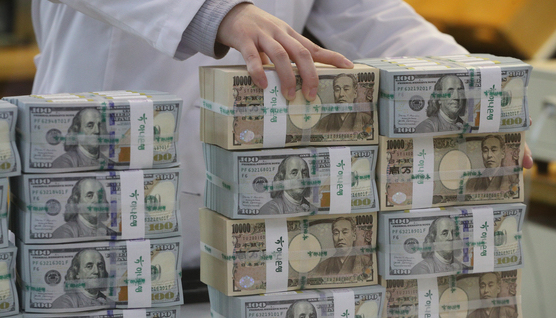
The weak yen and soaring energy import costs have led to a trade deficit, leading to controversy over energy security and strategic market structure.
Some argue that the current crisis should be used as an opportunity to expand renewable energy, but others argue that the hasty expansion of renewable energy will only increase instability in the already tight power situation.Amid speculation that the Japanese government will restart nuclear power plants that have stopped developing since the Fukushima nuclear accident, controversy over whether to do so is also rising again.Obanoriaki, director of the Post-Oil Strategic Research Institute, said, “There is growing public opinion in favor of restarting nuclear power plants,” adding, “The outcome of the Upper House election will have a significant impact on energy policy.”
Mike choi
ASIA JOURNAL

