


SINGAPORE – Co-living is evolving beyond the traditional “rooms in a shared apartment” model into new formats, including integrated hubs and senior-oriented concepts.
One approach involves turning an older retail asset into a “live-work-play” hub that combines co-living, co-working and retail amenities within a single building, said CBRE’s Rohini Saluja.
Saluja, the head of consulting and integrated client solutions for Asia-Pacific advisory services at the commercial real estate services and investment firm, added that more of such integrated concepts are emerging as landlords seek to breathe new life into underperforming commercial buildings.
By offering co-living and retail options, landlords earn stable rental income, while ground-floor shops and eateries get a steady stream of customers from the residents in the units above.
At the same time, public dining and retail options draw visitors from the surrounding neighbourhood, creating a more lively community atmosphere.
That concept is now a reality at Serene Centre, a retail and co-living development managed by The Assembly Place (TAP).
Eugene Lim, its founder and chief executive, noted that Serene Centre showcases how co-living and retail complement each other in a mixed-use development: Residents can live, shop and dine under one roof, while driving steady foot traffic for businesses.
Lim is taking a similar approach with the Phoenix Park site in Tanglin Road.
The property is being jointly redeveloped with TS Home into an integrated lifestyle destination, blending housing, dining, wellness and sports facilities, by early 2027.
This integrated approach is taking root in the heartland as well.
In Serangoon, Mber’s playbook caters for every aspect of a resident’s daily life – from working to dining – in one location.
The building in Teck Chye Terrace, on the site of the former Lim Tua Tow Market, houses 78 co-living rooms for short stays of at least six nights and 47 serviced apartments for longer stays of at least a month.
Five eateries on the ground floor offer a mix of local comfort food, Korean and Chinese dishes, and speciality coffee.
Mber consciously picked the dining options around what it thinks people living in the Serangoon area would like, so it could attract foot traffic while catering to its residents, said Josh Hu, managing director of boutique real estate developer and investment firm Aw & Sons Capital, which was behind the development.
“We like to think of Mber as not just a place for people to stay, but a place where they can enjoy quality living,” he said.
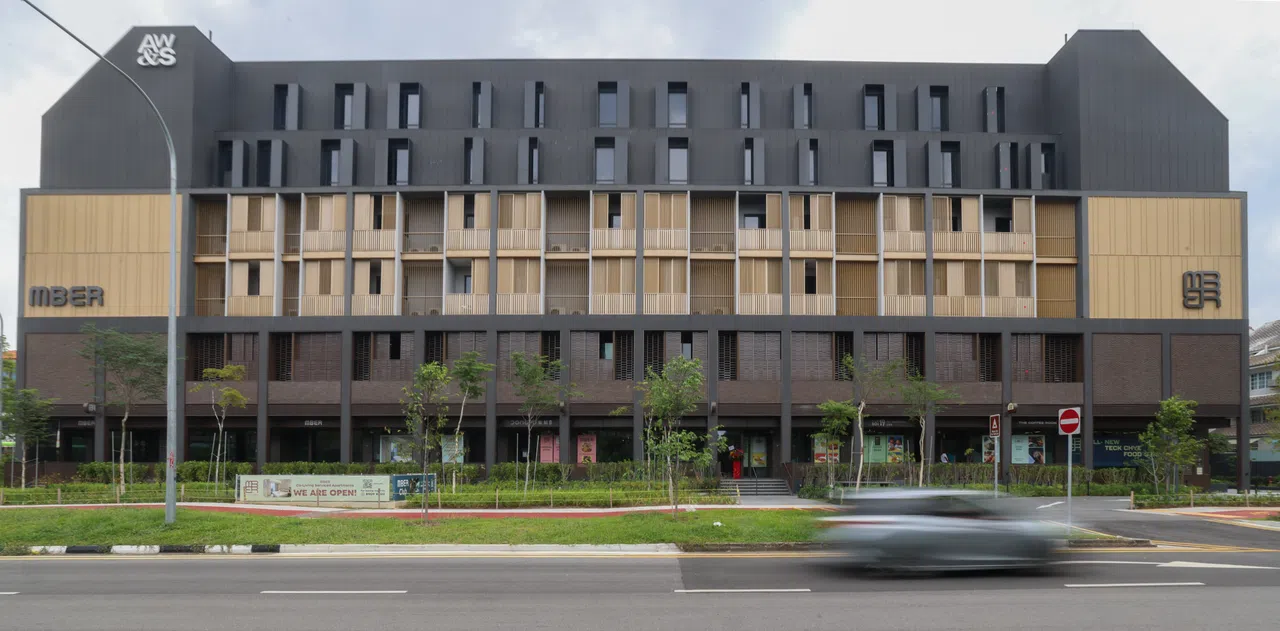
Mber houses 78 co-living rooms for short stays of at least six nights and 47 serviced apartments for longer stays of at least a month.
PHOTO: THE BUSINESS TIMES
Industry watchers said the integrated model relies on the right mix of conditions to succeed.
CBRE’s Saluja pointed out that these hubs are most effective when amenities like cafes, convenience stores and wellness services are chosen to complement residents’ daily routines.
They also work best when located near public transport, such as an MRT station, and where the authorities allow the space to be converted for residential use.
As a result, she said, “these concepts will emerge selectively, driven by the suitability of individual assets, rather than become a market-wide trend”.
A sense of community
More than just convenient amenities, integrated living spaces offer a built-in social network, making them a draw for young working professionals and international students, who form the bulk of co-living tenants.
Lim said the young foreign workers living with TAP want to network with people who share similar interests.
“In a co-living space, I am plugged into a community and can meet like-minded people through events hosted by the operator,” he noted.
This contrasts with renting a room in public housing and living with the landlord, he added.
This extends to student housing.
Building on its off-campus integrated project Campus by The Assembly Place in Telok Kurau, TAP has teamed up with TS Group, the parent company of TS Home, to develop the Dive Collective at the Singapore University of Technology and Design.
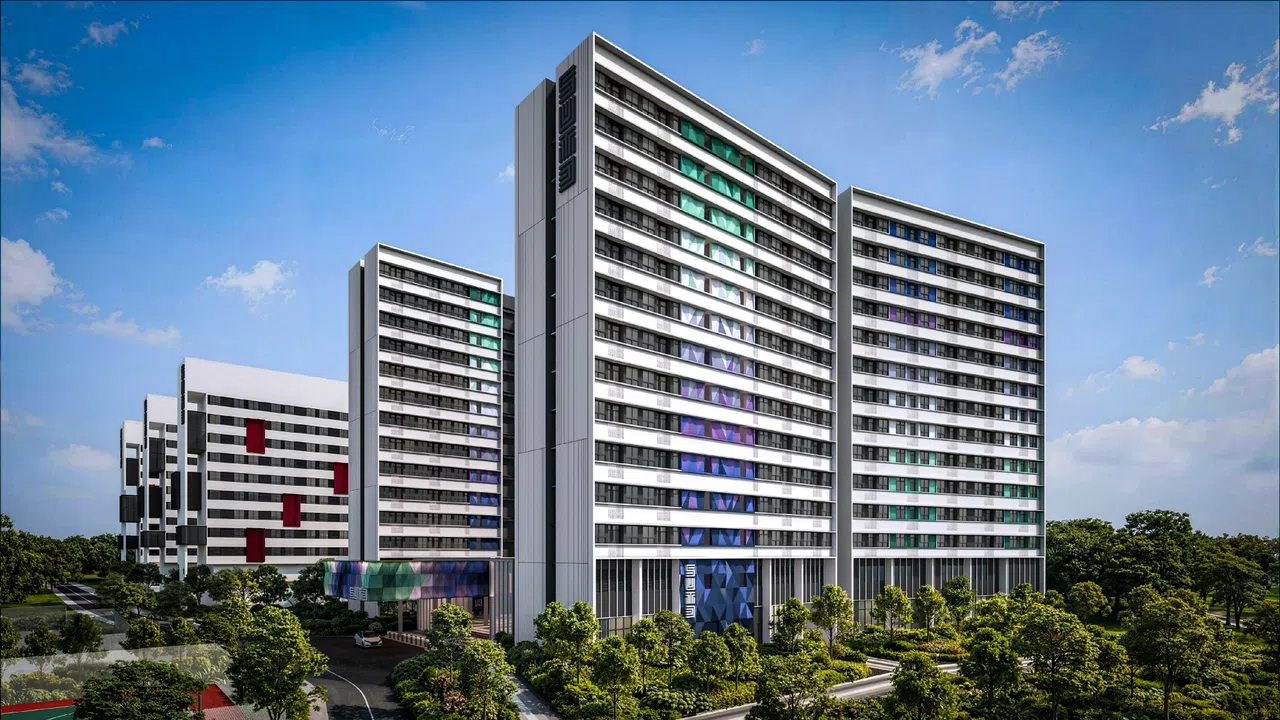
The Dive Collective at the Singapore University of Technology and Design will have an innovation centre, drone testing grounds and round-the-clock co-working spaces for start-ups.
PHOTO: SINGAPORE UNIVERSITY OF TECHNOLOGY AND DESIGN
Slated to open in early 2029, the 622-bed on-campus student housing project will have an innovation centre, drone testing grounds and round-the-clock co-working spaces for start-ups.
Mber’s Hu said his residents range from expatriates on work projects to international students to multi-generational families on holiday.
The Serangoon property, he said, is near six international schools, including the International French School, Australian International School and Stamford American International School.
Hu added that Mber is within a 15- to 20-minute drive from employment hubs in Paya Lebar (tech and cybersecurity), Tai Seng (light industrial and data centre) and Punggol Digital District.
Companies in these areas typically send engineers to Singapore on a project basis for two to three months.
These engineers need short-stay accommodation, a demand Mber helps meet.
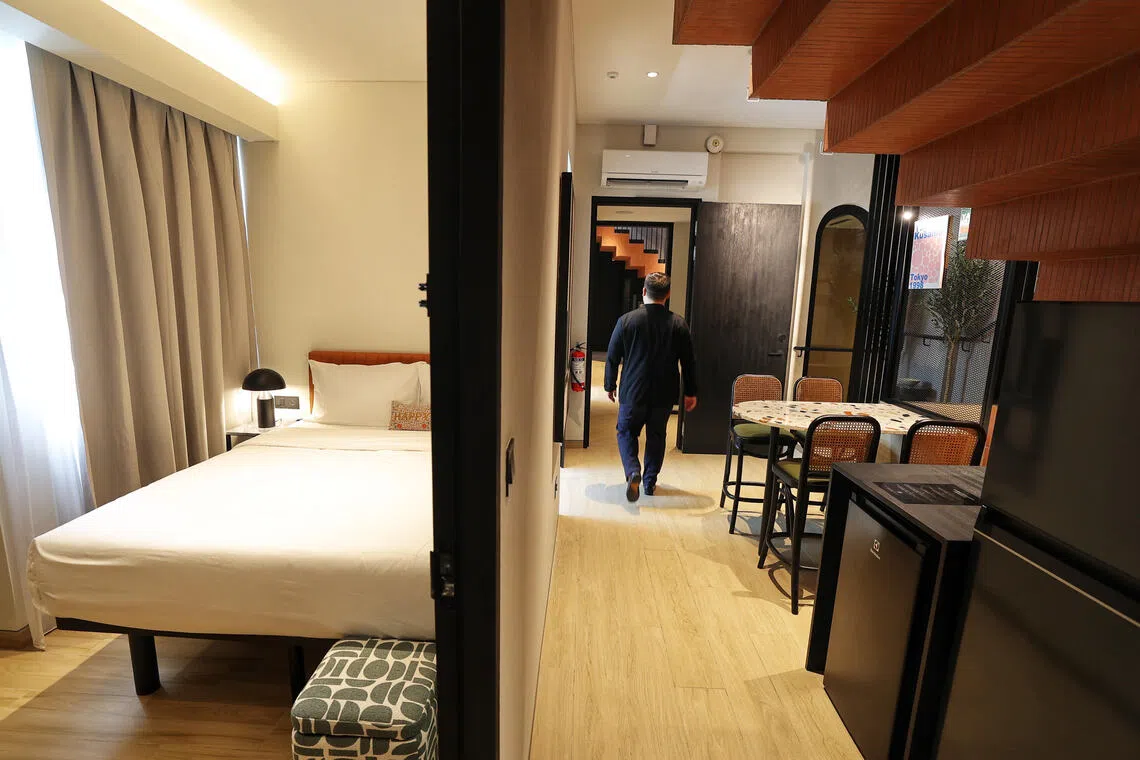
Mber houses 78 co-living rooms for short stays of at least six nights and 47 serviced apartments for longer stays of at least a month.
PHOTO: LIANHE ZAOBAO
Built to last, or a passing trend?
Kelvin Lim, executive chairman and CEO of co-living operator Coliwoo, said Singapore’s economy is “built on mobility”.
He added that there is a constant flow of professionals and students into the country – all of whom will need flexible housing options.
By contrast, “conventional housing is designed for permanence in the form of long leases and unfurnished units, all with the assumption that you are planting roots”, he said.
In its latest full-year results announcement on Nov 24, Coliwoo said its average portfolio occupancy remained high, at 94.8%, for the financial year ended Sept 30.
This was 96.1% in the previous financial year.
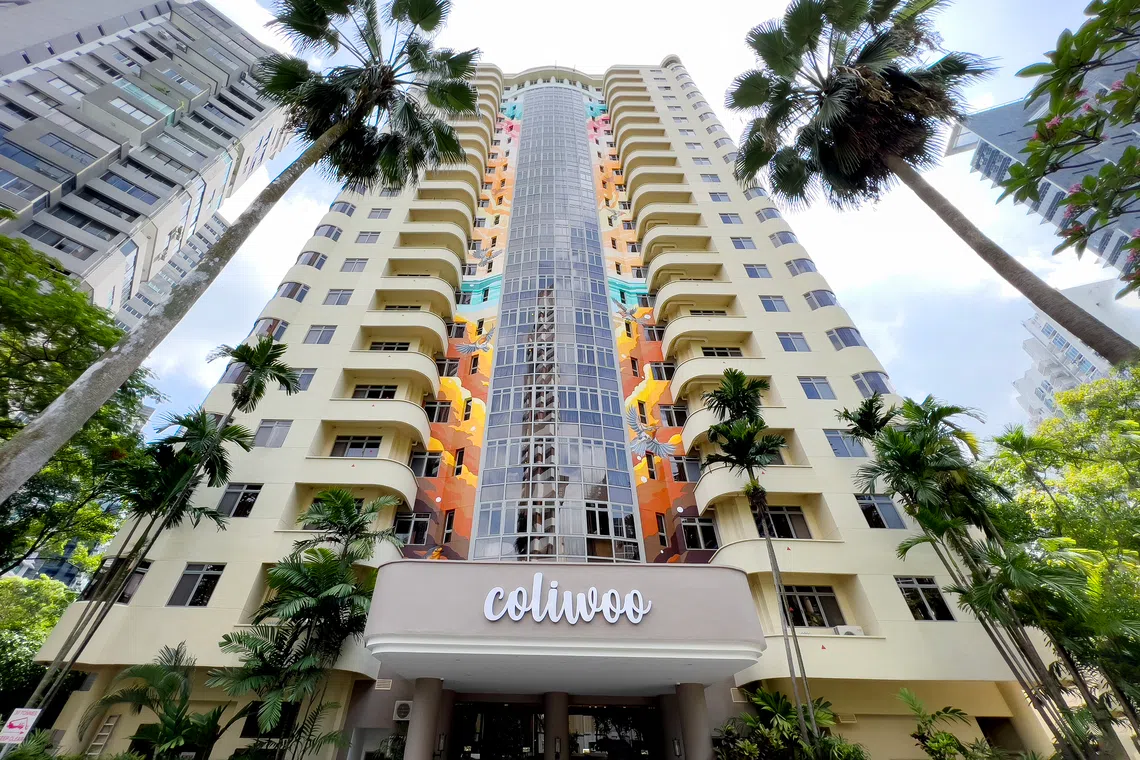
In its latest full-year results announcement on Nov 24, Coliwoo said its average portfolio occupancy remained high, at 94.8%, for the financial year ended Sept 30. This was 96.1% in the previous financial year.
PHOTO: COLIWOO
Mber has also registered steady occupancy numbers – room bookings remain consistent, averaging 80% since the property opened in August.
Since TAP started in 2019 with just six rooms in a landed home, Eugene Lim has maintained an average occupancy above 90% in its growing portfolio.
Yet, recent macroeconomic headwinds have raised concerns about the sustainability of the co-living trend.
There are signs that job cuts, particularly in the tech and finance space, and the relocation of jobs to cheaper places in neighbouring markets are beginning to weigh on demand.
TAP’s Lim noted that some of his residents have already been retrenched.
He shared how a customer paying $2,500 a month for a room with an attached bath lost his job and took a lower-paying role. He cut his housing budget to $1,500.
Lim told the customer: “No problem. You can downgrade to a room without an attached bath.”
As price and affordability become deciding factors in a downturn, operators cannot afford to price themselves out of the market, he said.
“We are very clear of the risks and the potential headwinds,” he noted.
Thus, it is important that “we have a wide spread of room options so that whatever happens, customers still have a place to stay”, Lim added.
Senior-oriented concepts
Building on that resilience, TAP has branched out into senior housing to tap the longevity trend.
The co-living operator and its partner, TS Home, run Singapore’s first intergenerational co-living community, Commune @ Henderson, where students, young adults and seniors live and interact together in one location.
Residents share communal kitchens and dining areas and take part in regular activities together, such as playing games in the games room or heading to the gym and basketball court.
“Through Commune @ Henderson, we have seen how bringing different generations together can encourage social engagement, mutual learning and active ageing,” said TAP’s Lim.
TAP will build on its experience to evaluate opportunities to replicate and scale this intergenerational concept, he added.
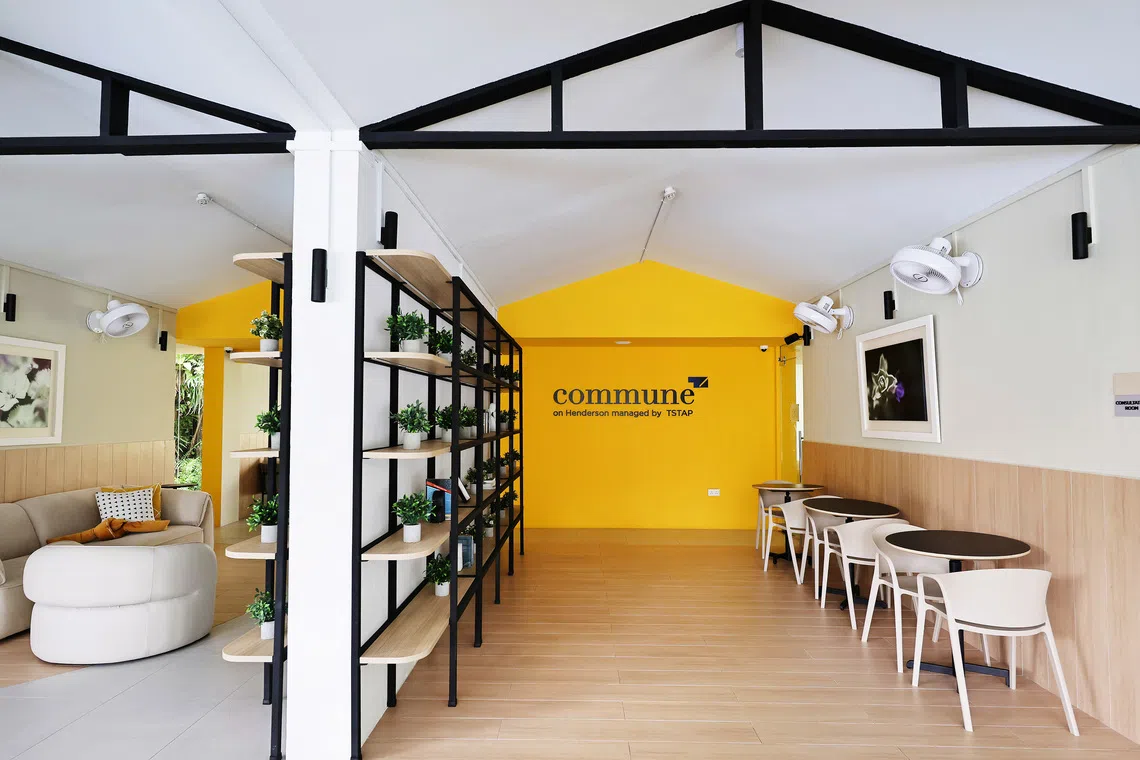
At Singapore’s first intergenerational co-living community, Commune @ Henderson, students, young adults and seniors live and interact together in one location.
ST PHOTO: KELVIN CHNG
Lim maintains that “community-driven living should not be limited by age”.
TAP intends to create an ecosystem where residents can transition between different accommodation options as their lifestyle and circumstances change.
CBRE’s Saluja agreed that senior living in Singapore remains underserved, creating room for mid-range community-based assisted living facilities.
However, she cautioned that senior living is far more complex and strictly regulated than co-living, so success depends on getting pricing, operating model and location right.
“Co-living is essentially a space-and-community product, whereas senior living is a more operationally intensive asset class that requires specialised on-site staff, compliance with regulatory and safety standards, and greater operator responsibility for resident safety and welfare,” she added.