


Inflation in Japan’s capital city accelerated to the fastest pace in 2026, backing the case for a Bank of Japan (BOJ) rate increase in December as authorities focus on keeping price growth around their 2% target.
The consumer price index excluding fresh food rose 2.9% in November from 2025 in Tokyo, the highest level since July 2025, the Ministry of Internal Affairs and Communications reported on Nov 27. The result matched economists’ consensus forecast.
Tokyo inflation is a leading indicator of nationwide price trends. The index that strips out both fresh food and energy – a gauge closely monitored by the BOJ as a measure of underlying inflation – climbed 2.5%, while overall CPI rose 2.8%.
Among the factors driving gains were rising costs for electricity, up 9.5%, and for city gas bills, which increased by almost 14%.
In both cases, the figures reflect the impact of the end of subsidies on utility bills that Japanese Prime Minister Sanae Takaichi’s government rolled out for three months in the summer. Price gains for processed food also accelerated.
“The impact of the end of utility measures was the biggest force for the core CPI to rise,” said Yoshiki Shinke, senior executive economist at Daiichi Life Research Institute.
“It’s still safe to say the data show businesses have a strong desire to pass their heightened costs to consumers, given price pressures stemming from the Middle East conflict and AI demand.”
Rice prices dropped almost 34%, the biggest decline in the data going back to 1971. Rice, a daily staple for households, has become a major drag on CPI after being among the primary drivers of overall inflation in 2025.
The Nov 27 CPI data generally back the case for the BOJ to raise interest rates in December.
The central bank judged in October that underlying inflation had reached a level broadly consistent with its 2% target, shifting its focus toward keeping price growth anchored around that level after previously focusing on coaxing the price trend higher.
“The assessment that upside risks to inflation remain high hasn’t changed, so there is a strong likelihood of a rate hike in December,” said Nomura Securities economist Uichiro Nozaki.
Economist Taro Kimura from Bloomberg Economics said: “We maintain our baseline call for a 25-basis-point rate hike in December. But, against the backdrop of recent stock-market turbulence, the CPI report argues for caution on rapid tightening. A December move remains a close call.”
Service prices – a key measure of the sustainability of inflation – increased 2.1% from 2025, largely unchanged.
Takaichi in October announced plans to reinstate utility subsidies for three months starting in December.
She is also seeking to cut the sales tax on food from April 2027 to ease the cost-of-living burden on households. At the same time, the government will scale back gasoline subsidies. Together, those measures complicate the BOJ’s task of gauging underlying inflation.
Earlier this week, the BOJ’s consumer price indicator that subtracts the impact of temporary government steps accelerated in October to 3.5%, the fastest pace in three years. Service prices charged among businesses also rose by the most in 36 years.
Unlike the era of prolonged deflation, Japanese businesses have been quick to reflect their rising costs stemming from the Middle East conflict.
Major food and beverage companies were planning to raise the prices of 1,477 products in November, almost ten times more than a year ago, according to Teikoku Databank.
While real wages have risen every month in 2026, consumer spending has remained sluggish, contracting for two consecutive quarters through September. The government downgraded its assessment of consumption this week.
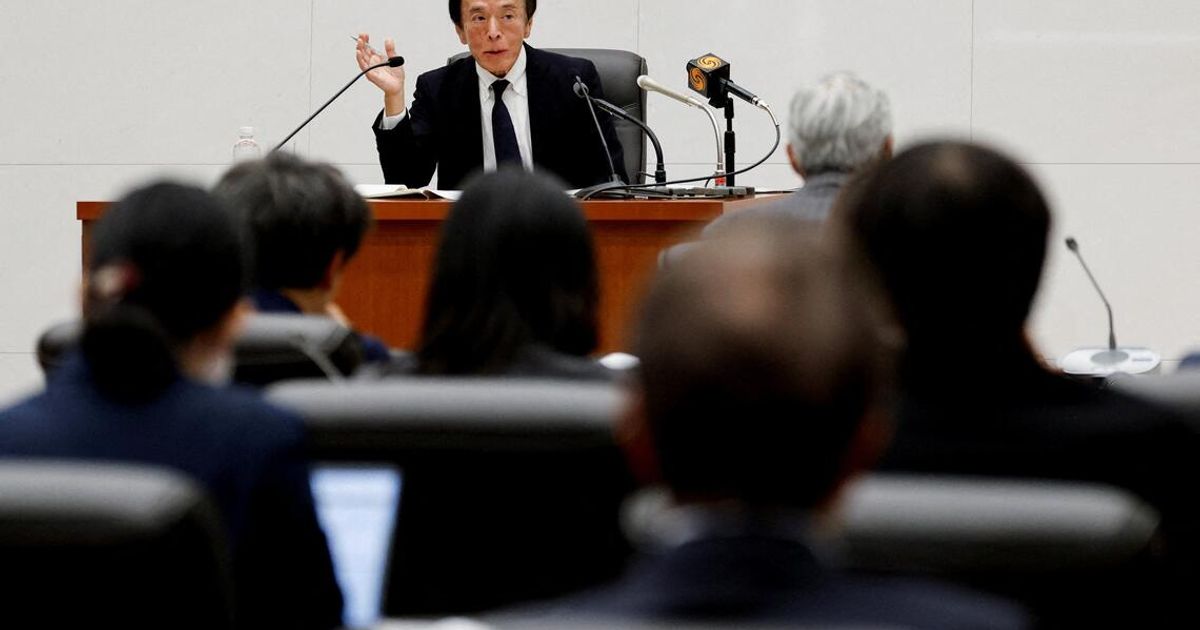
BOJ governor Kazuo Ueda has pledged to monitor the economy, inflation and financial conditions in determining the timing of rate moves.
The BOJ delivers its next decision on Dec 18. The governor is scheduled to deliver a speech on Nov 30 in which he may offer hints regarding December’s meeting. BLOOMBERG