


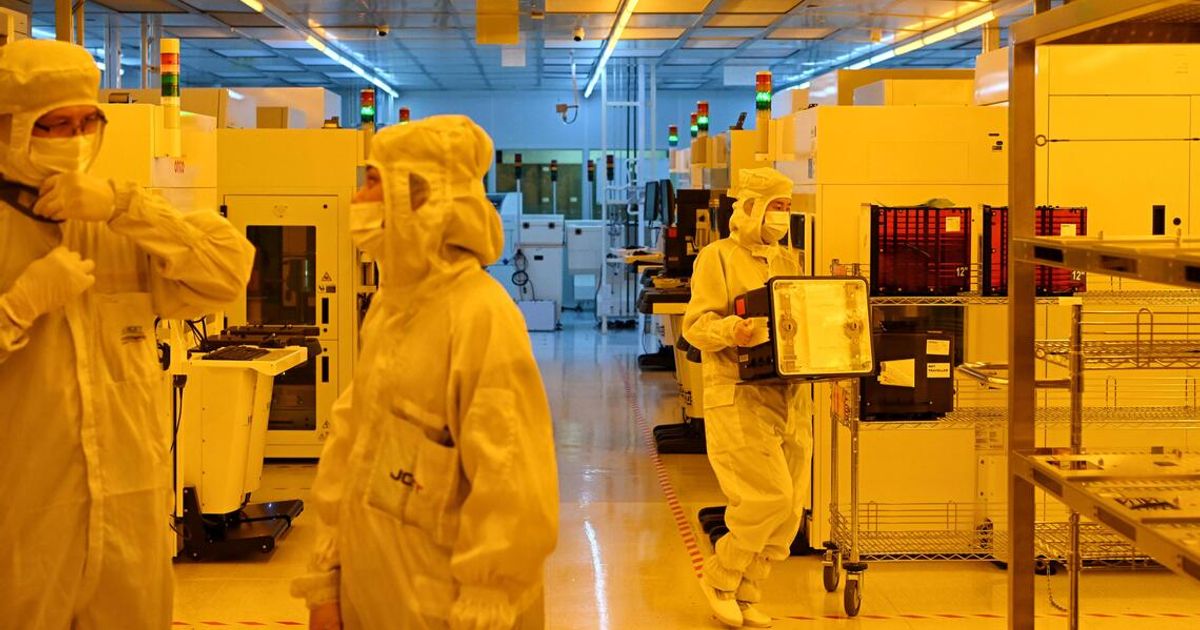
SINGAPORE – Singapore’s manufacturing output expanded in October, on the back of sustained demand for AI- and semiconductor-related products that supported the electronics and precision engineering sectors.
Factory output grew 6.1% year on year, accelerating from September’s 3.4% pace, according to data released by the Economic Development Board (EDB) on Nov 26. All clusters posted gains except transport engineering and biomedical manufacturing.
The figure exceeded the 2.2% forecast by economists in a Bloomberg poll. Excluding the highly volatile biomedical manufacturing, output increased 12.1%.
The precision engineering cluster grew the most at 54.1%, led by higher production of semiconductor equipment in the machinery and systems segment which expanded 62.4%. Precision modules and components saw production increase by 16.1%.
Output from the electronics cluster continued to expand year on year due to continued AI demand, with 6.6% growth. Other electronic modules and components saw the largest output, climbing 26.9%, followed by the computer peripherals and data storage segment, growing 24.7%.
Production in the semiconductors segment edged up 5.2% while the infocomms and consumer electronics segment inched up 5.3%.
The chemicals cluster grew 4.4%, after having contracted in September. The expansion was led by a 10.4% uptick in the specialties segment due to higher production of industrial gases, chemicals and food additives, as well as a 16.6% increase in the other chemicals segment thanks to higher output of fragrances.
Transport engineering contracted 5.3%, weighed down by lower shipyard activities and weak production of oil and gas field equipment in the marine and offshore engineering segment.
The petroleum segment recorded 7.8% growth with higher production of refined products. Conversely, the petrochemicals segment continued to shrink, declining 23.1% amid softer demand and feedstock supply disruptions that constrained production.
General manufacturing industries grew 0.5%, with the food, beverages and tobacco segment climbing 2.1%, supported by higher production of milk powder and beverage products. The miscellaneous and printing segments, however, recorded output dips of 1.3% and 10.2% respectively, with the former reflecting lower production of structural metal products and furniture.
The transport engineering cluster declined 5.3%, weighed down by lower shipyard activities and weak production of oil and gas field equipment in the marine and offshore engineering segment, which contracted 25.2%.
Conversely, the land transport segment expanded the most at 34.3%, while the aerospace segments edged up 0.8%, supported by higher production of aircraft parts and engine maintenance, repair and overhaul.
The biomedical manufacturing segment declined 35.8% due to lower production of biologics and a change in the mix of active pharmaceutical ingredients in the pharmaceuticals segment.