


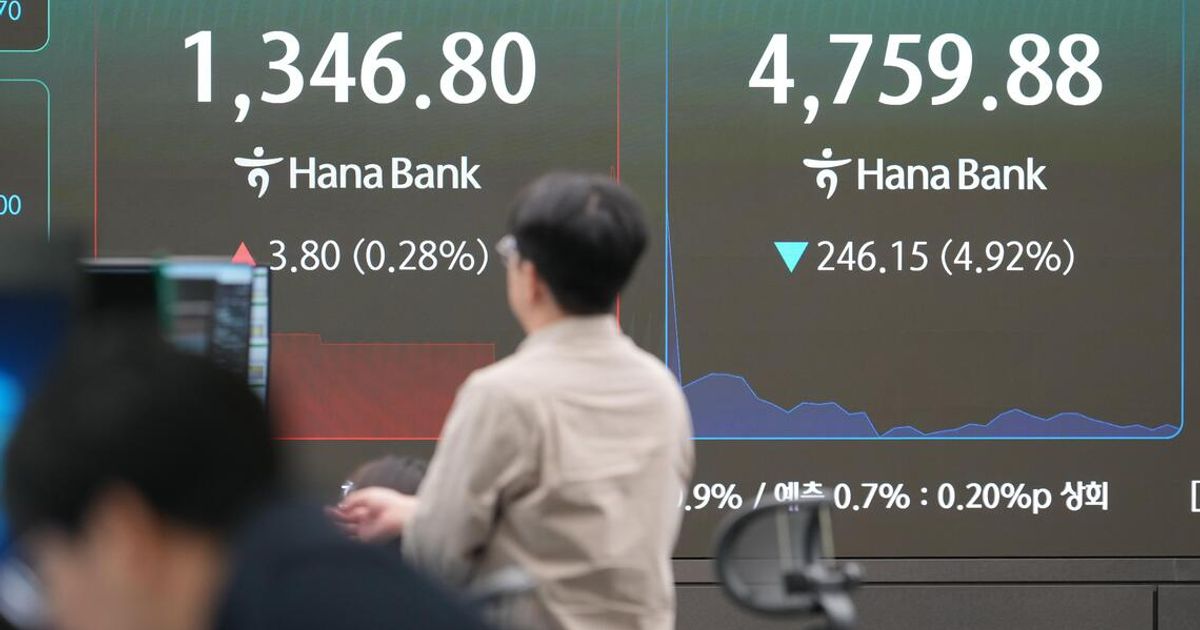
TOKYO – Asian stocks tumbled early on Nov 25 as fresh US tariff threats hit sentiment and a tech-led rally fizzled, with the region’s chip-heavy markets bearing the brunt of the sell-off.
MSCI’s broadest index of Asia-Pacific shares outside Japan was down 2.3%, led by a drop of as much as 5.3% in South Korean shares and a 5.1% decline at the worst point in Taiwan.
Japan’s Nikkei 225 fell 3.3% to 56,710.43 by the midday break, while S&P 500 e-mini futures were 0.3% lower.
Risk appetite weakened after media reports the Trump administration was preparing to release findings of a trade investigation that could pave the way for new tariff measures.
The US Trade Representative’s (USTR) office is preparing to release the findings of the probe into alleged excess industrial capacity among 16 major US trading partners, including China and the European Union, three people with knowledge of the matter said on Nov 24.
“The re-emergence of tariffs from the USTR has been met with a collective sigh from investors,” said Chris Weston, head of research at Pepperstone Group in Melbourne. “Much like the US debt ceiling, which is also making an unwelcome comeback onto the radar, traders appear reluctant to commit significant capital on the headlines alone.”
Overnight, stocks on Wall Street were mixed, with the S&P 500 down 0.5% and the tech-heavy Nasdaq Composite off 1.5%, while the small-cap Russell 2000 gained 0.6% and the Dow Jones Industrial Average rallied 0.9%.
“The news of potential new US tariffs is probably mostly baked into market expectations at this point,” said Frederic Neumann, chief Asia economist at HSBC Holdings. “The US administration has been working for a while to replace some of the tariffs struck down by judges earlier (in 2026), and its efforts have been well telegraphed.”
Attention now turns to US core PCE (personal consumption expenditure) data due on Nov 25 ahead of the Thanksgiving holiday later in the week.
“Wall Street pared its (Nov 23) advance as sobriety returned to the market and a focus returned to fundamentals,” said Kyle Rodda, a senior market analyst at Capital.com in Melbourne.
The moves followed data showing US consumer confidence increased by more than expected in November, touching its highest level in nearly two years and better-than-expected earnings from Dell on surging AI server demand. The shares rose 4.1% in after-hours trading.
Nvidia surrendered some of its gains after Jensen Huang’s return as CEO earlier this week, falling 5.9%, while Anthropic fell 6.5% to below its IPO price.
“This is so dizzying day to day,” said Adam Phillips, managing director of portfolio strategy at EP Wealth Advisors, who is not buying the dip in stocks yet. “Nothing has significantly changed from (Nov 23), but we’re not out of the woods yet. There is still a whole lot of fear and uncertainty around the AI trade that needs to be worked through.”
Australian shares slid 0.9% and the Australian dollar strengthened 0.2% after the release of data showing consumer prices climbed by more than expected in October as fuel and clothing jumped.
The annualised trimmed mean measure of 3.8% means inflation is still running well above target and ramps up pressure on the Reserve Bank of Australia, which has already raised rates by 125 basis points in 2026.
In commodities, Brent crude opened 0.5% lower at US$90.97 in Asia after a choppy session on Nov 24, which saw crude prices settle more than 2% higher as new attacks were reported on vessels in and around the Strait of Hormuz.
Copper and tin prices fell sharply on Nov 24, giving up all of the previous session’s gains as the fizzling AI rally weighed on industrial metals, while aluminium sank to a 13-month low.
In cryptocurrencies, Bitcoin fell 1% to US$59,257.71, while ether slid 1.1% to US$1,660.52. REUTERS, BLOOMBERG