


SINGAPORE – Russia expects Singapore’s 2027 ASEAN chairmanship to inject fresh momentum into business ties with the Republic and the region, seeing opportunities in technology, logistics and financial infrastructure even as sanctions continue to complicate trade and investment.
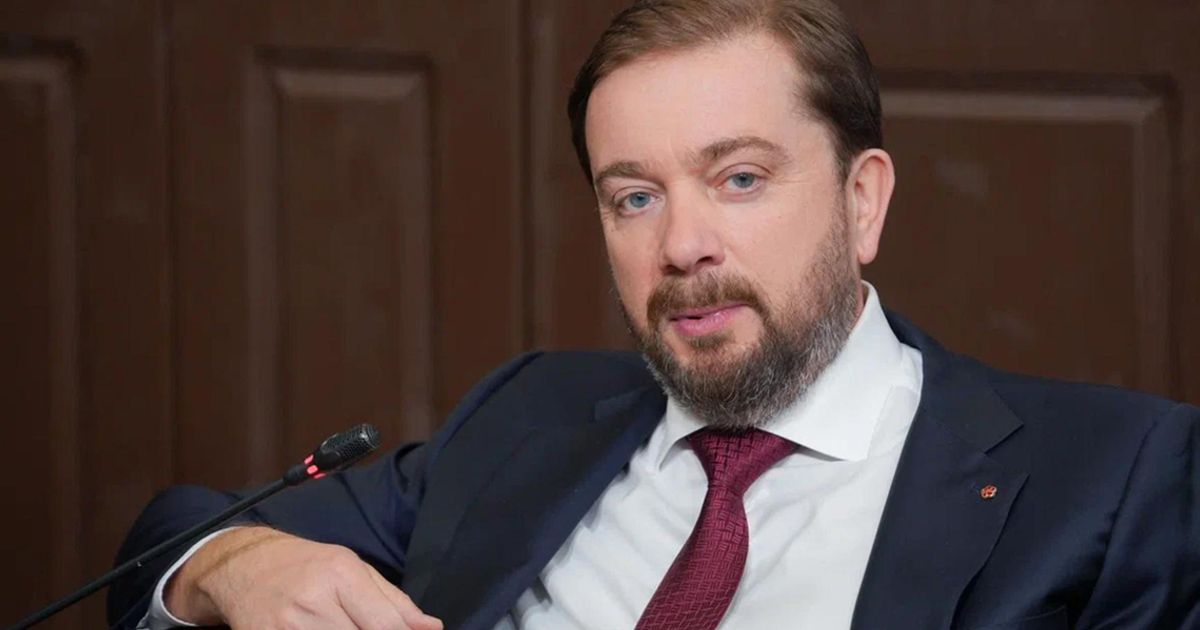
Singapore is a key gateway for Russian companies seeking to expand into South-East Asia, said Alexander Stuglev, chairman and director of Russia’s Roscongress Foundation, which promotes economic development, investment and international cooperation.
Citing digital technology as an example, Stuglev said Russian companies have accumulated deep experience in cybersecurity, Internet of Things applications and platform solutions.
“This experience can be adapted to the Singaporean market and then scaled across the Asia-Pacific,” he said.
The potential for partnerships here and the region is also seen in areas such as artificial intelligence, cybersecurity, transport connectivity and energy, Stuglev said.
“Singapore is a special case for us. We see it as a hub through which Russian companies, together with local partners, enter the entire region,” he told The Straits Times in an interview late Nov 20.
The state-backed Roscongress Foundation organises some of Russia’s largest business events, including the St Petersburg International Economic Forum (SPIEF) and the Eastern Economic Forum.
It runs around 150 events a year with participants from more than 200 countries and territories, and has in recent years held business events across the region, including in Malaysia, Thailand and Indonesia.
Stuglev was in Singapore to attend the Russia–Singapore Business Dialogue on Nov 19 to 20, held at the Four Seasons.
The event brought together companies from Russia, Singapore and the region to explore cooperation in artificial intelligence and digital technology, finance, education, industrial automation and additive manufacturing.
Singapore chairing ASEAN in 2027 is an opportunity to build on existing business links.
In Russia for an ASEAN-Russia summit in June, Prime Minister Lawrence Wong said Singapore looked forward to practical cooperation between the grouping and Russia during its chairmanship.
“For us, this is an important signal. Russia sees ASEAN as an equal dialogue partner, and the change of chair can give a new (impetus) to the groundwork already laid,” Stuglev said.
He identified potential collaboration in financial infrastructure and new payment systems, in information technology, artificial intelligence, cybersecurity, the Internet of Things and platform solutions, as well as in transport and logistics connectivity, including the Northern Sea Route, in energy and deep processing of raw materials.
But the opportunities come against a backdrop of financial and export restrictions imposed by the international community on Russia following its invasion of Ukraine in February 2022, which continue to constrain commercial dealings.
On March 5, 2022, Singapore unilaterally imposed its own sanctions against Russia over the invasion.
Stuglev said Moscow takes such restrictions into account when engaging with partners, although it does not recognise restrictions imposed by third countries.
“Practical cooperation makes sense where economic interest and clear regulatory frameworks coincide. We do not pretend that restrictions do not exist; they exist in the financial sphere and for certain categories of goods, and they have to be reckoned with,” he said.
Russian companies could also explore opportunities in transport and logistics connectivity, including the Northern Sea Route, energy and the deeper processing of raw materials.
Digital technology is among the more realistic areas for cooperation, he said, pointing to Russian expertise in cybersecurity, IoT applications and platform solutions that could potentially be adapted for Singapore and expanded across the Asia-Pacific.
Artificial intelligence could offer opportunities beyond technology exchange, including discussions on its ethical use and regulatory boundaries, he added.
Trade between Russia and Singapore amounted to US$4.5 billion (S$5.8 billion) in 2024, up 81% from 2022, while Russian exports grew by 90%, Stuglev said, citing figures he received from the Russian Ambassador to Singapore Nikolay Kudashev.
Energy supplies form the backbone of bilateral trade. Data for 2026 show that trade growth continues, he said.
Russia’s trade with ASEAN amounted to US$4.8 billion in the first quarter, according to Russia’s Center for Foreign Trade under the Ministry of Industry and Trade. Singapore accounted for US$1.3 billion or 26% of total turnover, placing it second after Indonesia at US$1.4 billion.
In the first half of 2026, trade with ASEAN grew by almost 10% – or 58% over 10 years – to US$21 billion, according to Russia’s Ministry of Economic Development.
Stuglev said interest from South-East Asian businesses in Russia was also changing, with more companies attending major business forums on their own initiative instead of waiting for official visits.
However, companies operating in Russia continue to face practical difficulties involving payments, insurance, logistics and visa procedures, Stuglev acknowledged.
Roscongress has introduced services such as business-matching platforms, negotiation facilities, a mobile application and an investment catalogue to help participants navigate the process.
He invited Singapore businesses to attend the 30th St Petersburg International Economic Forum, which will be held from June 16 to 19, 2027.
Beyond commercial ties, Russia is also looking at cooperation in education, talent development and cultural exchanges, including academic competitions, university partnerships and professional training.
“In the sphere of education, sport and culture there should be no sanctions: this is a humanitarian area on which the development of both the region and the world as a whole depends,” he said.
He argued that international business forums remain relevant in a more fragmented geopolitical environment, as companies and countries seek avenues to maintain contact.
“Even competing blocs need a point where they can meet directly, because business is more pragmatic than politics,” he said.