


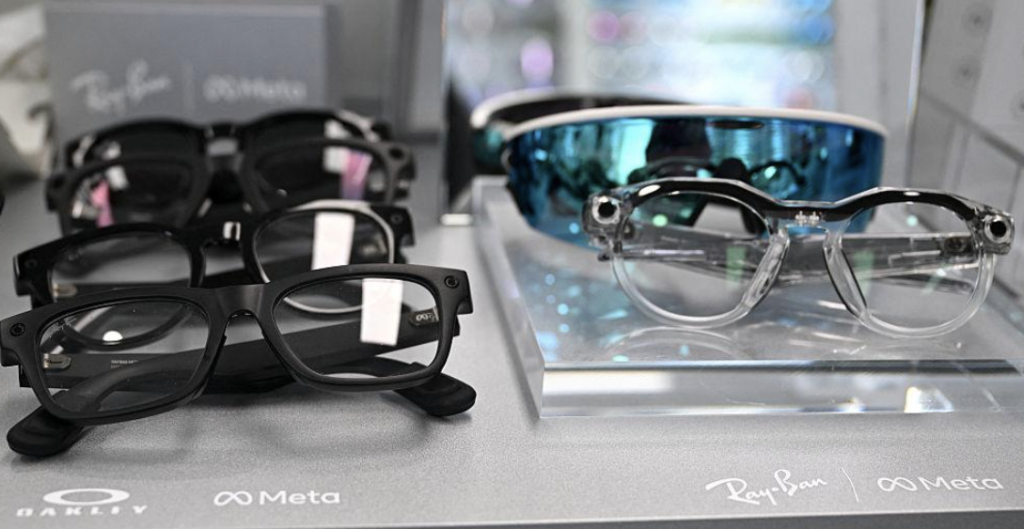
South Korea is stepping up security for its national college entrance examination after a cheating scandal involving a hidden camera and artificial intelligence raised concerns about the growing use of wearable technology to circumvent exam rules.
The government has ordered additional inspections of students’ glasses, clothing and personal belongings ahead of Thursday’s College Scholastic Ability Test, a high-stakes examination taken by more than 550,000 students seeking admission to universities.
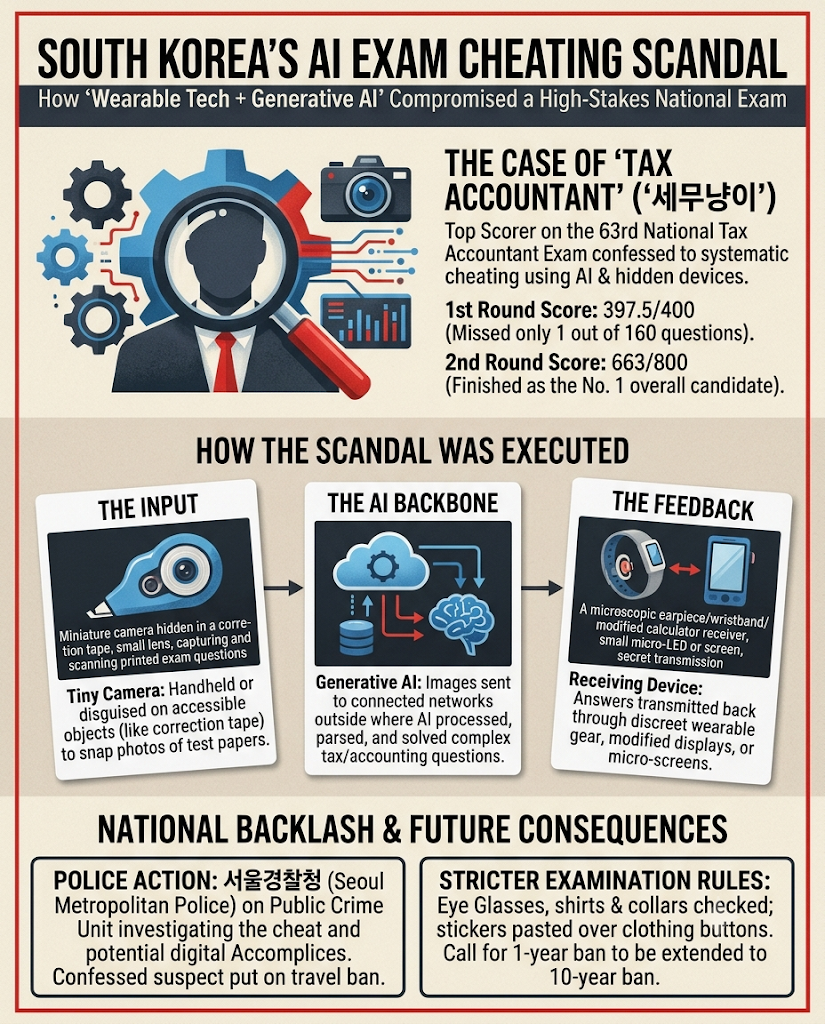
The measures follow a confession by the top scorer in this year’s national tax accountant qualification examination, who admitted using a miniature camera to capture test questions and generative AI to obtain answers.
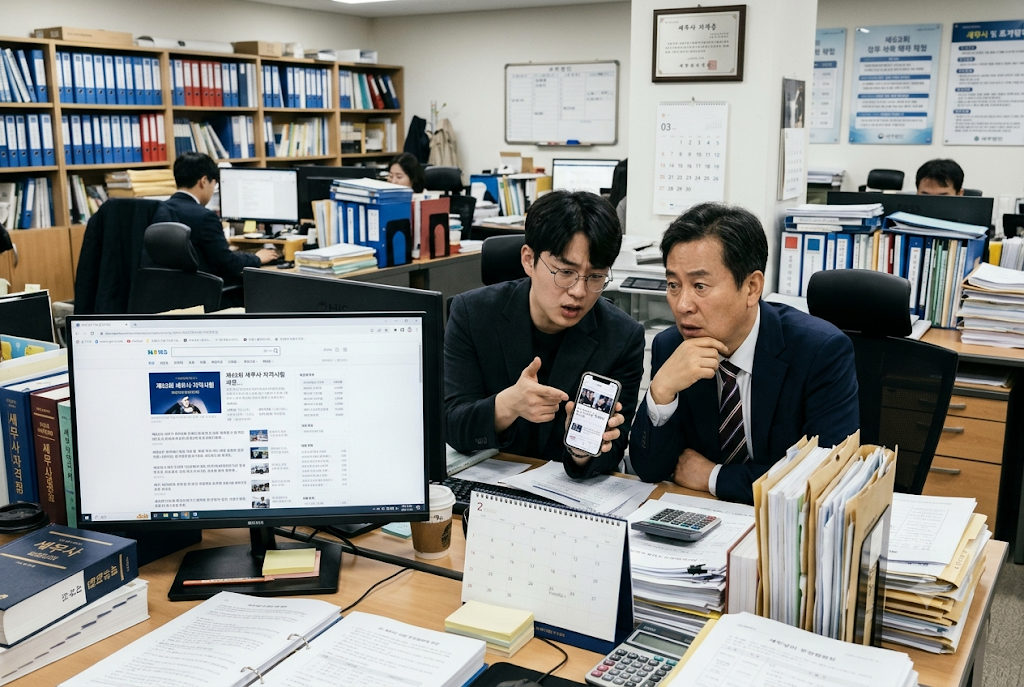
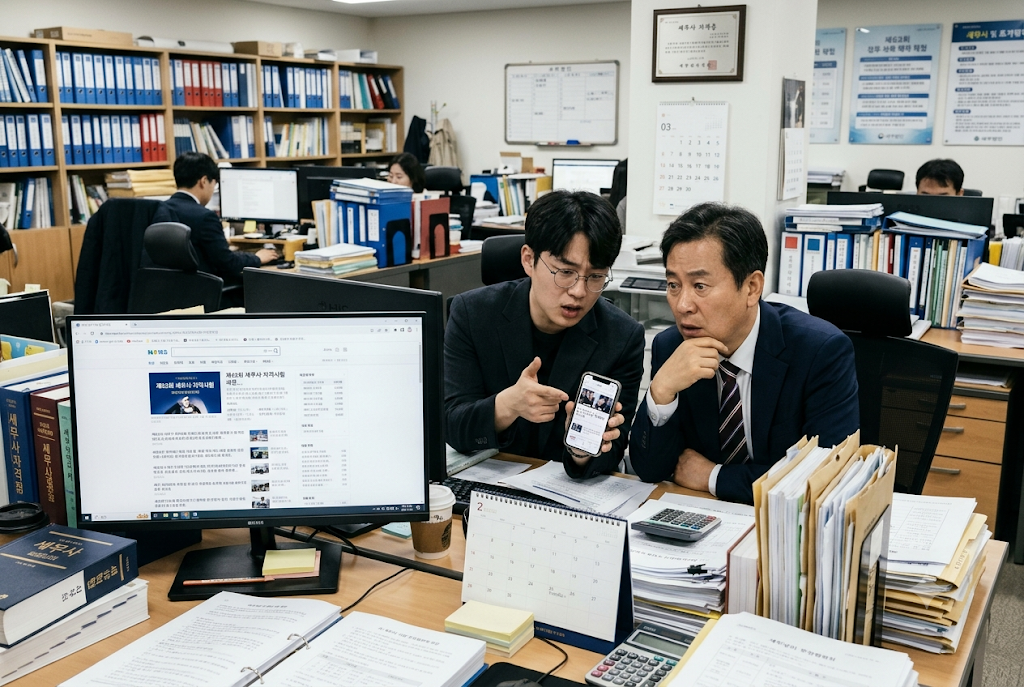
The case has prompted scrutiny of examination security across South Korea, where academic qualifications and professional licenses play an important role in education and employment.
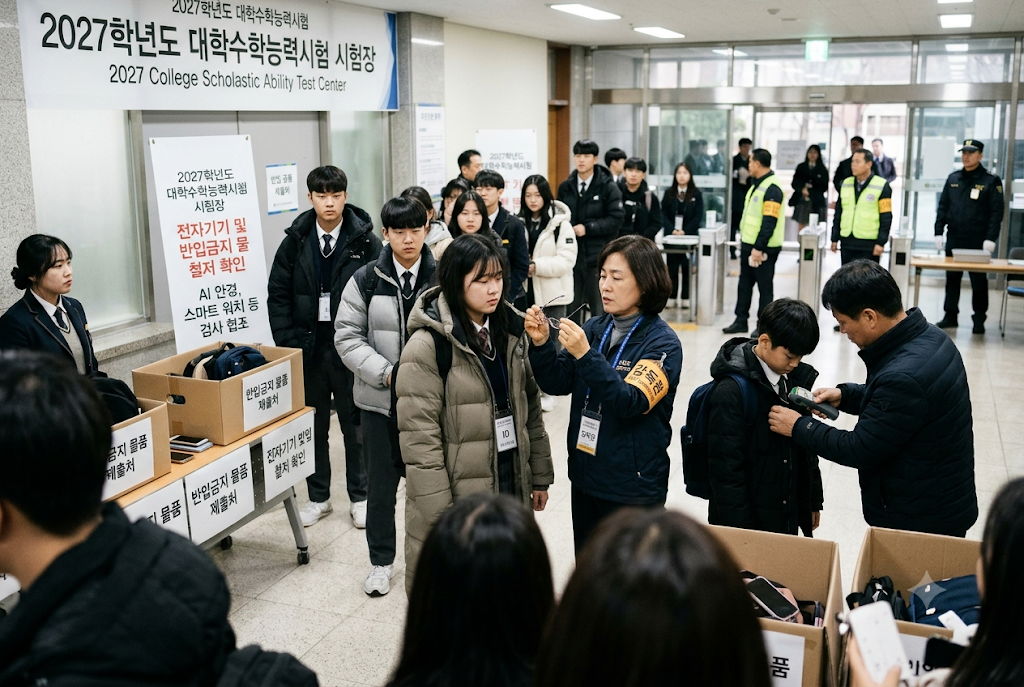
Prime Minister Han Seong-sook announced additional precautions on Tuesday, including inspections of eyeglasses and shirt collars for concealed electronic devices.
Supervisors will also place stickers over clothing buttons to prevent the use of miniature cameras disguised as ordinary accessories.
Metal detectors may be used to examine candidates suspected of carrying prohibited equipment, while bags and other personal belongings must be kept outside examination rooms.
Nearly 8,400 additional supervisors will be deployed nationwide.
The heightened security comes amid reports of AI-enabled smart glasses being used in school and professional examinations.
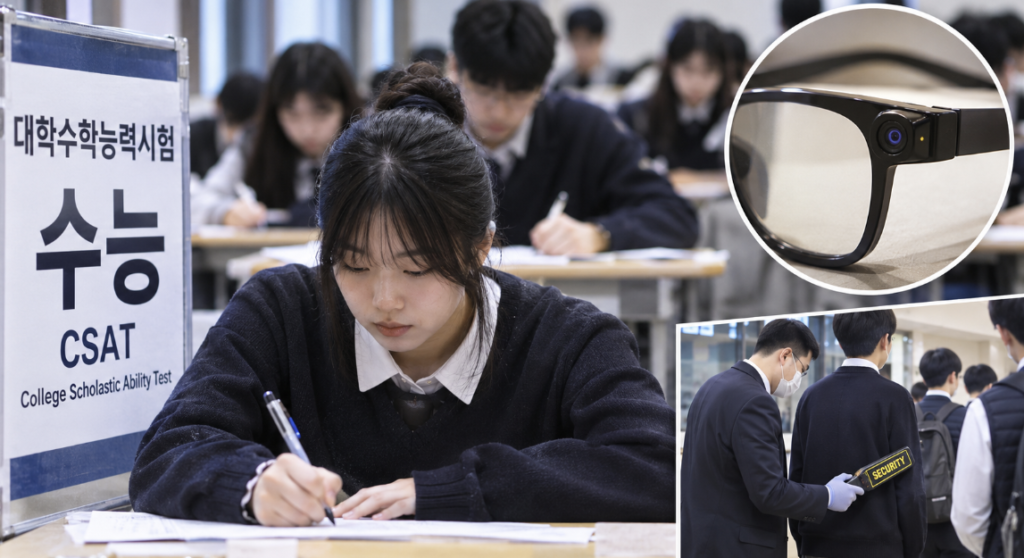
Unlike smartphones, which are relatively easy to identify, smart glasses can resemble ordinary eyewear while incorporating cameras, microphones and wireless connections.
Some models can capture images of printed material and transmit information to connected devices, creating new challenges for exam supervisors.
Earlier this month, the Education Ministry reported four cases involving AI glasses during middle and high school examinations. All four students received zero scores for the affected tests.
Separately, the Human Resources Development Service of Korea said on Monday that 12 cases involving smart glasses had been detected in national qualification examinations this year.
Authorities are reviewing examination procedures across hundreds of professional and technical certification categories.
The government has also indicated that it will seek assistance from technology companies in determining whether examination questions were submitted to generative AI services.
President Lee Jae Myung has called for strict action against cheating involving advanced electronic equipment, warning that such practices undermine the efforts of students who prepare for examinations legitimately.
Officials have proposed extending the period during which students caught cheating are barred from retaking the college entrance examination from one year to 10 years.
The proposed tougher penalty is separate from the security measures being implemented for Thursday’s test.
The controversy has also created uncertainty for students who wear conventional glasses, with some expressing concern that their eyewear could attract unnecessary scrutiny.
Education authorities face the challenge of identifying prohibited devices without disrupting candidates who have followed examination rules.
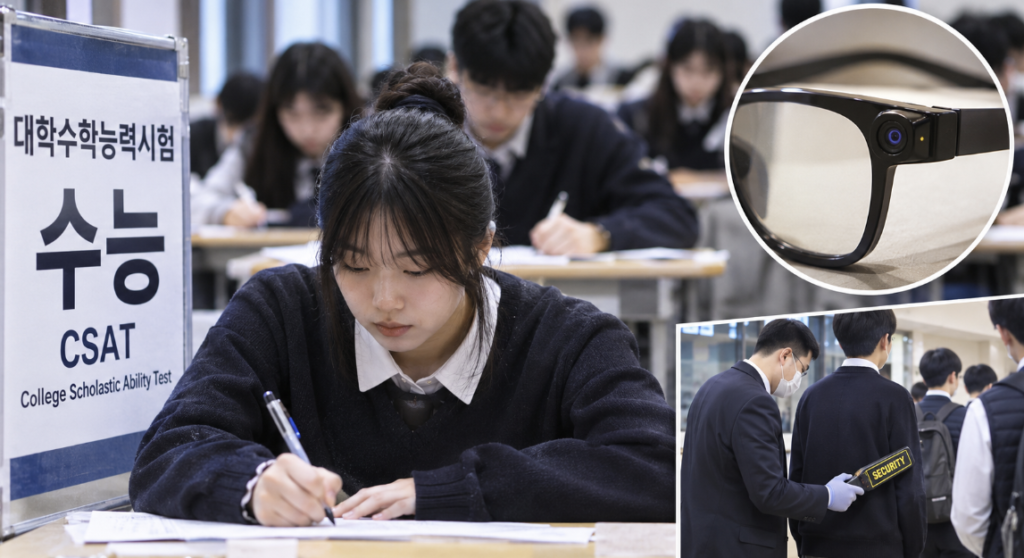
South Korea’s college entrance examination is among the country’s most closely monitored annual events, with transportation, workplaces and public services often adjusting their schedules to accommodate test-takers.
This year’s security measures reflect a broader problem confronting educational institutions as AI tools become smaller, more accessible and harder to distinguish from everyday consumer products.
For examination authorities, preventing misconduct increasingly requires more than collecting mobile phones before a test begins.
The immediate priority is ensuring that Thursday’s examination proceeds fairly while maintaining confidence in a system that plays a central role in determining students’ educational opportunities.
SOPHIA KIM
US ASIA JOURNAL

