


SINGAPORE – Singapore is launching three national artificial intelligence initiatives to combat financial crime, improve financing for smaller businesses and enable AI agents to make transactions safely on behalf of users.
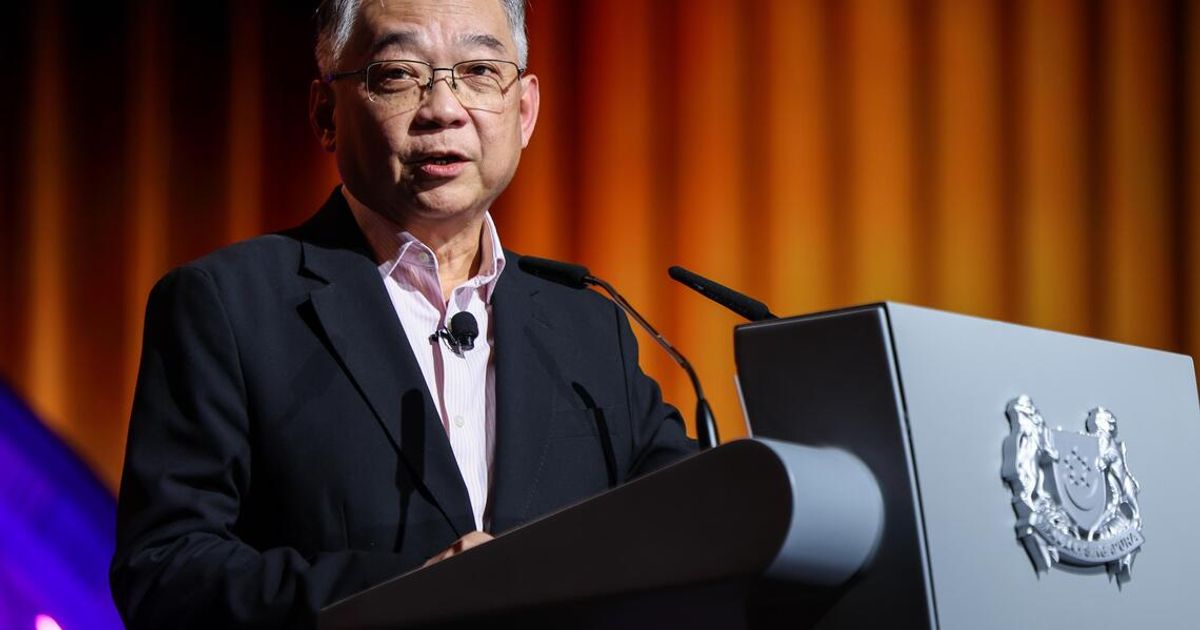
Speaking at the Singapore FinTech Festival on Nov 18, Deputy Prime Minister Gan Kim Yong said these missions will bring together financial institutions, technology companies, researchers and public agencies, to build shared capabilities in a bid to achieve more than any institution could alone.
Singapore will also test promising solutions against global best practices and standards, and take those that work well towards wider deployment.
To strengthen the country’s ability to detect and disrupt financial crime, Gan, also the chairman of the Monetary Authority of Singapore (MAS), said that the Republic must connect information across the financial system while strengthening detection within each institution.
“Scams are not confined within the boundary of one bank. A victim’s money can pass through several institutions within minutes. We will not be able to mitigate the risk if each institution sees only its part of the transaction chain,” he added.
He noted that a proof-of-value is already under way with five banks, whose transaction data is pooled securely to allow AI models to pick up patterns that no single bank can see on its own.
The MAS will begin a design study in early 2027 to develop the blueprint, including its governance and operating model, he added.
Singapore also wants to help businesses, especially small and medium-sized enterprises (SMEs), gain better access to financing through richer data.
Using these data sets, AI can identify information and patterns that traditional approaches may miss, giving lenders a fuller picture of a firm’s creditworthiness, said Gan.
It will also support faster, better-informed lending decisions, reduce the effort of serving smaller businesses, and lower the cost of borrowing for lenders.
Singapore will invite AI technology companies to develop and test solutions using realistic synthetic data, said Gan. These trials will assess whether AI and richer data can make SME financing more forward-looking and accessible, before determining the longer-term data and infrastructure needed to scale promising solutions.
The Republic will also look into enabling AI agents to make transactions safely on behalf of users.
While AI agents make cash management more efficient and payments faster, they must operate within defined authority and limits, and institutions and enterprises remain accountable for actions taken on their behalf, with safeguards built in from the start, he said.
Singapore will work with the industry to test practical applications in controlled environments – such as embedding conditions into transactions – and examine the safeguards needed for wider use, including common approaches to identity, authority, accountability and interoperability.
“We want to establish Singapore as a leading AI innovation centre, with the policies, standards and infrastructure to support trusted use of AI agents in finance.”
Gan also unveiled the latest report for PayNow Generation 2, which sets out how Singapore will make payments simpler, safer and more accessible for all users.
This includes a new SGQR+ switch, which will enable Singapore residents and tourists to pay with any SGQR+ label using their preferred QR app, as well as other enhancements.
Gan also touched on the new US rules requiring companies to have licences to export or re-export advanced chips to five countries, including Singapore.
He said the Republic will act against those who do not abide by its laws, amid growing scrutiny of the possible diversion of advanced US AI chips to China.
“We value our international reputation, and we do not condone companies using their association with Singapore to circumvent or violate the laws of other countries in their international business activities,” he said.
“We will act against those who flout our laws.”