


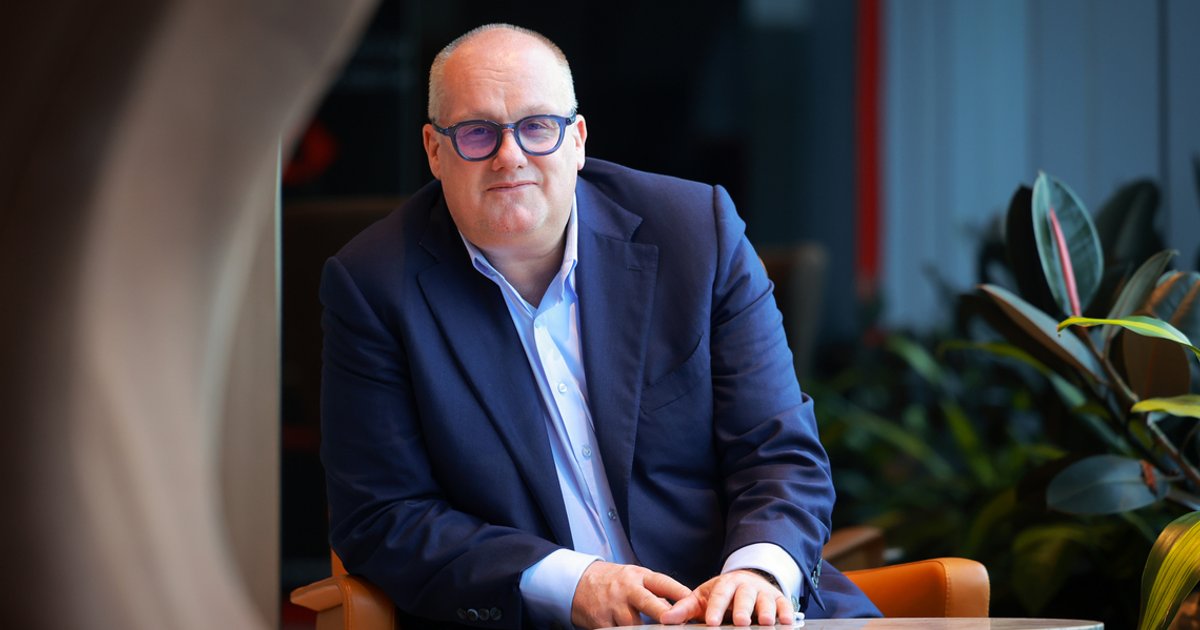
SINGAPORE – Singapore’s regulators have made efforts to revitalise the stock market and deepen liquidity, but more needs to be done to grow the supply of new, innovative companies that will want to list here, said HSBC’s head of equity strategy for the Asia-Pacific, Herald van der Linde.
Drawing more investor money into Singapore’s stock market is only half the battle.
With its small domestic market and relatively few tech listings, the Republic also needs to attract and nurture innovative companies that will eventually turn to the local exchange to fund their growth, he told The Straits Times.
Van der Linde, who is based in Hong Kong, said that there are two sides to growing the stock market – the people who put money into it to buy shares such as asset managers, and businesses seeking to raise funds by selling shares.
Schemes like the $6.5 billion Equity Market Development Programme have already incentivised fund managers to invest in the local market, especially in mid-cap stocks.
The programme aims to strengthen the local asset management and research ecosystem and increase investor interest in Singapore’s equities market. It has already placed $5.4 billion across 14 asset managers as at September.
The challenge now is generating a steady pipeline of companies prepared to go public on the Singapore Exchange.
Singapore’s listings have already improved over the past few years, with 10 initial public offerings (IPOs) in 2026 so far.
Still, the Republic’s pipeline remains modest compared with some regional peers.
In the first half of 2026, for example, it recorded five IPOs raising US$868 million (S$1.11 billion), compared with Malaysia’s 36, which raised about US$1.34 billion, according to Deloitte.
Hong Kong, meanwhile, hosted 13 specialist technology IPOs alone over the same period, KPMG data showed.
“You need more companies to come and say, I want to list in Singapore,” van der Linde said, noting that large regional companies like Grab and Sea previously chose to list in the United States.
Other regional players have also opted for Hong Kong instead.
To be fair, Singapore is simply limited by its market size, especially when compared with a massive market like China, he said.
Van der Linde pointed to concerted efforts in China to roll out new technology and artificial intelligence tools, which mean there are new companies springing up around these themes.
“There are so many new companies that are popping up there that need capital, and they go to the stock market to raise money for their own investments.
“That is not happening as much in ASEAN or in Singapore, and there are good reasons for it – it’s just not as big,” he said.
But the Republic can still take targeted steps to make its equity market attractive to young and growing companies.
Van der Linde noted that Singapore, primarily known for banks that pay good dividends, as well as real estate companies, does not attract many tech listings in the way that other markets in the region like South Korea and Taiwan do.
Singapore needs tech companies that want to set up here, and should create an environment that is attractive to fledgling start-ups that are looking for a base to grow from, van der Linde said.
“Then you say, ‘Listen, if you make it, you get even further advantages if you list on the Singapore stock exchange.’
“There will be companies that say, ‘Okay, we do that. We need money’, and then you can develop that as well. But for that, you need home-grown or regionally grown companies that eventually… need a larger pool of investors to fund their expansions.”
When such an environment is cultivated, it will become automatic for a tech firm that wants to list in the region to think of Singapore first, the same way tech companies look to the Nasdaq because it is known for tech-heavy listings, he said.
Singapore is indeed working on supporting companies through different stages of growth.
A growth capital work group was convened by the Monetary Authority of Singapore and the Ministry of Energy, Trade and Industry earlier in 2026 to look at the broader growth capital ecosystem, including how companies access capital as they scale, how investors realise investments, and how capital can be recycled into new opportunities.
It will also look at broadening exits and capital recycling options, as well as deepening capabilities across the financing chain.
Looking at the South-east Asian region, van der Linde said Singapore is “already pretty competitive”.
He added that it is a positive sign that many companies listed in Singapore are regional in nature, such as the banks.
“For it to really be lifted to another level, you need innovative companies that need capital, and you need to create an environment whereby it’s easy for such companies to gain access to funding in this market,” he said.
Another sector that shows promise in the region is healthcare, van der Linde said.
He noted that medical tourism is a booming industry in South-east Asia, and Singapore also has its fair share of healthcare and medical technology stocks.
He envisioned more cooperation between insurance companies, healthcare organisations and even tourism providers across countries to make it easier for the industry to grow across the region.
In this way, the companies that make up the sector can also find opportunities to grow and eventually list on the exchanges.
“It revitalises the equities landscape of the whole region,” he said.

