


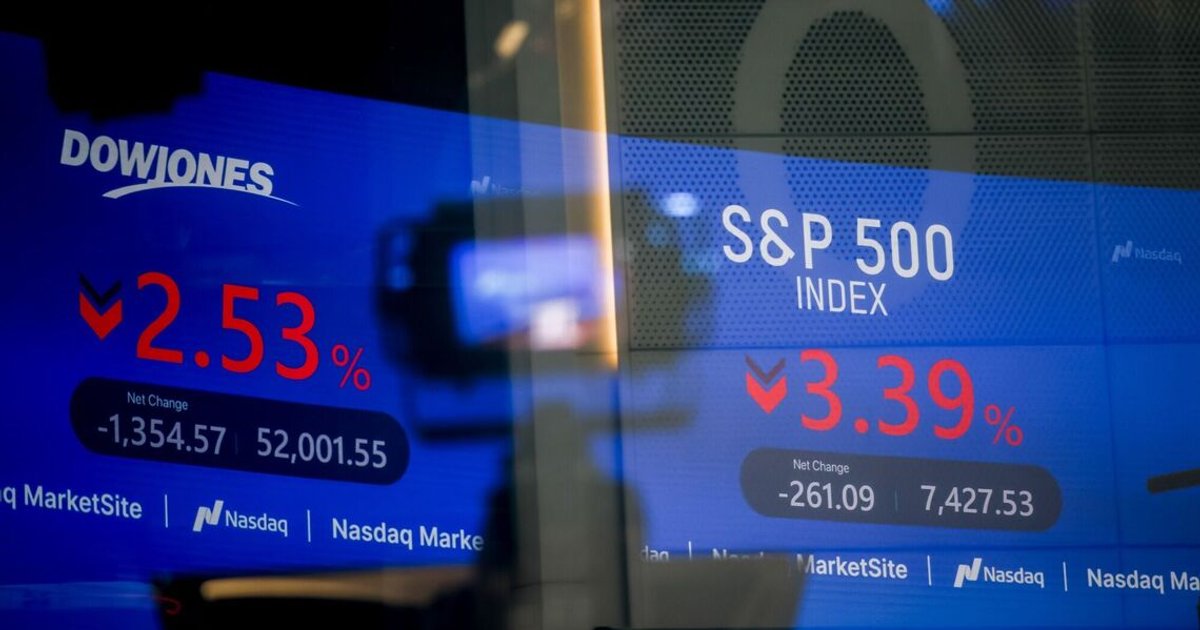
SINGAPORE – A brutal sell-off in US technology stocks has spread to Asia and Singapore, leaving investors to decide whether to buy the dip, cut exposure or wait to see if the companies driving the artificial intelligence (AI) boom stick to their spending plans.
The Nasdaq 100 plunged 6.4% on Nov 5, two days after the US midterms, wiping out about US$2.5 trillion in market value. The S&P 500 fell 4.4%, while the Philadelphia Semiconductor Index sank 12.2%.
The sell-off hit the chip-heavy markets of South Korea, Taiwan and Japan on Nov 6, and Singapore-listed technology stocks also took a beating.
The Democrats’ sweep of Congress raised the prospect of tighter scrutiny of AI at a time when investors were already questioning how quickly spending on chips and data centres would translate into profits.
Experts added that crowded AI bets and the use of borrowed money to speculate in the sector may have amplified the fall as funds and investors rushed for an exit.
What happens next?
Investors should watch whether a Democratic Congress’ greater scrutiny of electricity and water use, grid costs and permits leads to rules that actually delay data centre construction. The next clues will come from whether major cloud providers trim their spending plans and whether chipmakers lower their earnings forecasts.
What’s clear is that while data centre construction could slow, long-term demand for AI and computing power remains intact.
“AI demand, existing infrastructure and the technological opportunity did not disappear overnight,” Saxo chief investment strategist Charu Chanana said in a note to investors on Nov 6.
“Many leading technology companies still have substantial cash flows, established customers and significant competitive advantages.”
What has changed is market sentiment, and investors’ assessment of future growth, regulatory risks and the valuations they are willing to pay.
“The sell-off appears to reflect a combination of genuine uncertainty and amplified selling pressure, rather than an overnight collapse in business fundamentals,” she said.
Brian Levitt, chief global market strategist at Invesco, sees the sell-off as “a reset in one of the market’s strongest and most crowded trades”.
He noted that the correction could continue, and stocks that led the market over the past few years could lag in the months ahead.
On the flipside, the lower prices are making some AI stocks more attractive to long-term investors, said Levitt.
What should investors do?
Long-term investors who can ride out further losses can keep investing regularly if their mix of holdings still suits them, Chanana said.
Investors with extra cash or those looking to buy the dip should focus on companies with strong balance sheets, steady cash flow and reasonable valuations. One suggestion is to spread purchases over time, which can help investors avoid committing all their cash at one price.
Those heavily exposed to AI could shift some money towards established businesses that generate cash or diversify into other sectors with different sources of demand, while those trading on margin should work out how far prices could fall before they have to put up more cash or sell, Chanana said.
Those nearing retirement or facing a large expense soon should check that they have enough cash available to avoid selling shares during a downturn.
She noted that while investors should not dismiss the possibility of further downside, they should recognise that a sharp fall in share prices does not mean the underlying investment opportunity has deteriorated by the same magnitude.
“Market sentiment can change much faster than business fundamentals. When leverage and crowded positioning amplify that shift, price movements can become extreme.”
Who wins, who loses?
Those who choose to stay invested are likely to focus company fundamentals, including profitability and return on investment.
Afdhal Rahman, executive director of wealth advisory at OCBC, said in a Nov 6 note said cloud giants such as Microsoft, Alphabet and Amazon are relatively well positioned in the near term.
If tighter rules delay data centre projects, these companies could get some relief from heavy spending and have more cash left over. Their strong balance sheets, diverse businesses and access to financing also give them room to ride out delays, he said.
On the flipside, what frees up cash for cloud giants could mean fewer orders for chipmakers, storage suppliers and equipment manufacturers.
Still, major cloud providers have indicated that they expect to spend more in 2027, and Rahman expects demand for computing power to hold up over the longer term.
He favours graphics processors, custom chips and networking equipment, and is more cautious about memory stocks, where prices may already reflect much of the expected growth.
In software, established companies may be better placed to defend their business if their products are central to customers’ daily work, they own data that rivals cannot easily replicate, or they have close ties with leading AI labs, Rahman said.
He added that cybersecurity companies could also benefit as wider AI use creates new security risks.
He was more cautious about smaller AI cloud providers that rely heavily on debt. If permits take longer to secure, these companies may have to pay interest for longer before their data centres start earning revenue.
“While the funding tap has not been turned off, it is becoming more selective. So, too, should equity investors,” he said, adding that for most investors, spreading AI exposure across several parts of the industry is a good idea.

