


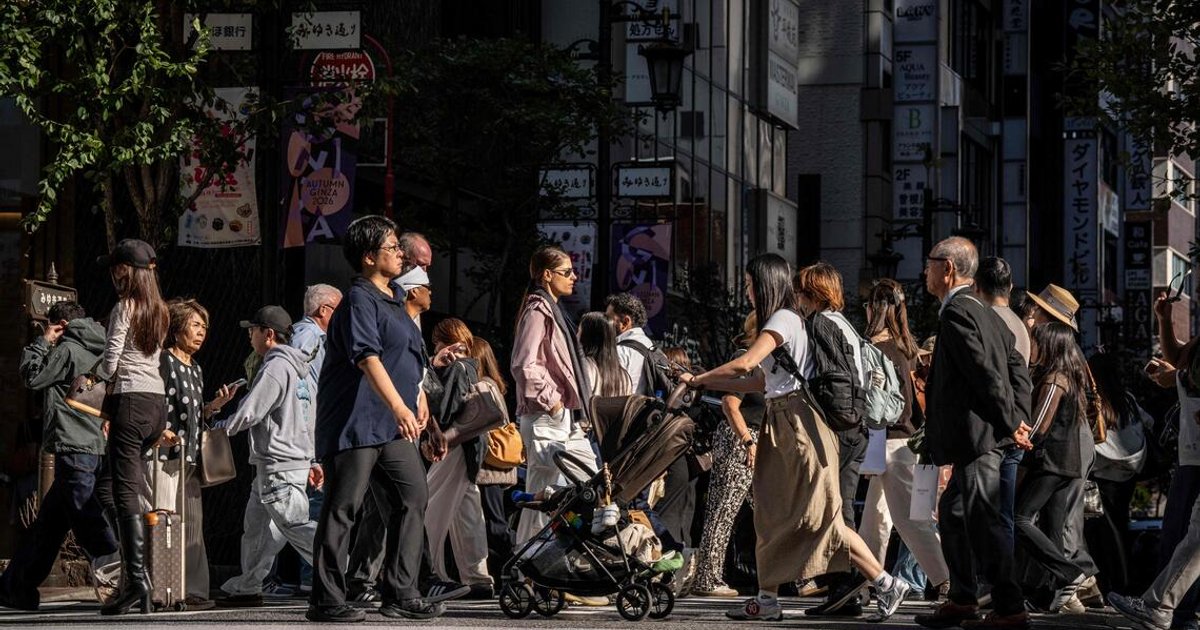
Japanese workers’ nominal wages rose at the fastest pace in almost three decades, underscoring sustained momentum in pay growth that will keep the Bank of Japan (BOJ) on track to hike interest rates as soon as December.
Nominal wages rose 4.6% in September compared with a year earlier, marking the largest gain since 1997, the Labour Ministry reported on Nov 6. Base pay increased 3.7%, while a more stable gauge excluding bonuses, overtime and sampling distortions rose by a record 3.1% for full-time workers.
Real cash earnings – adjusted for inflation excluding rents – climbed 2.2% from a year earlier, accelerating from a revised 1.6% gain in August and beating the consensus estimate of 1.3%. Economists had expected growth to slow due to fewer working days.
The data come as labour unions prepare for the next round of annual wage negotiations that will culminate in March, with early anecdotal evidence suggesting momentum built over the last few years will be maintained.
The largest labour union federation in October urged its members to demand wage increases of around 6%, setting a more ambitious target than in 2026.
Workers represented by the group have secured raises exceeding 5% for three consecutive years, signalling that pay gains are becoming the norm in a country long plagued by wage stagnation after an asset bubble burst in the the early 1990s, ushering in years of deflation.
“I expect wage increases in next year’s wage negotiations to come in at around 5%, roughly the same pace as in 2026,” said Yasunari Tanaka, researcher at Mitsubishi Research Institute.
Sustained upward pressure on wages is expected to keep the BOJ on track to keep raising its benchmark rate for some time.
The median economist forecast puts the terminal rate for the current cycle at 1.75%, implying two more quarter-point hikes.
BNP Paribas and JPMorgan Securities are among those forecasting the benchmark rate will reach 2.5%.
Bloomberg economist Taro Kimura said: “Wage growth is likely to accelerate next year as unions seek bigger pay rises in the next annual shunto negotiations. But wobbling AI-related stocks argue for caution. Our baseline has three more 25-basis-point hikes in December, March and July, taking the policy rate to 2%.”
After leaving interest rates unchanged last week, BOJ Governor Kazuo Ueda said that underlying inflation had reached a level broadly consistent with the central bank’s 2% target, while stressing the importance of labour and management factoring 2% inflation into their coming pay negotiations.
More than 80% of economists surveyed by Bloomberg expect the BOJ to raise borrowing costs when it next sets policy on Dec 18.
The central bank has previously cited early momentum in wage talks as a factor supporting rate hikes.
Pay trends, particularly inflation-adjusted earnings, will also be crucial to Prime Minister Sanae Takaichi as households grapple with elevated living costs.
With markets wary of the potential for a worsening fiscal outlook, Takaichi faces a delicate balance between easing the burden on consumers with price relief measures and containing fiscal costs.
In the latest developments, Takaichi in October announced that she will begin gradually scaling back petrol subsidies from December, while reviving electricity and gas support for the winter starting the same month.
A persistent labour shortage has been a major driver of Japan’s recent wage gains.
In its latest Outlook report, the BOJ said that labour market conditions are likely to remain tight, and nominal wages are projected to continue increasing steadily, with base pay increases being realised at around the same level as in 2025.
The BOJ’s Tankan survey released in October showed staffing shortages across industries remained among the most severe on record, forcing companies to offer higher pay to attract and retain employees.
The resulting rise in personnel expenses, however, is squeezing smaller businesses.
Bankruptcies linked to labour shortages hit a record 240 in the first half of the fiscal year, according to a report released in October by Tokyo Shoko Research.
More than half of those cases cited higher labour costs, underscoring the growing financial strain on smaller firms struggling to keep pace with wage demands, the report said.
“If we look at same sample data, base pay is recently rising by around 3%, so wage growth at its current pace is consistent with 2% inflation” if factoring in productivity gains, Tanaka said. “I think sustained strong wage growth would support rate hikes by the BOJ.” BLOOMBERG