


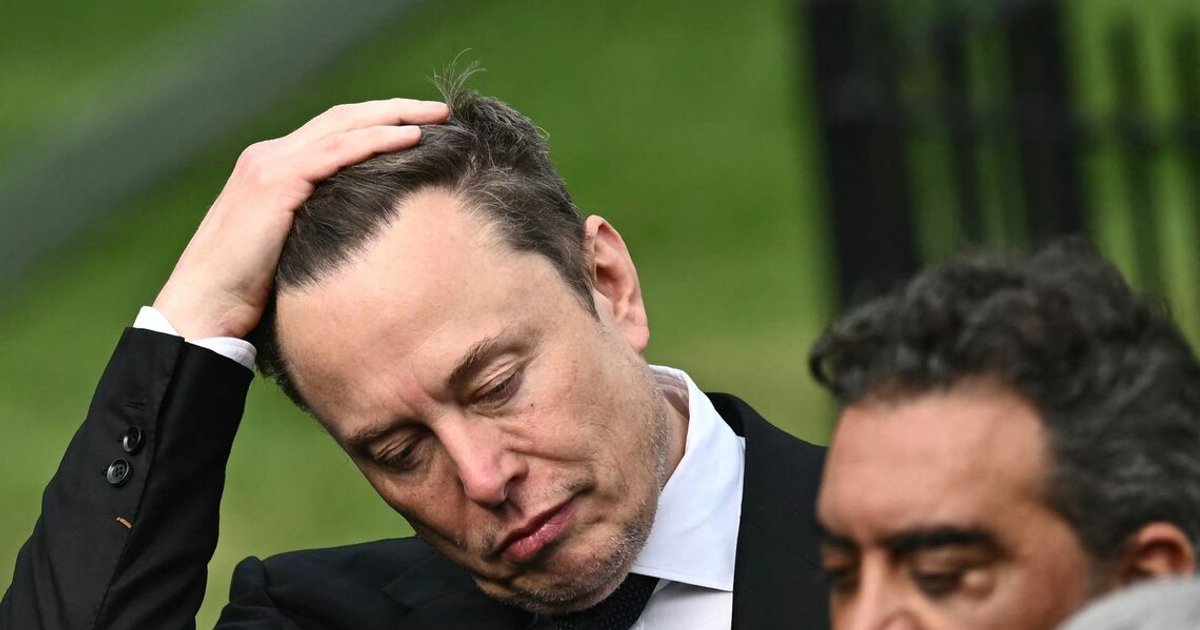
Shares of Elon Musk-led companies plunged on Nov 5, deepening a rout that began after Democrats outperformed in the US midterm elections, as investors worry the billionaire’s efforts to expand his business empire will be stymied.
Tesla shares sank 11% on Nov 5, following a 3.3% drop a day earlier. For the year, Tesla shares are now down about 24%. SpaceX, Musk’s rocket, satellite and AI company, tumbled 9% on Nov 5 on the back of a 3.8% decline the day before.
Since the results became clear, Tesla and SpaceX shares have sloughed off roughly US$460 billion (S$588 billion) from their combined market value.
“Tesla and SpaceX are just a 2-for-1 special as the market attempts to reprice the risk of a material slowing in data centre buildouts,” said Joe Gilbert, portfolio manager at Integrity Asset Management. “Momentum is a powerful thing that cuts both ways and there is a rush to the exits in tech until we see some kind of bottoming.”
Democrats seized key positions in Musk’s home state of Texas, where Tesla and SpaceX have their headquarters, and won a majority of seats in both chambers of Congress.
The Texas results were a particular focal point, with Gina Hinojosa ousting Governor Greg Abbott, the Republican who had held the state’s highest office since 2015.
On the campaign trail, Hinojosa called for a moratorium on data centres and cast scrutiny on Musk’s political contributions to Abbott, as well as state tax breaks provided to Musk companies during Abbott’s tenure.
James Talarico, the first Democrat in a generation to win a US Senate seat in Texas, has also taken aim at Musk and the fortune the billionaire spent to support Republican Ken Paxton.
“Elon Musk is trying to buy this Senate seat in Texas,” Talarico said during a recent rally. “In all likelihood, if you’ve seen an attack ad on your TV, that was Elon. Musk spent close to half a billion dollars on behalf of GOP (Republican Party) candidates.”
“If you move your businesses to what you perceive to be a friendly state, then spend hundreds of millions of dollars to elect a slate of friendly candidates only to have them lose spectacularly, that’s going to have some consequences,” said Interactive Brokers’ chief strategist Steve Sosnick.
The declines in Tesla and SpaceX come amid a wider market meltdown that hit AI companies, chipmakers and technology stocks the hardest.
The tech-heavy Nasday 100 slumped 6.4% for its worst single-day performance since March 2020.
In the options market, traders turned the most bearish on Tesla since April 2025’s tariff chaos. SpaceX’s put skew climbed to its highest level since going public in June.
“The market is reacting to a potential slowdown in everything AI-related, whether its SpaceX’s super intelligence segment, or Tesla’s autonomous vehicles,” said Morningstar’s Seth Goldstein.
Musk’s net worth was down US$71 billion to US$793 billion as at 3.41pm in New York, according to the Bloomberg Billionaires Index, following a drop of US$33.5 billion on Nov 4.
Musk’s fortune is still by far the biggest in the world, but it has seen a stark fall from his peak of US$1.3 trillion after the SpaceX initial public offering in June.
Market watchers are also fretting over what the election results spell for a merger between Tesla and SpaceX.
Special committees at both companies are reviewing the potential deal, and Bloomberg has reported that there is a push to get the deal done before the Trump Administration reaches its end.
“A less friendly Congress makes that path messier, even if it doesn’t automatically block it,” according to David Wagner, portfolio manager at Aptus Capital Advisors. BLOOMBERG