


SINGAPORE – More affluent families from around the region and globe are turning to Singapore to manage their wealth as their focus shifts from preserving fortunes to diversifying investments, succession planning and transferring wealth to the next generation, Julius Baer’s Asia head Jimmy Lee told The Straits Times.
The Swiss private bank serves clients across more than 25 markets from Singapore, where its workforce has grown from 34 employees in 2006 to a multinational workforce of more than 1,350 in 2026.
Since it set up shop here 20 years ago, Singapore has grown to become Julius Baer’s second-largest global hub after Switzerland.
“Singapore’s rise as a global wealth management centre has mirrored the evolution of wealth across Asia,” said Lee, a veteran private banker who became the bank’s head of Asia-Pacific in 2016.
Two decades ago, wealth management in Singapore was primarily focused on wealth preservation, he said.
Many clients were first-generation entrepreneurs who had built their businesses through challenging economic conditions and were focused on protecting capital. Portfolios were often concentrated in familiar regional markets, with equity trading playing a central role.
Alternative investments, sustainability and philanthropy were less prominent considerations. Digital assets had yet to emerge as an investable asset class, he said.
Meanwhile, Singapore was strengthening its regulatory framework and financial infrastructure, helping to establish its position as a trusted financial centre.
Today, the landscape has become more diverse and client priorities have evolved alongside it.
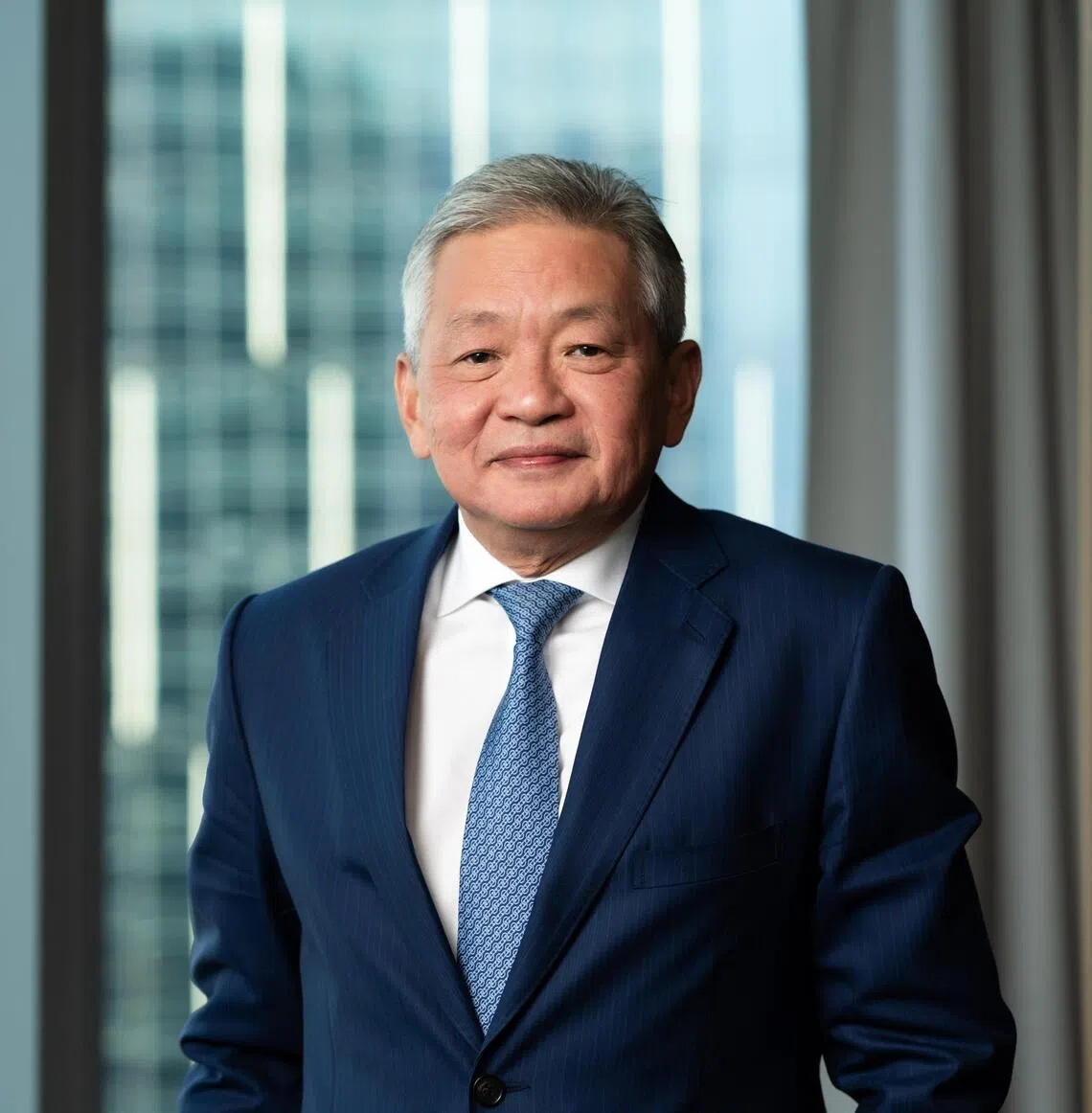
The rich have shifted their focus from wealth preservation to diversifying investments, succession planning and transferring wealth to the next generation, says Jimmy Lee, Julius Baer’s Asia head.
PHOTO: JULIUS BAER
A new generation of wealth holders, including second- and third-generation family members, as well as entrepreneurs from sectors such as technology, fintech and e-commerce, are placing greater emphasis on diversification across geographies and asset classes, Lee said.
Interest in global equities, alternative investments and thematic opportunities has increased, while discretionary portfolio management – where a licensed portfolio manager makes buying and selling decisions on clients’ behalf without requiring prior approval for each trade – has become more widely accepted.
As intergenerational wealth transfers continue across Asia, families are also taking a more structured approach to managing wealth.
Succession planning, family governance and long-term stewardship have become increasingly important alongside investment performance.
“Singapore’s development reflects many of these trends. Supported by a stable regulatory environment, financial resilience and a deep ecosystem of financial expertise, it has become an important centre for wealth management and family offices in the region,” Lee said.
More than a quarter of Julius Baer’s global business today originates from Asia, spanning clients, assets under management and talent. Lee said the bank’s presence in the region reflects two decades of sustained investment and commitment.
“Building long-term relationships in Asia requires local expertise, continuity and a willingness to invest through market cycles. We view our presence here as long-term, underpinned by the belief that enduring client relationships are built through consistency, proximity and a deep understanding of local markets,” he said.
Singapore is also an important centre for innovation for Julius Baer, which in 2021 established Launchpad, its dedicated innovation lab in the Republic, to test and incubate disruptive tech solutions, including digital assets and generative AI.
Lee said that as client needs continue to evolve, Singapore will remain central to how the bank develops new capabilities and delivers the next generation of wealth management.
In a new report on Asian safe havens, Julius Baer said market volatility driven by artificial intelligence, rising geopolitical tensions and growing government debt has prompted investors to rethink how best to protect their wealth.
Traditional safe-haven assets, including US Treasuries, gold and the Japanese yen, have delivered mixed results in 2026.
While investment returns remain important, investors are increasingly looking at whether a country can protect their families, wealth, businesses and assets, while offering security and flexibility in citizenship options.
And Singapore is well-placed to capitalise on this shift, due to its reputation for neutrality, strong governance and sophisticated financial and legal services.
The report named Singapore and Hong Kong as Asia’s leading safe-haven financial centres, but said they serve different purposes. Singapore’s neutrality and extensive connections across Greater China, South-east Asia and India make it a natural destination for capital from a broad range of markets. Hong Kong, in contrast, remains primarily a gateway for mainland Chinese wealth.
Singapore’s cross-border wealth is expected to grow at a compound annual rate of 9% between 2025 and 2030, from about US$2.1 trillion (S$2.7 trillion) to US$3.3 trillion, according to Boston Consulting Group.
This would place it among the faster-growing major wealth centres, alongside Hong Kong, which is projected to expand at the same rate.
Tech-fuelled growth has created massive wealth in Asia, which accounts for about 30% of global millionaire wealth.
This has created significant demand for stable places to store wealth, invest and manage cross-border assets within Asia, the report said.
The eastward shift does not necessarily mean traditional Western financial centres will lose their dominance.
Switzerland retains advantages built over centuries, including its reputation for neutrality, deep private-banking expertise and established legal and wealth-planning infrastructure.
Julius Baer expects rising cross-border wealth to sustain two parallel networks: a Western axis centred on Switzerland, the US and Britain, and an Asian axis anchored by Singapore and Hong Kong.