For investors in Asia, the market environment is becoming harder to navigate. Geopolitical uncertainty, persistent inflation and greater dispersion across markets are making research, selectivity and disciplined decision-making more important. At the same time, structural shifts – from generational wealth transfer to retirement reform, private-market access and artificial intelligence – are reshaping what investors need from their portfolios.
Janet Perumal, Wellington Management’s head of Asia-Pacific (APAC), head of Investments for APAC and head of the Singapore office, says that in an environment where information is abundant, the advantage lies in having the deep insights to know what to make of it.
That is where active investing can become more relevant. Rather than simply tracking a market, active managers choose where to allocate capital – and where not to.
Independent research and decision-making have long been central to Wellington’s investment approach. The Boston-headquartered firm, which opened its Singapore office in 1996, today manages US$1.37 trillion (S$1.75 trillion) for clients in more than 60 markets.
In this Q&A, Perumal discusses how Wellington’s heritage and entrepreneurial culture shape its investment approach, why proximity matters in APAC, how AI is reshaping investment management and what clients may expect over the next decade.
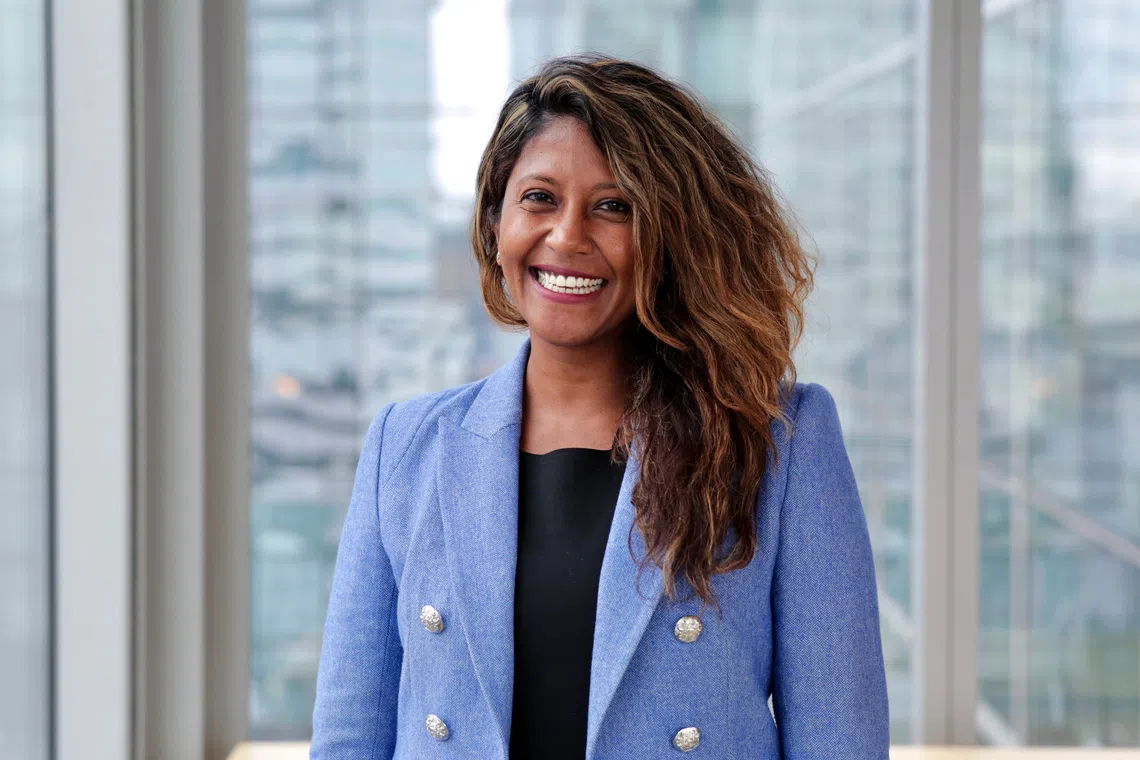
Janet Perumal, Wellington Management’s head of Asia-Pacific, says staying close to clients and markets helps the firm understand “what is changing on the ground”.
PHOTO: WELLINGTON MANAGEMENT
Q1. As Wellington marks 30 years in Singapore, what moments or shifts stand out most from that journey?
A: The first is Wellington’s long-term commitment to Asia-Pacific, beginning with Singapore in 1996, followed by Tokyo and Sydney in 1997, Hong Kong in 2003 and Shanghai in 2020.
That footprint has allowed us to build relationships over time and stay close to developments in capital markets, wealth channels, retirement systems and investor expectations.
The second is how our Singapore presence has helped connect APAC clients to Wellington’s global investment platform. Our role is to bring long-term active management, deep research and independent thinking to clients here and across the region.
Conversations in the region also continue to inform how we think about global client priorities – from income and diversification to resilience, alternatives and portfolio implementation.
Q2. Wellington has nearly a century of heritage. How does its entrepreneurial DNA benefit investors in Asia?
A: Our entrepreneurial DNA comes from private ownership, long-term thinking and a culture that gives investors room to think independently. Wellington has no single chief investment officer setting a firmwide house view. Instead, our model is built around independent perspectives, open debate and accountability at the investment-team level.
For clients in Asia, that means access not to one prescribed market view, but to a broad global research ecosystem – with more than 800 investment professionals sharing insights across asset classes and regions. It gives clients the breadth of a global platform with the focus and conviction of specialist teams.
A practical example is Wellington’s Daily Morning Meeting, part of the firm for more than 50 years: a forum where investment professionals exchange views, challenge assumptions and test ideas – not to force consensus, but to make each investor better informed.
Our private ownership model also allows us to keep investing in capabilities, talent and tools with long-term client outcomes in mind, rather than managing short-term pressures. That mindset is reinforced by a simple principle that has long guided Wellington’s culture: client, firm, self. It reminds us to start with what clients need, build the firm for the long term and approach our work with a shared sense of responsibility. In practice, independence is not simply about individual conviction; it is about using independent thinking in service of better outcomes for clients.
Q3. Why does being close to APAC clients matter, and how can local developments influence global investment thinking?
A: For our APAC teams, our philosophy of “learn locally, connect globally, build collectively” is very practical.
“Learn locally” means spending time with clients and markets to understand what is changing on the ground. “Connect globally” means making sure those observations reach the right parts of the firm – investment teams, product groups, solutions specialists and client platforms. “Build collectively” means using that shared knowledge to develop capabilities that can be adapted across markets.
APAC is a sophisticated, fast-changing region. Wealth creation, retirement reform, digital adoption, broader access to private markets and demand for income are all shaping portfolio discussions. These conversations help us separate cyclical noise from more durable shifts and identify when an Asia-led development may have wider relevance.
Developments in Australia’s retirement system, Asia’s wealth market, Singapore’s role as a capital and family-office hub, and ASEAN’s reform and integration agenda all offer useful signals about how investor priorities are evolving. In some cases, trends that emerge first in Asia can point to issues that later become more relevant globally. Our role is to stay close enough to these developments to understand what is emerging, connect those insights across the firm and help clients prepare for the opportunities and risks ahead.
Q4. AI is changing how companies operate, where innovation takes place and how investors process information. How does Wellington think about its investment implications, and where does human judgement still matter?
A: AI matters to us in two ways. First, it is an investment theme reshaping companies, industries and infrastructure needs – from productivity and business models to the capital required for data centres, power and other enabling technologies. It also reinforces a broader shift: Innovation can emerge across both public and private companies, so investors need to think carefully about where long-term growth is developing and how best to access it.
Second, AI is a tool that can help investment teams and the broader firm work more effectively. At Wellington, we think about this at different levels – from productivity tools that help people work faster, to applications that are more closely connected to our data, processes and client needs. The purpose is not to use technology for its own sake, but to improve how we find, organise and test information, support research and decision-making, and serve clients more efficiently.
But more information does not automatically create better insight. Where data is abundant and narratives can move quickly, experienced investors still need to understand what is material, ask the right questions and challenge assumptions. That is where Wellington’s research culture matters. Technology can sharpen the process, but judgement, creativity, debate and accountability remain central to investment decisions.
Q5. As Wellington approaches its centenary in 2028, what will clients expect from an investment manager over the next decade? How is Wellington preparing to meet these evolving needs globally and in Asia?
A: We believe investors will increasingly look for partners who can help them make decisions with greater clarity, flexibility and confidence.
Wellington’s long experience in multi-asset investing – including the launch of the first balanced fund in the US in 1928 – provides a strong foundation. Clients are moving from product-led to outcome-led conversations. With the lines between public markets, private markets and alternatives blurring, they are asking how different exposures can work together to support income, growth, diversification, liquidity and resilience across market cycles.
We expect clients to seek more differentiated active strategies, broader access to private markets and alternatives, and deeper partnerships as portfolios grow more complex. Active management will remain important as investors face greater volatility, wider dispersion and potentially more modest returns.
In Asia, this shows up as demand for differentiated sources of return, resilient income and broader access to public markets, private markets and alternatives. We are responding by deepening our institutional and wealth relationships and bringing global capabilities closer to local objectives – including making institutional-calibre investment approaches more accessible to wealth investors. As one of the world’s largest sub-advisory managers, Wellington also works behind the scenes with leading financial institutions and wealth platforms to help them deliver investment solutions to end clients.
Singapore plays an important role in that ambition. After 30 years, we have developed deep relationships and a strong understanding of the region’s diverse investor base. As an international financial centre, it provides a natural platform for engaging investors across Asia.
Over the next decade, our focus is to grow with clients and ensure APAC continues to contribute meaningfully to Wellington’s growth and the region’s investment ecosystem.
Find out more about Wellington Management here.