


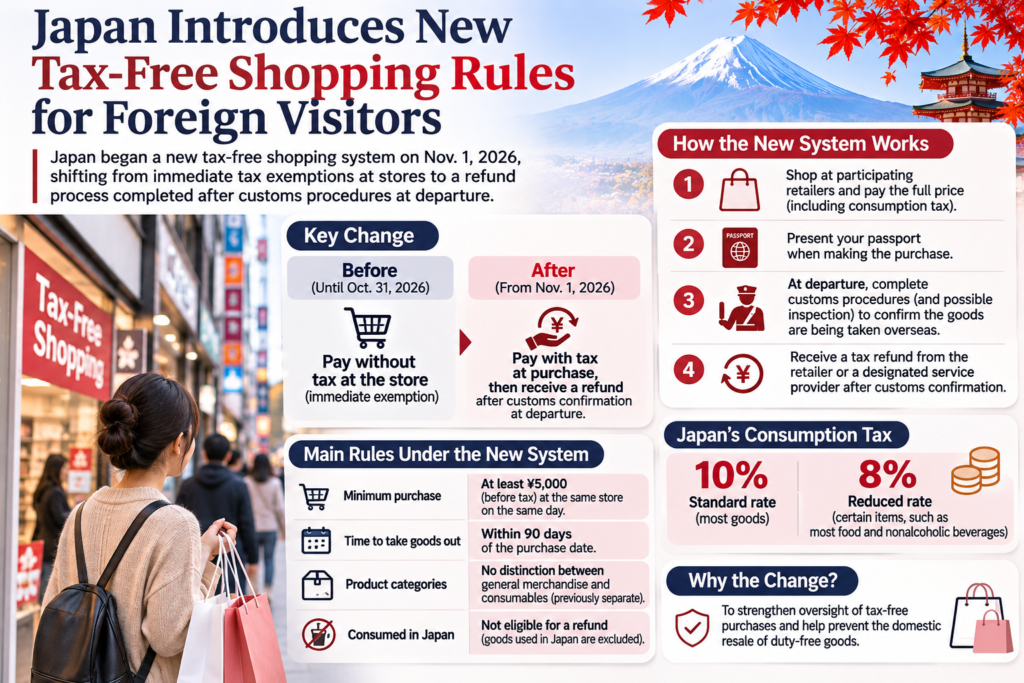
Japan introduced a new tax-free shopping system for international visitors on Sunday, replacing immediate tax exemptions at stores with a refund process that requires travelers to complete customs procedures before leaving the country.
The change affects tourists purchasing cosmetics, clothing, electronics, souvenirs and other eligible goods at participating retailers across Japan.
Under the previous system, qualifying foreign visitors could buy products without paying Japan’s consumption tax at designated tax-free stores.
Beginning Nov. 1, shoppers must pay the full price, including consumption tax, at the time of purchase.
They can receive a refund after customs confirms that the eligible goods are being taken out of Japan.
The change means travelers will need to account for the full purchase price while shopping, even when they expect to receive a tax refund later.
Japan generally applies a 10% consumption tax, although a reduced rate of 8% applies to certain products, including most food and nonalcoholic beverages.
The revised system also simplifies several rules governing tax-free purchases.
Previously, general merchandise and consumable goods were treated differently, with separate restrictions on packaging and purchase amounts.
Under the new arrangements, that distinction has been removed, and the former 500,000-yen purchase limit for consumable goods no longer applies.
Purchases must total at least 5,000 yen before tax at the same store on the same day to qualify.
Travelers must also take the purchased goods out of Japan within 90 days of the purchase date.
Although consumable products no longer need to remain in sealed packaging, goods consumed while in Japan are not eligible for the refund.
Visitors must continue to present their passports or other accepted identification when making qualifying purchases.
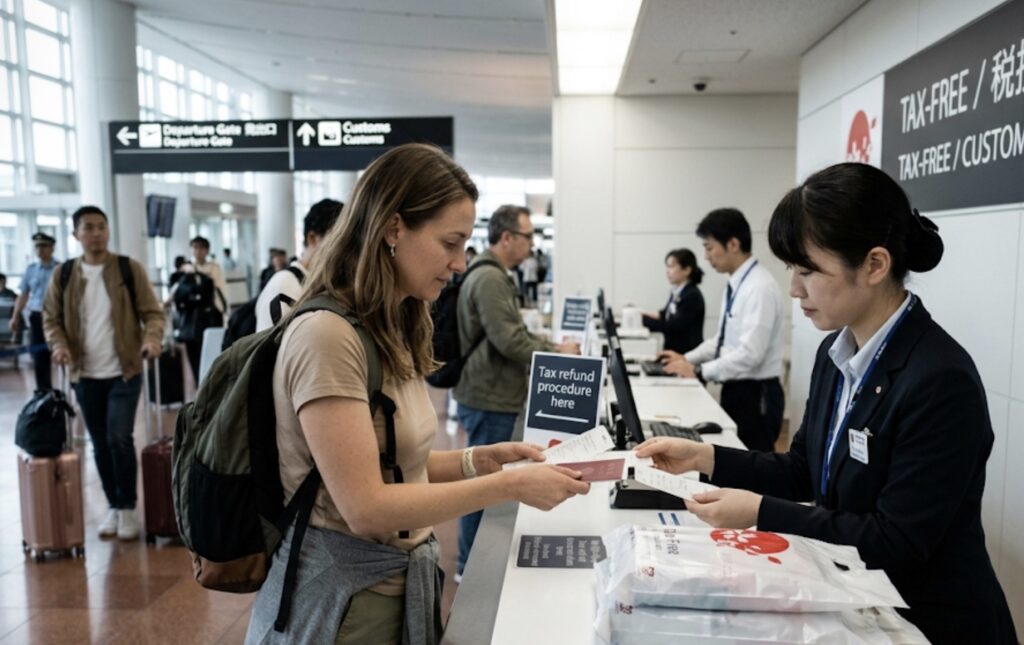
Before departure, customs authorities will verify the relevant purchase records and may inspect the goods to confirm that they are being taken overseas.
Refunds will then be processed by participating retailers or their designated service providers after customs confirmation, rather than automatically being issued at the checkout counter.
The change comes as shopping remains an important part of Japan’s tourism industry.
International visitors spent approximately 9.5 trillion yen in Japan in 2025, according to government tourism figures, reflecting the country’s continued appeal as a destination for shopping, dining and cultural experiences.
Japanese cosmetics, electronics, fashion products and character merchandise are among the goods that attract overseas shoppers.
Authorities have introduced the new refund-based system partly to strengthen oversight of tax-free purchases and address concerns about goods being resold domestically.
For retailers, the transition requires adjustments to payment procedures and refund processing.
For tourists, the most immediate difference is practical: shopping at a tax-free store no longer means receiving the tax exemption at the point of sale.
Visitors planning substantial purchases may need to allow additional time for customs procedures and ensure that eligible goods are available for inspection before checking their luggage.
The revised system preserves tax-free shopping for qualifying visitors while changing when and how they receive the benefit.
As the new rules take effect, understanding the refund process will become an important part of planning a shopping trip to Japan.
SOPHIA KIM
US ASIA JOURNAL

