


France’s economy unexpectedly contracted and inflation neared a three-year high, adding to headaches that already include surging borrowing costs, violent protests and political and budgetary uncertainty.
Third-quarter gross domestic product fell 0.1% from the previous three months as investment continued to decline and exports dropped, statistics agency Insee said. Analysts surveyed by Bloomberg had estimated expansion of 0.1%.
Spain, by contrast, recorded another strong quarter with GDP up 0.6% thanks to domestic demand and trade.
France’s weak performance is a worrying sign for the euro area’s second-largest economy on a day when Germany and Italy are, like Spain, also expected to report growth. A reading for the 21-nation bloc as a whole is set to show an increase of 0.2%.
That outcome would highlight Europe’s broader sturdiness, not just to the Iran war’s inflationary impact but to the heatwaves and droughts that marred much of the summer. Still, the European Central Bank sees downside risks and could yet hike interest rates for a third time in December after standing pat this week.
Separate data from France showed energy costs drove inflation to 3.8% in October, the highest level since late 2023. Analysts had expected it to quicken to 3.6%. In Spain, consumer-price gains eased a touch to 4.9%, in line with estimates.
The jump in global bond yields is another drag, with France’s shaky fiscal and political position making it the region’s focal point. Its economy was already the euro area’s major laggard, only narrowly avoiding a recession in the first half amid soft domestic demand, falling investment and as hot weather hurt agriculture.
The near-term outlook offers little reassurance. Prime Minister Sebastien Lecornu’s minority government is in the midst of another parliamentary showdown over austerity measures, against a backdrop of social and political upheaval before a presidential election in 2027, where the far right lead polls.
“France’s economy is at a standstill due to a unprecedented convergence of external and domestic shocks,” Finance Minister Roland Lescure told Franceinfo on Oct 30. “It needs to pick up. We need to restore confidence and for that having a Budget is essential as that is what will allow us to bring down interest rates.”
Jean Dalbard, economist at Bloomberg Economics, said: “France is heading into the final quarter with little momentum and risks firmly tilted to the downside. Its economy unexpectedly contracted 0.1% in the third quarter against expectations for a 0.1% gain.
“Trade volatility explains most of the miss. More worrying is another steep drop in investment – the third in a row – even before the recent tightening in financing conditions had much time to bite.”
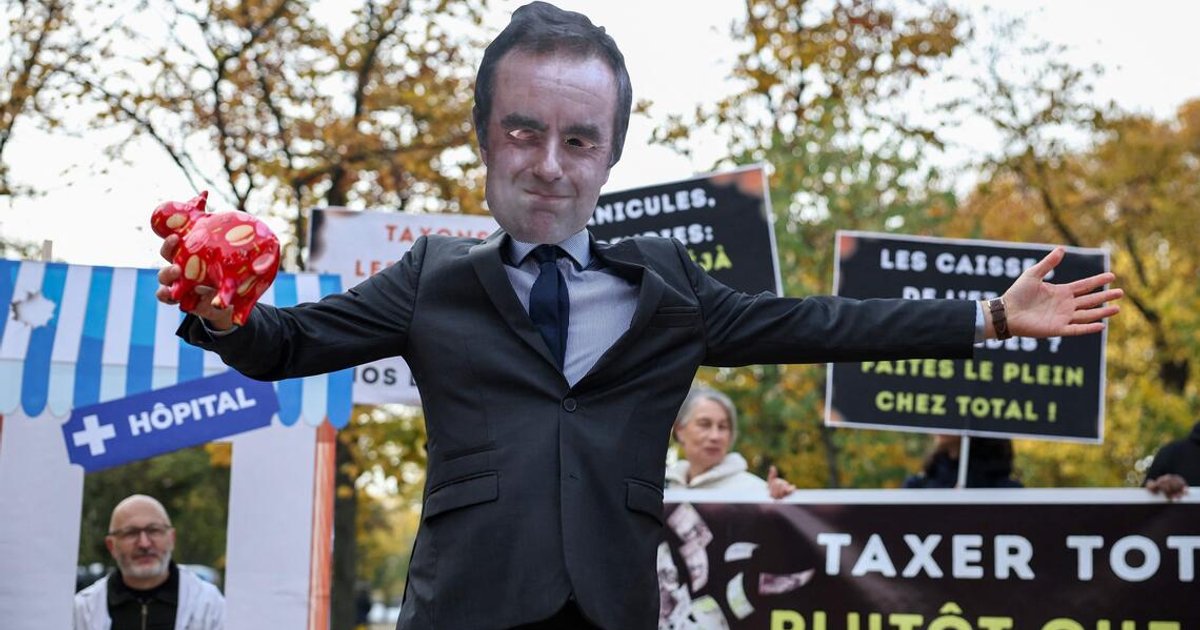
Protests over education funding and the rising costs of living boiled over into street violence on Oct 17, with widespread looting and thousands of arrests. Surveys have shown businesses are taking a wait-and-see approach, while a gauge of consumer confidence slumped to a 13-year low.
Spain’s economy has shown significant resilience, with the central bank listing private consumption, job creation and population growth among drivers. It sees growth of 2.6% in 2026 and 2.2% in 2027, comfortably above the euro area’s pace.
Political instability appears to have had little impact. Prime Minister Pedro Sanchez’s government has not passed a Budget during this parliamentary term and has not presented a draft for 2027, a timeline now interrupted by elections in November. BLOOMBERG

