


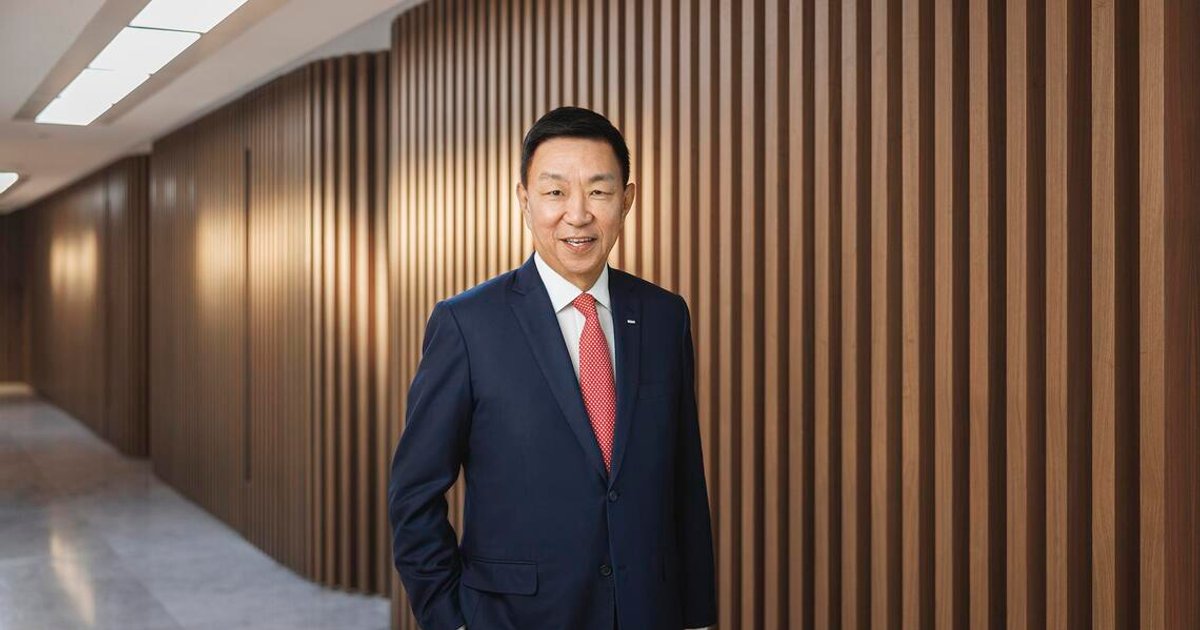
SINGAPORE – After years of transforming Keppel from a rig builder into an asset manager with interests spanning power plants and data centres, chief executive Loh Chin Hua sees artificial intelligence (AI) and energy needs driving its next phase of growth.
In an exclusive interview with The Straits Times, Loh noted that Keppel is already associated with AI because many of the solutions it provides enable the technology, such as data centres, low-carbon energy and digital networks.
But these solutions also serve the broader economy. Beyond AI, energy and connectivity remain basic necessities that society needs, he said.
“Our businesses provide essential services and critical infrastructure across areas such as power, cooling, sustainability, waste management, as well as social and urban development,” Loh said in Keppel’s third quarter business update, announced on Oct 29.
“This breadth gives resilience to our business while allowing us to capture the long-term opportunities presented by the energy transition, urbanisation and digitalisation.”
The company’s plans also involve both providing the infrastructure that supports AI and using the technology across its own business.
Within its own operations, Keppel will work towards being an “AI-native” company, making AI part of how it operates across business functions, Loh told ST.
A firm believer that AI “will fundamentally change the way we work”, Loh has set a goal for Keppel to become AI-native by 2040.
“I think the muscles that we have built for ourselves during the transformation over the last 10 years will serve us well as we transform into an AI-native organisation,” he said.
Despite shifting global sentiment and volatility around AI, Loh said Keppel remains focused on its strategy, supported by long-term leases and power-constrained markets.
“We are agnostic as to which language model will win, as we are providing the basic backbone infrastructure,” he said.
While questions have emerged about the amount being invested in AI, Loh believes data centres will remain necessary.
“I think there are now some questions about the amount invested, but at the end of the day, for us, being very focused on power-constrained markets, we still believe we remain very resilient,” he said.
From rig builder to asset manager
Loh took the reins of Keppel 12 years ago, when it was still an industrial conglomerate with businesses like the building and selling of oil and gas rigs, engineering, procurement and construction (EPC) projects and property development.
It also had a range of listed entities that Loh said attracted a “conglomerate discount”, where the stock market values a diversified group at less than the combined value of its individual businesses.
He explained that in the last five to 10 years, Keppel privatised some of its formerly-listed subsidiaries, flattened the company structure and changed its business model.
“We still take full advantage of our strong engineering and project management skills, but instead of doing EPC or contracts or selling homes, which are more non-recurring, we have now pivoted to becoming a global asset manager and operator,” he said.
“Instead of building projects for others, we are now developing, owning and operating these specialised assets.”
Keppel has also reduced the amount of its own money tied up in assets and returned capital to shareholders, while managing more money on behalf of investors. It now uses money from the funds it manages to invest in costly assets, rather than relying on its own resources, Loh said.
“We co-invest with limited partners, we build data centres and power plants, and we operate them. So as a global asset manager and operator, we actually have two streams of income – asset management fees and operating income from these assets,” he said.
“This model has worked well for us. I think we’ve been re-rated by the market, and you can understand why.”
Keppel added $19.5 billion in new funds under management in 2026, while fees earned from managing assets rose 18% year on year in the first nine months of 2026 to $354 million, it announced in a business update released on Oct 29.
Divesting non-core assets
In 2025, Keppel was also divided into two – the New Keppel which is about the new business model, and non-core assets which it will divest over time.
“We monetise the non-core assets, we pay down debt, we fund the growth in New Keppel, and at the same time we pay 10% to 15% of the monetisation received from the non-core portfolio as special dividends to our shareholders,” Loh said.
New Keppel’s net profit grew nearly 15% year on year in the third quarter of 2026, according to its Oct 29 update. Including the non-core portfolio for divestment and discontinued operations, overall net profit was 20% higher year on year.
Keppel has made good progress in monetising its non-core portfolio, with assets worth around $3.7 billion targeted for divestments so far this year, according to its update. This includes the proposed divestment of a 51% stake in Keppel South Central to Keppel real estate investment trust (Reit).
In 2026 so far, Keppel has realised approximately $940 million from the monetisation of non-core assets, with another approximately $600 million expected when it completes the divestments of six legacy rigs to Keppel Offshore Fund. This is targeted to be done by end-2026.
Keppel, which holds an 84% stake in telco M1, last month also confirmed that it has advanced discussions with Starhub regarding a potential M1 transaction. This followed the collapse of an earlier plan to divest its stake to Simba Telecom for $1.43 billion.
There is more growth to come, Loh said.
“I think there’s no reason why an asset management company like Keppel cannot eventually compete at the same level as our global peers, and so there is still a lot of growth ahead of us, and I see this as a kind of a inflection point, getting ready for the next push up.”