


Chinese automakers outsold Japanese rivals in Europe for the first time over a full quarter, underscoring how quickly brands like BYD and Chery Automobile are gaining ground in the region.
Registrations of Chinese-branded cars roughly doubled from a year earlier in September to make up 12.7% of total sales across the region, led by hybrids, according to market researcher Dataforce. That has put them ahead of Japanese manufacturers including Toyota Motor at 11.9%.
While European manufacturers like Volkswagen or Renault still dominate the region, the speed of China’s surge has been a surprise.
Five years ago, Chinese brands accounted for barely 1% of European sales. Japan’s automakers, by contrast, have spent decades building their position in Europe.
Toyota has sold cars in the region since 1963 and now operates factories across the continent, while Nissan Motor has produced vehicles at its Sunderland plant in the UK since 1986. China’s offering is especially successful in Britain, where Chery’s Jaecoo 7 SUV was the country’s best-selling model in March and September.
The shift is a double whammy for Europe’s struggling manufacturers.
China’s drivers are deserting VW and BMW in their biggest market in favour of domestic rivals, who are churning out new models faster and at lower cost. And shrinking demand in China is forcing BYD and others to look for new markets.
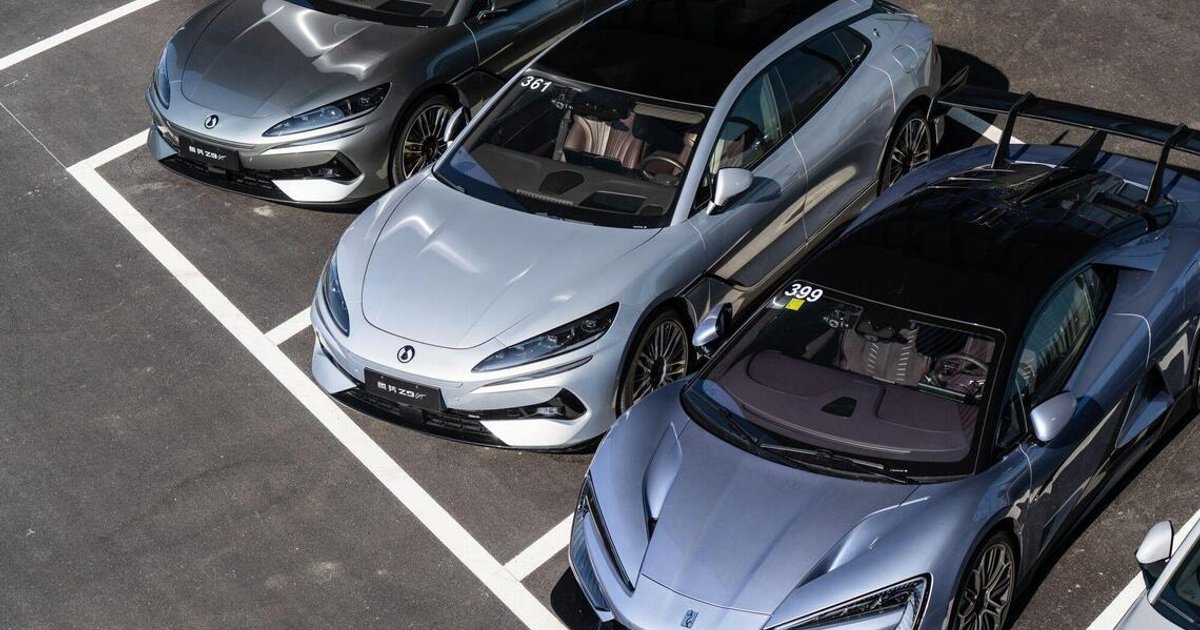
Earlier in October, Chery, BYD and Geely’s Zeekr showed off a range of new models at the Paris car show, offering well-priced cars like the BYD Dolphin G DM-i, a compact plug-in hybrid specifically developed for Europe. Bringing their EV line-ups to Europe also positions them to benefit from a jump in demand as fuel prices hit record highs.
The European Union is trying to temper an expansion that is partly fuelled by state-backed subsidies. After adding extra tariffs on China-made battery-electric vehicles, the bloc in October agreed in principle to curb fast-growing imports of hybrid cars from China.
Amid speculation of future measures, shipments of hybrids have accelerated.
Separately, the EU is considering new rules that would favour locally made cars when granting subsidies and other incentives. The proposals include linking some company-car tax benefits to European production, a powerful tool in many countries like Germany where corporate and fleet buyers dominate.
Carmakers like Mercedes-Benz Group have welcomed the political backing, but warned of distortions to global supply chains, driving costs up.
Countries including Britain, Turkey and Morocco ship vehicles and parts to the EU that could struggle because of Made in Europe rules.
Chinese manufacturers have been preparing to produce locally already.
Chery is preparing production in Barcelona and BYD is nearing the completion of a manufacturing site in Hungary.
Zhejiang Leapmotor Technology has started making its B10 SUV at Stellantis NV’s plant in Zaragoza, Spain, as part of the companies’ joint venture. BLOOMBERG