


SINGAPORE – Former naval officer Ian Chan enjoyed his time at sea, although he sometimes struggled with seasickness.
“I eventually decided not to continue along that path, which was a difficult decision because serving the nation was something I genuinely wanted to do,” he said.
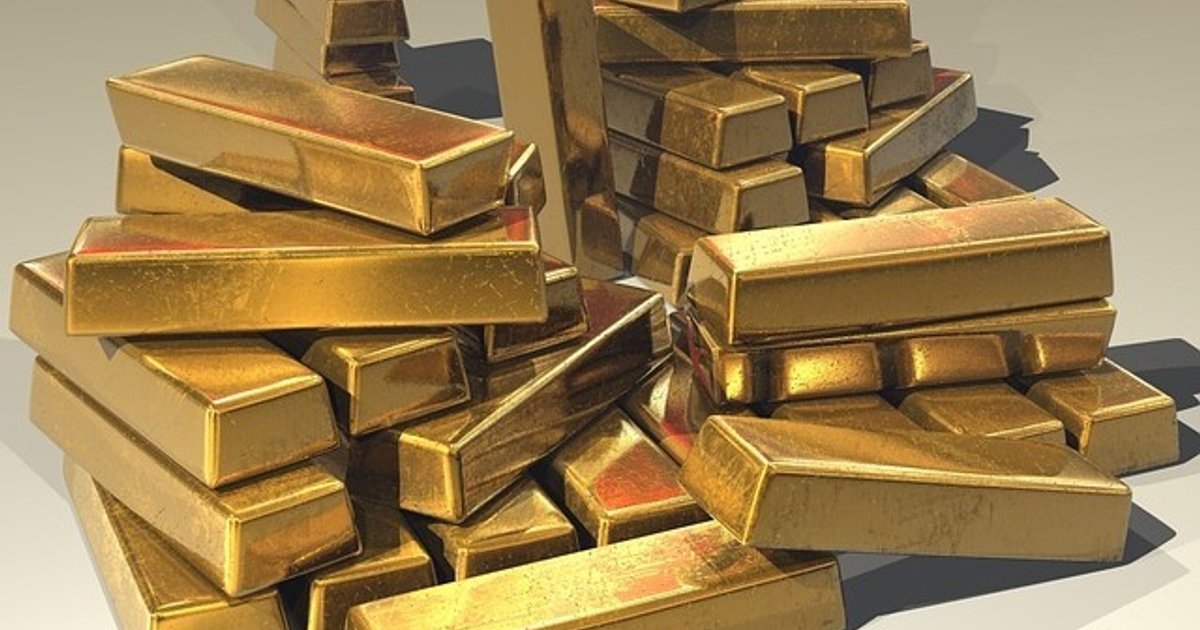
The 25-year-old subsequently invested a significant portion of his personal savings and profits from previous investments to start precious metals trading company Big Bullion in December 2025, along with financial support from his family.
The company has generated about $1.5 million in revenue thus far, comprising $1.2 million from investment-grade gold and silver bullion and the remainder from buying back precious metals jewellery for refining.
Big Bullion is expected to become profitable by December 2026.
However, getting the business off the ground came with its own challenges, from establishing relationships with reliable suppliers, to sourcing gold and silver inventory, to developing hedging strategies to manage fluctuations in bullion prices.
“The experience has taught me the importance of managing business finances carefully, particularly cash flow and working capital,” said Chan.
The final-year student at NUS Business School added that he hopes to make investing in precious metals more accessible to younger Singaporeans through social media and educational content that explains how gold and silver pricing, premiums and buyback values work.
“Ultimately, our goal is not just to sell precious metals, but also to help customers better understand what they are buying, how pricing works and how physical gold and silver may fit into their broader financial plans,” he said.
Chan is engaged to his 25-year-old fiancee, who also helps him with his business.
Q: Do you invest? If so, what do you invest in and why?
Apart from precious metals, I also invest in a broad range of stocks, including exposure to the US market through indexes such as the S&P 500.
Equities give me exposure to businesses around the world and the potential for long-term capital growth.
I also believe liquidity is important. Cash gives me the flexibility to meet short-term needs, manage unexpected expenses and take advantage of opportunities without having to sell investments at an unfavourable time.
Q: What is your biggest or most valuable asset right now?
My business is one of my most valuable assets, alongside my gold and silver holdings. Building a business has also taught me that an asset’s value is not always immediately reflected in a bank balance. It can lie in the relationships, systems, knowledge and opportunities built over time.
Q: What is your approach to growing your money?
I believe younger investors with longer time horizons can generally consider taking more investment risk, provided they understand what they are investing in and can withstand potential losses.
At the same time, taking risk does not mean concentrating everything in one asset. Diversification is important because different assets behave differently under different market conditions.
Above all, I believe consistency matters. It is tempting to keep searching for the next big opportunity, but building wealth often comes down to investing regularly, controlling costs and allowing time for compounding to work.
Q: What was your first exposure to investing, and what was your first investment?
My first investment was at the end of national service, when I put about $200 into the S&P 500. It was a small amount, but it gave me a starting point.
Q: What has been your biggest financial mistake?
One area I could have managed better was my use of Singapore’s tax-advantaged savings schemes, particularly the Central Provident Fund and Supplementary Retirement Scheme (SRS), where additional contributions may have been appropriate for my circumstances.
The right CPF or SRS contribution depends on factors such as eligibility, tax bracket, liquidity needs and long-term plans, so it is not simply a matter of contributing as much as possible.
Q: What has been your best financial decision?
One of my best financial decisions has been consistently spending below my means and investing at least 20% of my income, even when it was tempting to spend more or pause investing.
I have dollar-cost averaged into investments over approximately seven years, including diversified US equities and precious metals. This has helped me develop discipline rather than trying to predict the perfect time to enter the market.
I have also been grateful that I learnt the importance of insurance planning early. Arranging appropriate coverage while younger helped me secure protection before potentially facing higher premiums or changes in insurability later on.
Q: Moneywise, what were your growing-up years like? How did they shape your approach to personal finance and investing?
My family emphasised delayed gratification: saving for a rainy day and understanding different asset classes, including equities, property, bonds, gold and CPF.
Growing up around entrepreneurs and business owners also influenced me. Seeing my parents and relatives run businesses showed me both the opportunities and the risks involved.
It also taught me that entrepreneurship requires accepting uncertainty and being prepared to take responsibility for your decisions.
Q: What was your childhood dream?
I wanted to be a rocket scientist. I was fascinated by space and the stars, and I enjoyed building things and learning about engineering.
Q: Did you take on any part-time jobs?
For the past four to five years, I have been juggling full-time university studies with work as a financial planner.
It was challenging to balance both commitments while maintaining relationships and making time for other responsibilities. I had to become more disciplined about planning my schedule and prioritising what mattered. I am also grateful to friends who helped me along the way with my studies.
Q: As a child, what did you save up for? What were your saving habits like and how have they changed?
I was fortunate to have home-cooked meals and support from my family, so I did not have many essential expenses to worry about as a child.
I generally saved the extra pocket money I received from my uncles and aunties, including money received during Chinese New Year, for future expenses.
After NS, one of the biggest things I spent my savings on was preparing for an Ironman triathlon. I had signed up during my NS years, and the training required substantial spending on swimming, cycling and running equipment.
Although it was a significant expense, it was meaningful to me. Committing to the race taught me about discipline and resilience – qualities that have carried over into investing and entrepreneurship.
Q: What was your most memorable encounter with money? When did you first realise that money was important?
One defining moment was paying the down payment for my Build-To-Order flat with my fiancee. I realised that nearly all of the down payment was funded by the gains from my investments.
That made the practical value of investing very real to me.
It was no longer just about watching numbers grow on a screen; it was about being able to provide for my future family and work towards major life goals with greater financial flexibility.
Q: What would you tell your younger self?
I would tell my younger self not to worry too much about the future. What we can control right now in the moment is working hard, experiencing and taking away as many lessons as possible, and to learn as much as we can about everything and stay curious at all times.
Q: Where is home for you?
I live in Pasir Ris.
Q: What do you drive?
I drive a Mercedes GLA 180.
Q: What was your most frivolous or guilty-pleasure purchase?
I bought a Rolex Submariner in the first or second year of my career, which turned out not to be the wisest decision because I realised I have a small wrist and the watch face is too large for it.
I ended up changing it for a smaller watch later.
Q: What does work-life balance mean to you?
I do not think balance necessarily means dividing every day equally between work and personal life. There will be periods when work requires more attention.
What matters is being deliberate about those trade-offs and ensuring that the people and priorities outside work are not continually pushed aside.
Q: What would your perfect day look like?
I would say that my perfect day would look like hitting some exercise, spending time with my fiancee, and getting some work done in the middle of the day. Plus, perhaps learning a new skill.
Money Matters
Q: What would you do if you suddenly had a windfall of millions?
I would probably go on a nice holiday.
Q: If you suddenly had just $100 to your name, what would you do with it?
I would get a good cup of coffee and get to work.