

Follow our live coverage here.
SINGAPORE – Indonesian authorities have started a preliminary inquiry into suspected land-clearing fires in a concession area operated by a subsidiary of Singapore-listed palm oil producer Kencana Agri.
The company disclosed on Oct 16 that investigators had inspected the affected area in North Kalimantan in September and that the inquiry was ongoing.
Kencana acknowledged that fires had affected approximately 62 ha within concession areas operated by its subsidiaries in North and East Kalimantan, although it maintained that the fires had spread from adjacent land rather than originating from its operations.
The disclosures came in response to queries from Singapore Exchange Regulation (SGX RegCo) over recent forest and peatland fires in Indonesia and the resulting transboundary haze affecting Singapore, Malaysia and Indonesia.
Kencana is among several Singapore-listed plantation and agribusiness companies that have faced scrutiny over fires in Indonesia in recent days, with some acknowledging fires within their concessions but disputing that they had started them.
The company, which has plantations and mills in Sumatra, Kalimantan and Sulawesi, said the affected area was small compared with its total planted area of around 67,862 ha.
Its firefighting teams had worked with local authorities and communities to contain the fire, using drones and fire observation towers to identify active fire fronts and to direct ground crews.
“The incidents are under control, with ongoing monitoring and precautionary response measures being maintained,” it said.
Agribusiness giant Wilmar International also acknowledged on Oct 16 that fires had been detected in small areas of some of its Indonesian concessions, but said they had originated outside its concession boundaries or on land farmed by local communities within them.
The group said its field verification indicated that the fires had subsequently spread into areas under its management.
Wilmar said its firefighting teams, working with local authorities and communities, had extinguished all such fires quickly.
It also said it had not undertaken any new oil palm planting at its company-owned plantations in Indonesia since 2013.
Its field activities since then have been limited to replanting existing cultivated areas, which it said was carried out mechanically without the use of fire.
Wilmar added that it had maintained a strict no-burning policy since 2006, covering its subsidiaries and third-party suppliers. Suppliers that breached the policy could have their commercial relationships terminated.
Meanwhile, Golden Agri-Resources (GAR), said on Oct 16 that the recent forest and land fires had not materially affected its operations.
GAR, which operates oil palm plantations across Sumatra, Kalimantan and Papua, said it had received enquiries from various stakeholders about the fires and whether its concessions or activities were connected to the incidents.
However, it said that, to the best of its knowledge, there had been no allegations, claims or findings that its operations had contributed to the recent fires and haze.
The company also said neither it nor its subsidiaries had received any formal notice of investigation, enforcement action or allegation from regulatory or government authorities in connection with the fires.
Its Indonesian-listed subsidiary, PT Sinar Mas Agro Resources and Technology (SMART), had separately responded to queries from the Indonesia Stock Exchange on Oct 15.
SMART said the fires had not materially affected its operations, 2026 production targets, revenue, profit or asset values.
[embedded content]
Bumitama Agri, which requested a trading halt on Oct 16, said fires had damaged some areas within or adjoining its Indonesian concessions, particularly community-managed and unplanted land.
Its preliminary observations suggested that a number of fires had started outside areas directly managed by the group before spreading across surrounding land.
Bumitama also cited an official record issued by Indonesian authorities which showed that the fire at one of its concessions had originated outside the boundaries before spreading into it, rather than starting from its operations.
The affected area comprised conservation land rather than productive plantation land, and the lack of established access routes had hampered firefighting efforts.
Bumitama has requested that trading in its shares resume at 8.30am on Oct 19.
First Resources, meanwhile, said on Oct 15 that there had been instances of fires originating outside its concession boundaries in West Kalimantan before spreading into areas under its management.
The company acknowledged that some fires were too extensive and spread too quickly for its firefighting teams to fully contain.
It said it had verified that the hotspots detected near its concessions were outside its operating boundaries.
Both First Resources and Bumitama were named in a recent investigation by environmental group Greenpeace.
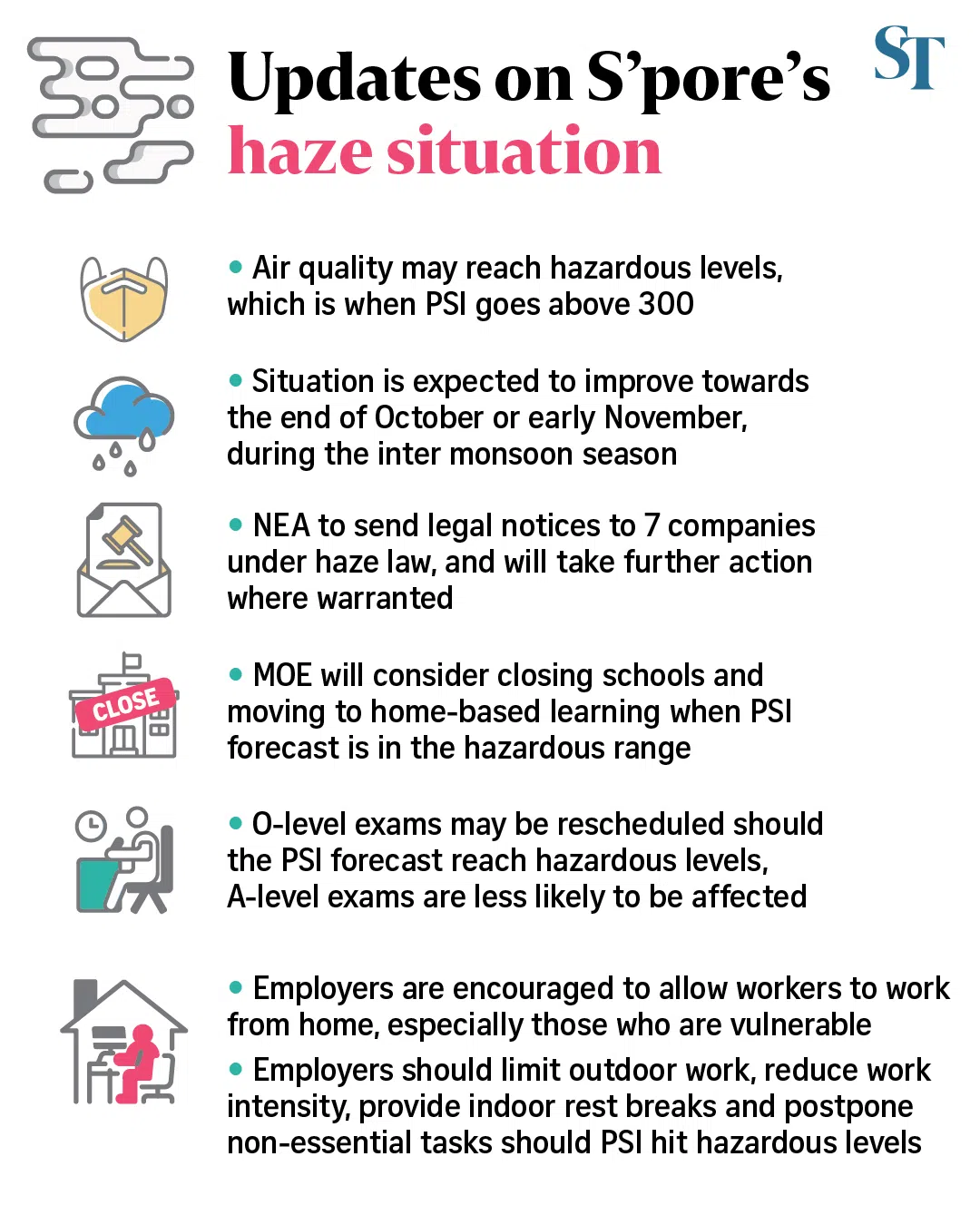
Separately, on Oct 16, Singapore’s National Environment Agency said it issued preventive measure notices to seven Indonesian companies identified through its investigations. These companies are predominantly in the timber and pulpwood business, rather than oil palm cultivation.