


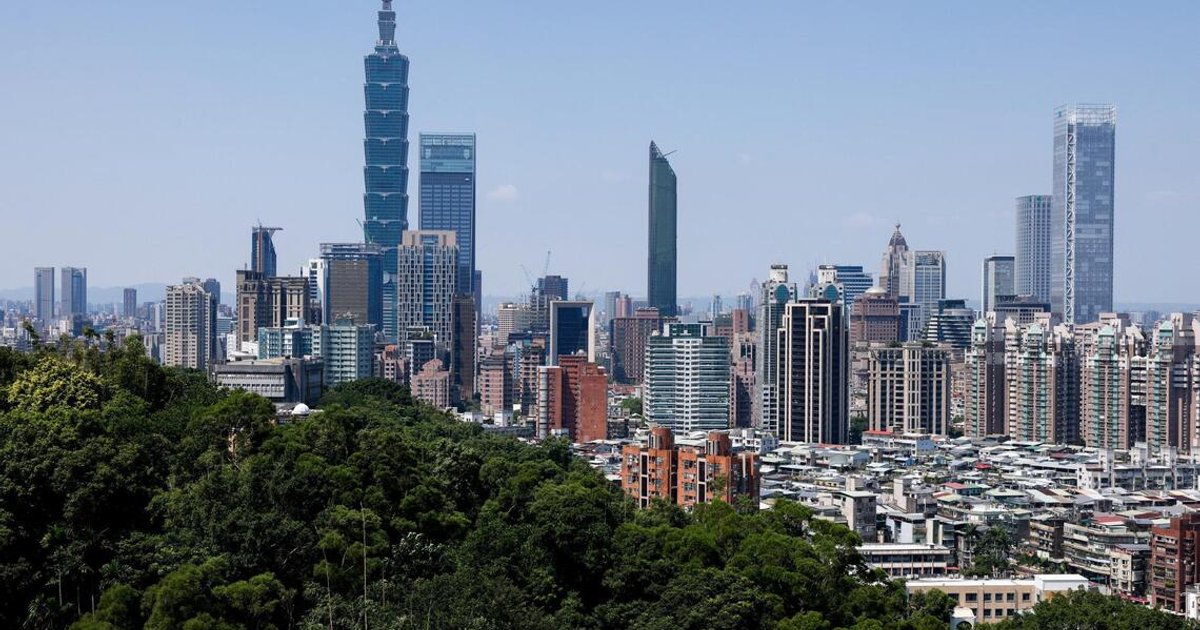
TAIPEI – The world’s biggest equity rally is creating an unusual bout of FOMO (fear of missing out) among Taiwan’s professional stock pickers.
Barred by local regulations from owning individual stocks in their personal accounts, fund managers and equity analysts are ditching prestigious finance jobs so they can bet their own money on shares they have spent years analysing.
Fewer than half of the 20 largest local equity mutual funds have retained the same portfolio manager for more than three years, according to fund-data website MoneyDJ.
The temptation is clear: Taiwan’s benchmark stock index soared 62% in 2026 to become the world’s best-performing major equity gauge, adding about US$1.8 trillion (S$2.31 trillion) in market capitalisation.
Some stocks buoyed by the AI trade such as memory and circuit makers Nanya Technology and Macronix International have more than doubled in 2026.
While personal-trading restrictions are common across global finance, they bite harder for Taiwan’s money managers.
Limits on trading on personal accounts are also more onerous in Taiwan, and stringent checks at work for fund managers have overwhelmed the benefits of those jobs for some.
As seasoned professionals leave traditional money managers, they are often ending up at less-regulated trading firms that allow more freedom for employees to trade their personal accounts.
That is coinciding with the allure of faster career progression where junior staffers spend less time early on doing more mundane work and, crucially, a chance to earn large bonuses in a profit-sharing model.
“The trend is impossible to ignore,” said Huang Wen-ching, chief strategy officer at Taishin Securities Investment Advisory.
“Private investment firms are springing up everywhere, and the pools of capital they command are getting bigger and bigger.”
Institutional money managers, for years the destination of choice for the island’s top finance talent, face an increasingly difficult hunt for personnel, according to people familiar with the recruitment process.
That is forcing them to accept less skilled hires due to the dwindling pool of potential recruits, they said, asking not to be identified discussing private information.
Mutual fund managers in Taiwan typically start out earning about half what their Hong Kong counterparts make, and the gap persists as pay rises with experience in subsequent years, according to industry veterans and headhunters who spoke with Bloomberg and data from recruitment firm Robert Walters.
Taiwan’s portfolio managers receive the equivalent of around US$124,354 to US$310,884 annually, depending on performance and seniority, compared with base salaries in the range of US$229,372 to US$637,144 in Hong Kong.
The concerns over missing out are becoming more acute due to the breadth of Taiwan’s stock-market surge.
Around 10% of Taiex shares have more than doubled in 2026, compared to just 2% of South Korea’s main index and around 5% of Japan’s Nikkei 225 index. Even as global stocks sold off recently, the island’s equity benchmark outperformed all major peers, extending the resilience it has shown throughout the year.
For Ken Tsai, one winning bet still stings.
In 2024, while at one of Taiwan’s biggest asset managers, the 40-year-old fund manager made a Taiwanese supplier of components that transfer data between AI servers his fund’s biggest holding. The stock surged more than fivefold the following year – then another sixfold in 2026.
Bound by rules, Tsai did not own a single share in his personal accounts.
Tired of seeing his calls enrich the fund – but not himself – he departed in July for a Taipei-based private investment firm that provides a more attractive revenue sharing model and grants bigger room for personal investments. Tsai declined to name the firm.
“It left me with a strong sense of relative deprivation.” he said, “People who were free to buy the stock ended up making more money than I did.”
Cases like Tsai’s are creating fresh challenges for asset managers trying to retain senior talent and recruit younger ones.
About half of the roughly 10 employees who left a large Taiwanese asset manager over the past year joined private investment shops, while applications for junior roles at some international firms have halved in 2026 as young candidates gravitate towards such firms, according to people familiar with the matter, who asked not to be identified discussing private information.
Some asset managers have lowered the bar to fill vacant spots, some of the people said.
One foreign firm took more than six months to fill a Taiwan stocks role and eventually settled for a more junior candidate, while another peer is still trying to fill out its local equities line-up more than a year after adding new positions as applicants dwindle, they said.
Take Leo Tu, 25, who graduated with a finance major at Taiwan’s top university and picked a private investment shop as his first full-time job.
The company offered what traditional firms could not: Broader research responsibilities, a chance to join a profit-sharing model and no restrictions on investing his own money. He’s already researching companies, making site visits and pitching trades.
“I chose investing as a career because I want to make money,” Tu said.
“Being able to invest your own money makes an enormous difference. At a traditional asset manager, your income is basically limited to your compensation. Here, you could say the upside is unlimited.”
Like Hong Kong and the US, Taiwan requires investment professionals at licenced asset managers to disclose their own transactions and those of close relatives, to guard against insider trading and the use of privileged information through personal or nominee accounts.
While there is no outright law banning personal investments in Taiwan, the asset-management sector’s code of conduct imposes strict personal-trading rules on fund managers and investment department heads.
They are barred from trading a locally-listed stock or linked derivatives within seven business days before or after their firm’s funds or discretionary accounts trade it, effectively making personal stock-picking impossible.
The rules do not apply to offshore hedge funds or the private investment shops in Taiwan.
The latter are registered as private companies with the Ministry of Economic Affairs but do not need asset-management licences from the Financial Supervisory Commission (FSC) because they do not raise money from the public.
Morning routine
The FSC will continue to improve and refine measures aimed at developing talent for the asset-management industry, it said on Oct 15 in response to questions from Bloomberg.
It added that asset managers in Taiwan had 4,729 registered employees as of September, up from 4,581 at the end of 2025, citing data from an industry association.
Traditional asset managers in Taiwan also impose a painstaking daily security ritual designed to eliminate even the slightest risk of a breach.
Each morning, when investment staff arrive at work, they must lock away mobile phones, laptops and smart watches in a room lined with electronic lockers.
They cannot retrieve the belongings until the local stock market closes at 1.30pm local time.
Some firms require employees to pass through airport-style security checkpoints dubbed “customs gates”, where staff face bag searches. Others install cameras near fund managers’ computers to monitor their activities.
To help retain talent, Allianz Global Investors, the biggest foreign asset manager on the island with over NT$2 trillion (S$79.1 billion) in assets under management, is tapping its global resources, giving analysts cross-market exposure covering Japanese and US equities and opportunities to work in different offices around the world.
The island’s asset-management industry group is lobbying regulators to ease restrictions on cellphone use and personal trading.
The FSC said on Oct 15 it has been gathering information and plans to review the rules, while seeking to balance market development, prevent conflicts of interest and protect investors.
“For strong-performing fund managers, there’s a sense of, ‘Why should I put up with all this?’” said Li Fang-kuo, chairman at President Capital Management. “They’d rather go out and start their own shops.”
Regulators believe strict rules are needed to prevent misconduct, he added. “There’s really no easy solution to this problem for now.”
The talent drain is hitting traditional asset managers from both ends. Portfolio managers in their 30s and 40s – the backbone of their investment teams – are defecting to private investment shops and offshore hedge funds, according to people familiar with the matter.
Some Wall Street firms are also losing Taiwan equity analysts, shrinking the pool of sell-side recruits asset managers have long relied on.
“What’s new is where they’re going,” said Taishin’s Huang.
“In the past, sell-side talent typically aspired to move to traditional buy-side institutions such as insurers or asset managers. Now, many are joining private investment firms or setting up their own shops with friends.”
Hedge fund
The gravitation towards private investment firms is already sending ripples through the market as overseas hedge funds boost their Taiwan exposure to tap the artificial intelligence trade.
Such participants add liquidity to the market and deepen the domestic investor base, but as these firms scale, their collective activity can amplify short-term momentum when investors crowd around the same themes, said Charlene Lin, managing director at Lighthouse Canton.
Some of these firms generate more than NT$10 billion in monthly trading volume, rivalling the island’s mid-sized asset managers, according to brokers familiar with the matter.
They are also drawing increased attention from foreign hedge funds, which are making more frequent trips to Taiwan and seeking for more information about these domestic players from brokers.
“Proximity to companies and supply chains gives these managers an information advantage and lets them move faster than traditional asset managers,” said Lin.
Her firm, which is based in Singapore, has been building its Taiwan capabilities through local partners rather than covering the market from offshore, as “execution speed and local knowledge are increasingly important”.
More than anything, the trend reflects a basic urge to maximise gains in a bull market – one that is reshaping career choices across Taiwan’s financial industry and complicating the government’s push to expand its asset-management sector.
Xun quit his stock analyst job at a top Taiwanese asset manager in March.
The 30-year-old based in Taipei, who asked to be identified only by his first name to protect his privacy, has grown his personal Taiwan stock portfolio more than tenfold since.
“I’ve made far more in the few months since quitting than I ever earned as a stock analyst,” he said.
Fed up with the strict rules at traditional asset managers, he left to start a private investment firm with friends. “I should’ve left earlier.” BLOOMBERG