


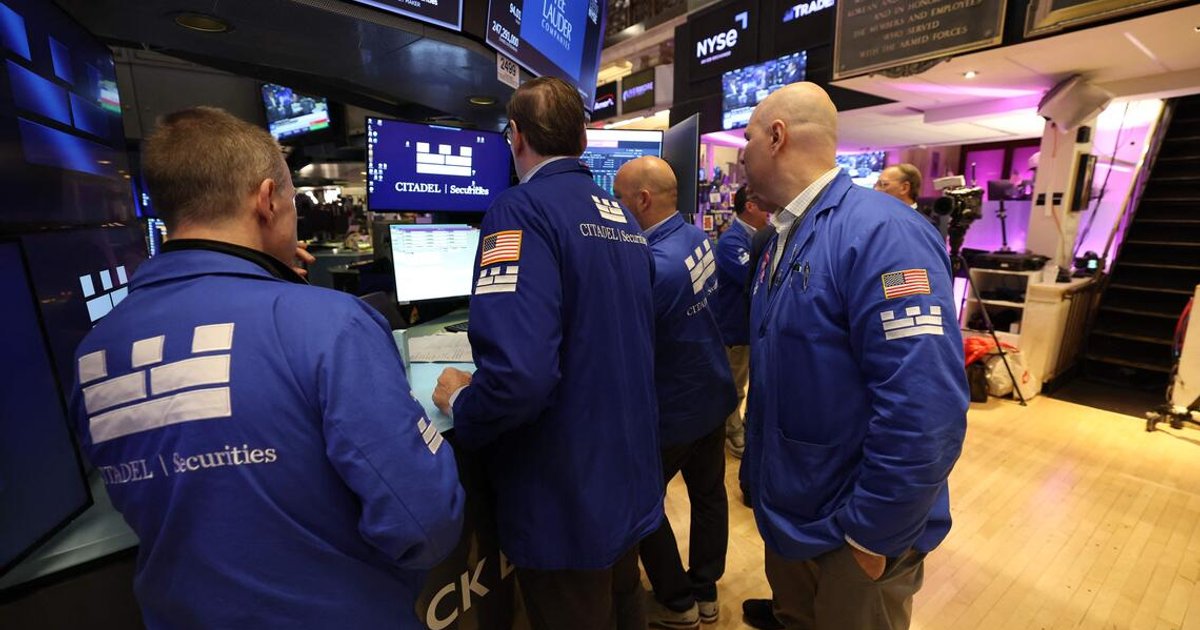
The technology-heavy Nasdaq composite closed lower on Oct 12 as oil prices jumped nearly US$2 (S$2.6) a barrel after attacks on a Saudi airport, and investors waited for banks to kick off the third-quarter earnings season and for economic data this week.
The S&P 500 ended the session barely lower while the Dow advanced.
Oil futures rallied after deadly strikes on Riyadh’s international airport over the weekend. The attacks overshadowed the prospect of increased supplies after US President Donald Trump hailed fresh Russian diesel exports and talked about a Russia-Ukraine ceasefire on energy targets.
In coming days, US investors will focus on corporate earnings, with major US banks including Goldman Sachs, Citigroup and JPMorgan Chase reporting early on Oct 13.
Analysts were expecting S&P 500 earnings to surge 30.6% in the third quarter, according to LSEG IBES data.
Also due out this week are September readings for US consumer and producer inflation as well as retail sales data. While the US Treasury market was closed on Oct 12 for Columbus Day, stock investors have been wary of bond yields’ recent advance to 24-year highs as elevated energy prices have stoked inflation concerns.
“Looking out further in the week, we have some big economic reports,” said Tim Ghriskey, senior portfolio strategist at Ingalls & Snyder in New York. He said investors were also cautious due to a lack of direction from bonds.
“We’re also waiting on earnings and that’s significant. The four large banks reporting on Tuesday can have a big impact,” he said.
The Dow Jones Industrial Average rose 195.60 points, or 0.38%, to 51,850.55, the S&P 500 lost 4.30 points, or 0.06%, to 7,807.24 and the Nasdaq Composite lost 120.27 points, or 0.44%, to 27,245.90.
Trading volume was relatively light with 12.67 billion shares changing hands on US exchanges compared with the 20-day moving average of 17.62 billion.
“There’s a lot to be wary of,” said Robert Pavlik, senior portfolio manager at Dakota Wealth in Fairfield, Connecticut, pointing to upcoming data and earnings along with rising oil prices.
“You’re walking down a train line and you don’t know, because it’s dark, if a train is coming and so, you know, you’re just being real careful,” he said.
With oil prices rising, energy outperformed among the S&P 500’s 11 major industry sectors with a 1.5% advance. The defensive consumer staples sector rose more than 1% along with the S&P 500 communication services index, which was boosted by a more than 3% gain in heavyweight Meta.
Technology, down 0.9%, and consumer discretionary, off 0.7%, were the biggest sector laggards. Technology’s weakness was most pronounced among chip stocks with the Philadelphia semiconductor index finishing down 2.7% after hitting a three-week low.
In consumer discretionary, Chipotle Mexican Grill shares fell 3.8% after Starbucks said it was not buying the burrito chain. Starbucks shares closed up 1.7%.
Microsoft finished up 1.1% with its market capitalisation climbing above US$4 trillion for the first time in a year after it announced plans for major deployment of its own AI chips.
Salesforce shares added 2% after BofA Global Research upgraded the stock to “buy” from “underperform.” And eBay rose 2% after Morgan Stanley added the stock to its top-pick list.
Meanwhile, Cleveland Federal Reserve President Beth Hammack said the US central bank should move “relatively quickly” to a more restrictive monetary policy stance to fight inflation, which she feels has become more broad-based and is starting to influence firms’ price-setting plans.
Traders were pricing in an almost 22% chance the US Federal Reserve will hike interest rates this month, according to CME’s FedWatch tool, up from 17.7% on Oct 9.
Declining issues outnumbered advancers by a 1.09-to-1 ratio on the NYSE where there were 149 new highs and 272 new lows. On the Nasdaq, 1,888 stocks rose and 3,008 fell as declining issues outnumbered advancers by a 1.59-to-1 ratio.
The S&P 500 posted 10 new 52-week highs and five new lows while the Nasdaq Composite recorded 51 new highs and 318 new lows. REUTERS