


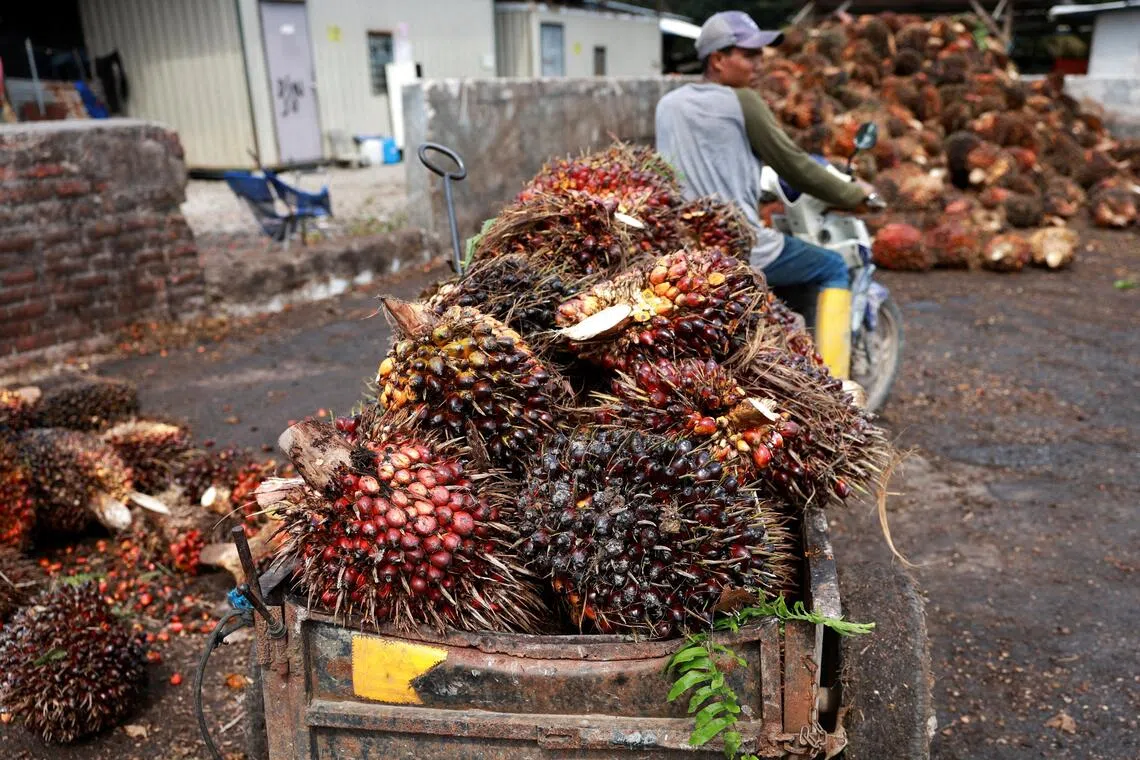
Palm oil inventories in Malaysia likely swelled to a record in September, buffering supplies of the world’s most-used vegetable oil as an intensifying El Nino threatens to disrupt production in 2027
The burgeoning supplies could deepen a recent slump in prices, as traders also await a ramp-up in exports to major markets like India that would help draw down the massive stockpiles.
Though production typically peaks in September and October, higher-than-expected output growth has elevated inventories, meaning prices will likely stay under pressure at 4,300 ringgit (S$1,346) to 4,500 ringgit a tonne, said Jacquelyn Yow, regional head of plantation research at CGS International.
“It’s a shock to the market that stockpiles would grow so suddenly,” she said.
Benchmark futures in Kuala Lumpur slid from their September peak of 5,049 ringgit and were trading near 4,535 ringgit on Oct 5.
The Malaysian Palm Oil Board is set to release monthly supply and demand data on Oct 12.
Stockpiles likely jumped about 22% to 3.45 million tonnes in September from August, according to the median of ten estimates in a Bloomberg survey of plantation executives, traders and analysts. That would surpass the previous record of 3.22 million tonnes in Dec 2018, and mark a nearly 50% increase since inventories began climbing in April. Output surged 16% to 2.11 million tonnes, the highest ever for the month of September.
Meanwhile, exports fell around 12% to a four-month low of 1.13 million tonnes, the survey showed.
The Southeast Asian nation has lost export share in the recent months because of a wide premium over Indonesian supplies, while near-record edible oil stockpiles in key importing markets have also dampened demand, according to Aditya Jeripotula, head of South Asia at agricultural commodities research firm DNext Intelligence SA.
Palm stockpiles will likely peak in October before easing toward the year’s end as production slows and festive demand boosts exports, he said. India, for instance, has stepped up purchases ahead of Diwali and following cuts to import duties, buying more than 200,000 tonnes in recent days.
But reserves “will very likely remain high near record levels through the first half of 2027,” Jeripotula added.
Palm production in Malaysia had initially been expected to be curbed by volatile weather, including floods in key-growing regions of Borneo earlier in 2026, followed by below-normal rainfall and dryness amid the onset of the El Niño weather phenomenon.
The outlook for the 2025-26 year has improved, however, thanks to better plantation management and improving labour availability, the US Department of Agriculture said in a Oct 1 report, when it raised its full-year production forecast to 20.2 million tonnes.
“September’s production was supported by favourable weather and we may even see full-year production surpassing 2025’s record, although that would depend on weather conditions in the October-December months,” Jeripotula said. “El Nino is the key here.”
Still, the record reserves offer some slack to the global palm market, which is expected to tighten going forward due to a delayed impact on yields from the El Nino and as Indonesia’s expanding biofuel mandate absorbs more supplies. BLOOMBERG

