


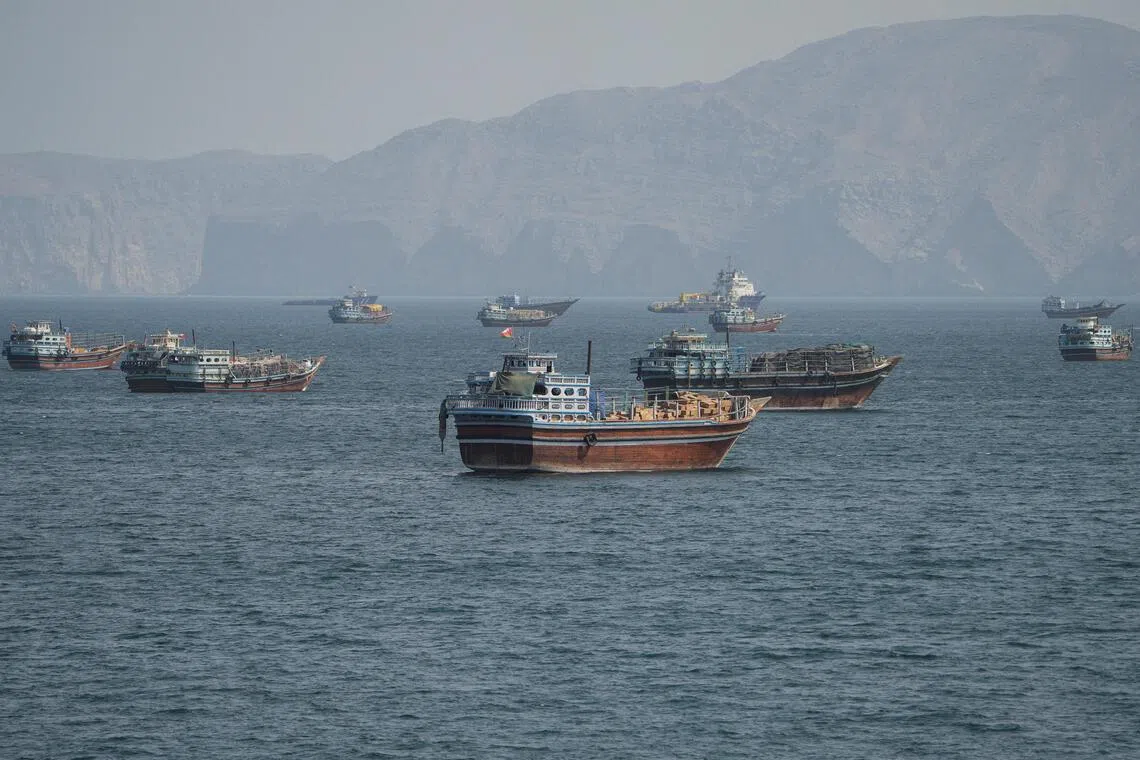
SINGAPORE – Middle East oil exports, excluding Iran, surpassed their pre-war levels last week, despite attacks on ships in the Strait of Hormuz, according to data from the maritime tracking firm Kpler.
For the first time since the US and Israel launched their offensive against Iran at the end of February, the weekly average of shipments rose for several days above the pre-conflict average of 18 million barrels per day.
Crude oil exports reached pre-war levels in September, with at least 16.5 million barrels leaving the region, excluding Iran, Kpler said on Sept 30.
“Forty per cent now bypass Hormuz, and most crude crossing the strait changes tankers offshore,” Kpler said, adding that most of the oil flowed through Saudi and United Arab Emirates pipelines.
These figures include flows via the Red Sea, a route increasingly used to bypass the blockade Iran is attempting to impose on Hormuz – where around a fifth of the world’s petroleum supplies crossed before the conflict.
Iran still claims control over the strait, and ships without its authorisation risk coming under attack, but more and more are making it out, and alternative routes meant to bypass the waterway are operating at full capacity.
Despite the rebound, experts stressed that the situation was far from normal, and Iran remains deprived of a large share of its own exports by a US counterblockade of its ports.
Saudi Arabia is benefiting from the reactivation of its East–West pipeline, which links the kingdom’s main oil fields in the east to its Yanbu terminal on the Red Sea, allowing it to bypass Hormuz.
Shut down on Sept 11 after being hit by strikes launched from Iraq, the pipeline resumed operations on Sept 22, Amena Bakr, an analyst at Kpler, said last week.
The United Arab Emirates is also able to bypass Hormuz thanks to its pipeline linking Abu Dhabi’s fields to Fujairah, a terminal just outside the strait on the Gulf of Oman.
Around 3.10am GMT (11.10am Singapore time) on Oct 5, Brent North Sea crude for December delivery fell 0.79% to US$101.44 a barrel.
Its US counterpart, West Texas Intermediate for November delivery, dropped 1.2% to US$90.02. AFP

