


SINGAPORE – US President Donald Trump’s administration will act soon, most probably with a harsh trade tariff, against trading partners allegedly producing more goods than they can consume domestically.
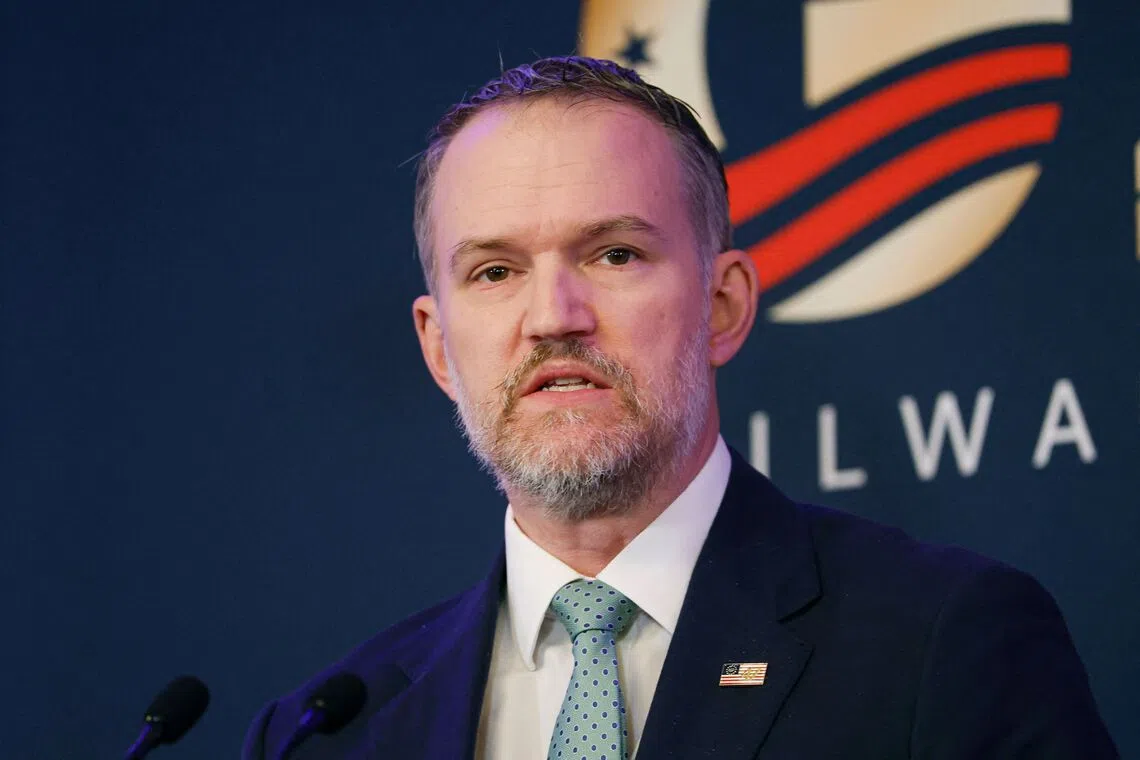
US Trade Representative (USTR) Jamieson Greer told Japanese news outlet Nikkei Asia: “If you’re a country that doesn’t take action to stop the effects of excess capacity… whether it’s in your country or coming from a third country, I’m not going to sit there and take it.”
“The United States is going to act,” he said in an interview on the sidelines of the G20 (Group of Twenty) meeting in the US city of Milwaukee.
Greer said the US will announce countermeasures within “weeks” against overproduction that displaces existing US domestic production or prevents investment and expansion in the US manufacturing sector.
The USTR launched an investigation in March against 16 economies, including Singapore, under Section 301 of the Trade Act focused on alleged excess manufacturing capacity.
Other economies subject to the inquiry include some of the US’ largest trading partners: China, the European Union, Mexico, India, Japan, South Korea and Taiwan.
Switzerland, Norway, Indonesia, Thailand, Malaysia, Cambodia, Vietnam and Bangladesh are also part of the investigation.
A new tariff will add to the 12.5 per cent levy Singapore became subject to in July following a USTR scrutiny into 60 US trading partners regarding their alleged failure to enforce prohibitions on imports made with forced labour.
Separately, US sectoral tariffs – with rates ranging from 25 per cent to 50 per cent – on steel, aluminium, copper and automotive parts also apply to some Singapore exports. Singapore may also face a possible US tariff on its semiconductor exports.
In the interview with Nikkei, Greer cited intense competition, or involution, in China’s electric vehicle market as an example of excess production that squeezes profit margins.
You can see “the Chinese on their own independently acknowledging to some degree that excess capacity exists,” Greer said. “They call the effects of it involution, but it’s rooted in excess capacity”.
Greer also referred to the G20 meeting in Milwaukee, where trade officials from member countries announced an agreement to tackle the global steel glut which many believe stems from state subsidies that encourage excess production of the refined metal.
In an earlier meeting of G20 Finance Ministers and Central Bank Governors in Asheville last month, 19 of the 20 members agreed to take action against non-market economic policies, excessive trade surpluses, and an over-reliance on cheap exports.
Greer said that at international forums like the G20, China is “generally defensive about this because they know that they are part of the broader distortion”.
He also called out the policies of China’s neighbours including Japan and Vietnam, which have seen their exports to the US rise in recent years as shipments from China declined.
Vietnam has “no consumption,” Greer told Nikkei. Workers there “can’t buy the things they’re making, so they have to send them to us”.
“They need to increase their domestic demand” through measures including protection of worker rights and higher wages,” he said.
Greer also suggested that Japan has its own overcapacity problem.
“They have zombie firms that should have been bankrupt long ago, but they just … keep them surviving, whether it’s Japan or other countries,” he said.
In its engagements with Trump administration officials, Singapore has denied that it enjoys a trade surplus with the US or that its exports to the world’s largest economy stem from any form of excess capacity.
In fact, the US has maintained a substantial trade surplus with Singapore for more than two decades. In 2025, that surplus exceeded US$33 billion (S$42 billion), according to the Ministry of Trade and Industry.
Singapore, despite its small size, is the third-largest Asian investor in the US, behind Japan and South Korea. Bilateral trade and Singapore’s investments in the US support around 350,000 American jobs.
About 6,600 American companies are based in Singapore, while more than 250 Singapore companies operate across 45 US states, in sectors ranging from logistics and agribusiness to aerospace and shipbuilding.

