


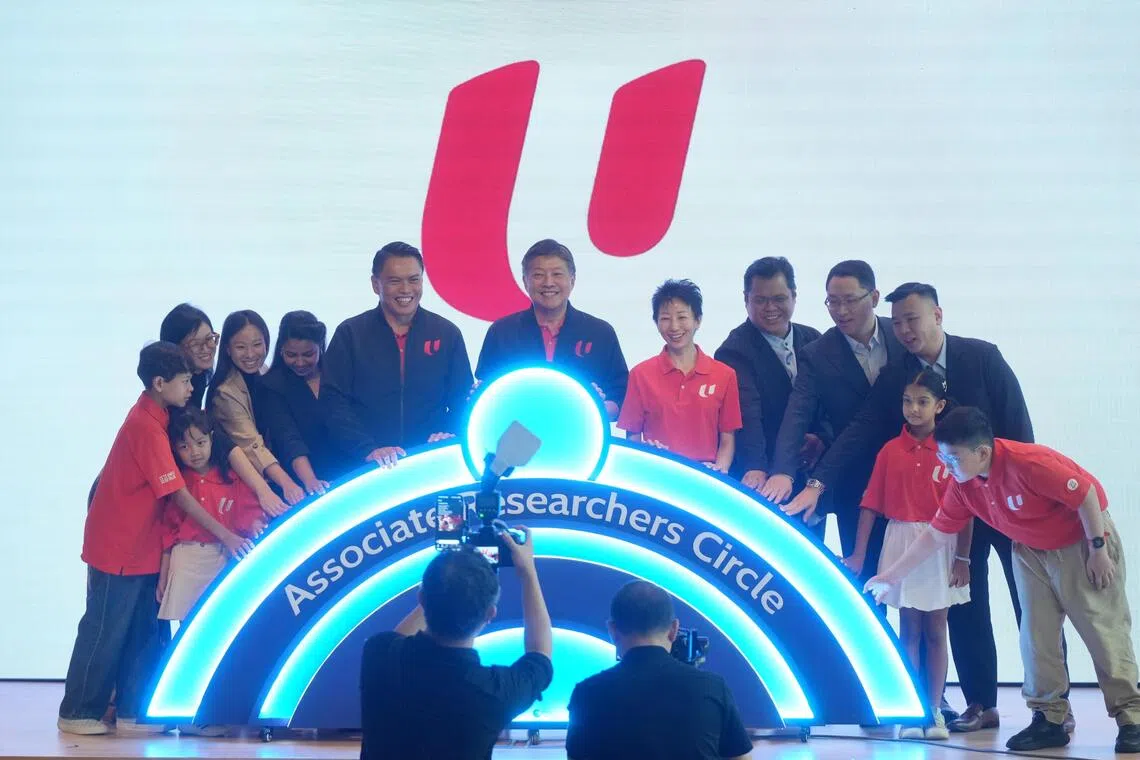
SINGAPORE – Young researchers studying pressing labour issues like implications of artificial intelligence (AI) and the ageing workforce will receive more support, as part of a new research network to strengthen and advance labour market intelligence in Singapore.
The new Associate Researchers Circle (ARC), which comprises eight initial members, was launched by the National Trades Congress Union (NTUC) on Oct 1.
The formation of the group builds on the NTUC Labour Alliance co-laB (Lab), which was launched in 2024 to deepen knowledge base on labour research in Singapore. The network aims to influence labour policies and practises that will uplift the wages, welfare and work prospects of workers.
The initiative, announced at the labour movement’s 6th Labour Research Conference, comes amid rapid changes in the workforce accelerated by AI.
Insights gathered by Lab and ARC members will collectively help NTUC identify emerging opportunities and risks earlier, and shape its advocacy and interventions. The combined resources and capabilities will also strengthen efforts in the Tripartite Jobs Council, which was formed in April to help workers keep jobs as companies transform amid AI disruption.
Speaking at the conference’s opening, NTUC secretary-general Ng Chee Meng said that since he spoke about AI’s impact on white-collar jobs like law, medicine and accountancy two years ago, there still isn’t “full clarity” on how it reshapes these professions in the workplace.
“Good research provides trusted market intelligence and foresight that is grounded in Singapore’s economic and workforce realities,” he said.
Ng also highlighted concerns relating to higher retrenchment numbers and employers cutting back on entry-level hiring.
He noted that while sectors like manufacturing, information and communications technology, and financial services are growing, retrenchments are also happening.
“Today, these sectors are among those seeing more of the sharpest workforce shifts and reorganisations, and I think this has to do with AI impact and their own business remodelling.”
The eight initial young researchers were nominated by Lab members to gain greater exposure and familiarity with key labour issues and the opportunities to contribute their expertise to the network.
Said Ng: “Arc will bring new voices into the conversation about work and workers, and deepen NTUC’s links with our Institutes of Higher Learning and youth networks.”
One of the group’s inaugural cohort of eight members is Sarah Chan, 33, a research fellow at Lee Kuan Yew Centre for Innovative Cities at Singapore University of Technology and Design, who researches how different environments shape workers’ behaviour and outcomes.
She said working with NTUC helps her ask better questions, as she hopes to bring a psychological perspective to what good work means to people as the nature of work continues to evolve.
“What excites me most is the chance to bring research closer to workers’ everyday realities, and to turn behavioural insights into real-world change.”
Other members’ academic backgrounds range from data analytics to ethics and consumer behaviour.
Speaking to the media during the conference, NTUC assistant secretary-general Patrick Tay said some of the existing Lab members are established labour research experts who are retiring in due course. He added it remains key to ensure and expand a pipeline of younger, emerging labour researchers to continue contributing to the labour research community.
NTUC hopes to bring in five to 10 new young members into the network yearly. Lab members will act as mentors and nurture the next generation of emerging researchers.
Successful ones may subsequently be considered for appointment as Lab members and contribute research letters, articles and brief reports to the Singapore Labour Journal, said NTUC in a press statement on Oct 1.
Since Lab was launched in 2024, the labour research community has grown to over 60 members, including overseas labour experts from overseas universities like Cornell University and Rutgers University. It started out with 50 founding experts.
As of June, Lab members have engaged more than 5,000 workers and 1,000 employers through surveys, dialogues and focus groups.
Lab and Arc members will contribute research papers and journal articles, including the Singapore Labour Journal, a peer-reviewed journal on labour issues.
The conference also marked the fifth edition of the Singapore Labour Journal, featuring 12 articles with a focus on workforce resilience and inclusive labour strategies.

