


SINGAPORE – For Singapore’s future economy to thrive, local investors must be willing to back young companies, emerging sectors as well as unfamiliar business models, even though some will fail or remain loss-making for years after going public.
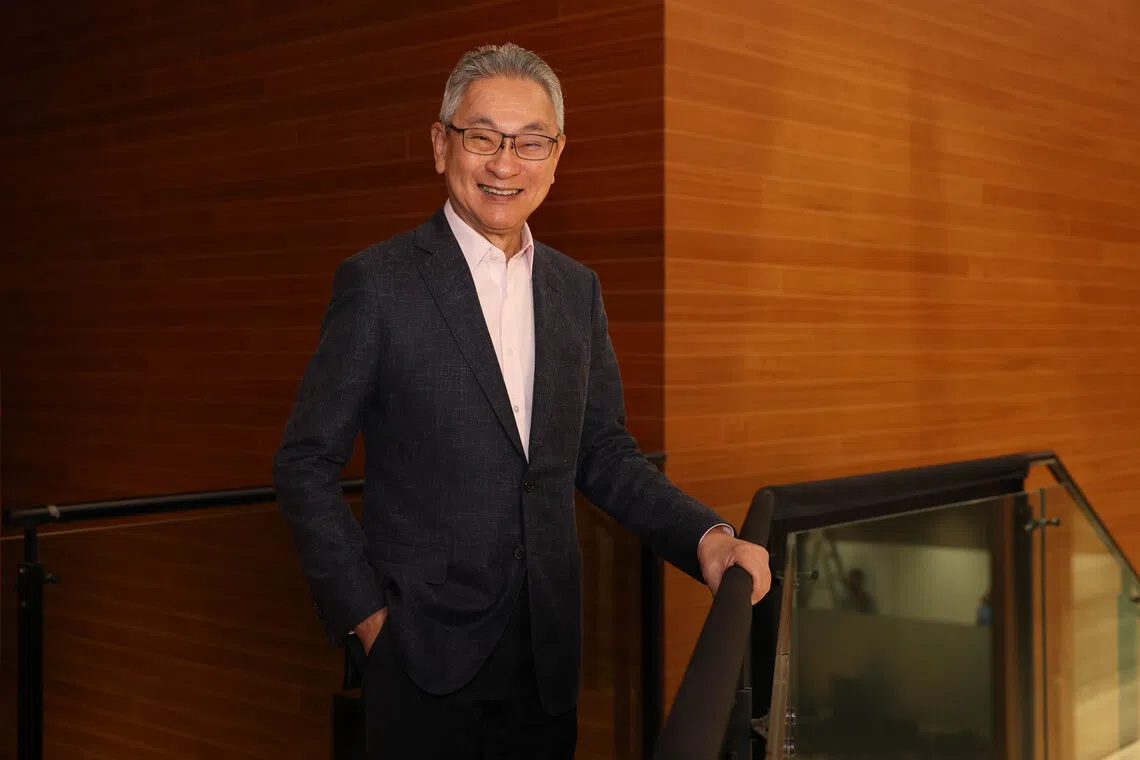
This support will build a pipeline of companies in which a next generation of Singaporeans can invest, and help the local stock market become more self-sustaining and resilient, Singapore Exchange (SGX) chairman Koh Boon Hwee wrote in his annual letter to shareholders on Sept 29.
Over the long term, this would, in turn, enable investors’ savings to compound as life expectancies in Singapore rise, allowing them to fund longer lives, he said.
Koh’s letter comes on the back of a standout year for SGX Group, with all-time highs in revenue and net profit.
Revenue for the financial year ended June 30 rose 13.9% to $1.48 billion, while adjusted net profit increased 24.6% to $759.5 million.
Supported by recent developmental and regulatory initiatives led by the Singapore government and central bank, the Straits Times Index (STI) also crossed the 5,000 mark for the first time in February, while securities’ daily average value exceeded $2 billion in the final five months of FY2026.
The focus, however, must shift to sustaining investor confidence and attracting companies to list on the local exchange, Koh said in his letter published in SGX Group’s FY2026 annual report.
He stressed that policies and regulations must continue to make it easier for promising new companies to secure funding in the capital markets, even though some will fail.
Singapore’s reputation for trust and stability should give it the confidence to take more calculated risks, noting that the Republic cannot foster a future-ready economy if its default reaction is to address every issue with additional rules.
If investors put money only into established, successful businesses, newer companies may never get the chance to grow into the next major employers or industry leaders, he added.
“One thing is for sure – a country that only finances yesterday’s winners will struggle to produce tomorrow’s,” Koh said.
“We would never create an Amazon, Grab, or Sea if capital had demanded immediate success, as they all remained unprofitable for years after their IPOs.”
While stressing that fraud and misconduct must be dealt with firmly and SGX’s governance standards kept high, Koh noted that if the market treats any undesirable outcome as evidence that someone should have prevented it, “we will unintentionally stifle innovation”.
“Left unchecked, we will create an environment where caution completely overwhelms opportunity.”
He also addressed the perception that Singapore equities are boring.
“Over the years, we have somehow convinced ourselves that because our market is steady and stable, it must therefore be unrewarding,” he noted.
“In my experience, ‘boring’ is often just another word for compounding.”
He cited an example of an investor who put $100,000 into an STI exchange-traded fund when it launched in April 2002 and reinvested the dividends. This investor would have had more than $600,000 by June 2026, amounting to a 576% total return, or more than 8% a year.
In contrast, the same sum earning a steady 4% annually would have grown to less than $260,000 over that period.
“This is not boring. It is the quiet, powerful engine of multigenerational prosperity.”
The way Koh sees it, as Singaporeans live longer, the stock market should be viewed not simply as a place for trading, but as one of the vehicles through which households can preserve purchasing power and support retirement planning.
“For the younger generation, our collective goal should be to show them that the path to long-term financial independence lies in transitioning from savers to owners, from day traders to long-term investors,” he said.
“It is less about timing the market, and more about compounding their savings and sharing directly in the productivity and growth of the wider economy.”
Noting “the wave of privatisations” in the Singapore stock market, he said the simple count of listed companies has become an “outdated metric of success” at a time when private equity and venture capital investments have been growing.
Mergers, acquisitions, listings and privatisations should be seen as stages in a company’s funding journey, rather than permanent endpoints, and a business taken private may later be sold, acquired or relisted after it has grown.
As companies move between private and public ownership, investors can redeploy their capital into new opportunities. The aim, Koh said, is to give businesses access to the type of funding that best suits each stage of their development.
“We must closely examine what is needed to achieve a sustainable and constant flow of funding through our equities market.”
He called on investors to participate in the Singapore stock market for the long haul, for companies to focus on actively seeking capital to scale their businesses, and for policymakers to support the ecosystem.
“Strengthening our capital markets is not an end in itself. It is an investment in Singapore’s future competitiveness, resilience and capacity to create opportunities for generations to come,” he said.

