


NEW YORK – Oil prices jumped and bond yields continued to rise on Sept 28 amid signs that Iran and the United States remained far apart in negotiating a resumption of energy supplies from the Persian Gulf.
The 10-year Treasury yield, which underpins corporate and consumer borrowing costs throughout the global economy, rose above 5.2%, its highest level in roughly two decades. The 30-year yield moved above 5.5%, also at a two-decade high and approaching its highest level since 2002.
On Sept 26, US President Donald Trump publicly rejected a ceasefire proposal that Iran offered last week to reopen the Strait of Hormuz, calling it “unacceptable”. Iranian Foreign Minister Abbas Araghchi called Trump’s rejection a “first reaction” and said he awaited “definitive news to be conveyed through intermediaries”.
The fighting in the Middle East has driven up energy prices ahead of the midterm elections, frustrating voters who have been dealing with high cost of living. A growing number of Republicans are speaking out against the war, with some calling for its immediate end.
Oil prices
The price of Brent crude, the global benchmark for oil, rose roughly 2% to about US$106 a barrel.
West Texas Intermediate crude, the US benchmark, traded around US$95 a barrel.
Ship operators in the Persian Gulf remain wary of sending vessels through the Strait of Hormuz, the vital waterway between Iran and Oman. Advances by the Iranian-backed Houthi militia in Yemen have threatened oil shipments through the Red Sea, an alternative route to the Persian Gulf used by Saudi Arabia to get oil out to global markets. Saudi authorities had to temporarily shut the critical East-West pipeline that shuttles oil from the Persian Gulf to the Red Sea, blaming a drone attack by an Iranian-backed Iraqi militia.
The price of Brent crude briefly dropped below US$100 a barrel last week on signs that Saudi Arabia had increased its exports through the Strait of Hormuz with help from the US Navy. There were also reports that the Saudis were close to reopening the East-West pipeline.
Stocks dip
The S&P 500 fell roughly 0.5% when stocks resumed trading in the US on Sept 28.
Stocks in Asia mostly fell. In mainland China, stocks tumbled about 2%, and the KOSPI in South Korea fell 2.7%. The Japanese Nikkei also fell. The only index to gain was the Hang Seng Stock Index in Hong Kong, which rose 0.5%.
In Europe, the Stoxx 600, a broad index that tracks the region’s largest companies, rose less than half a percent.
Petrol prices are steady
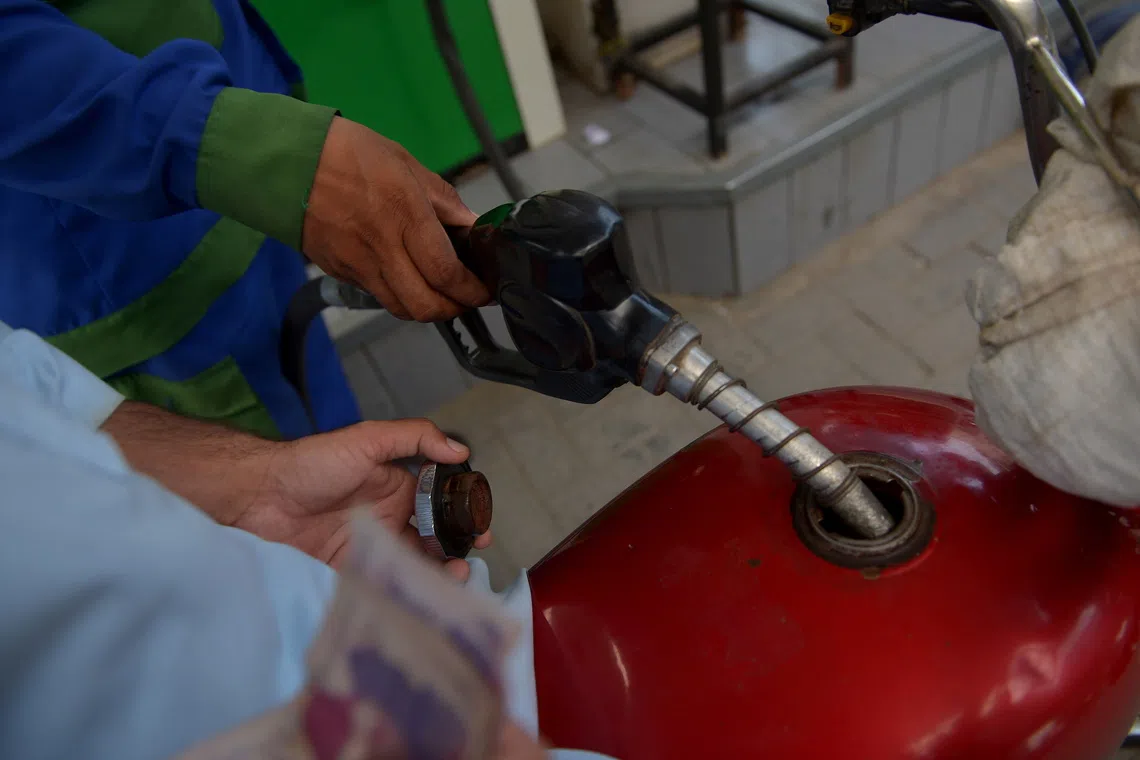
Petrol prices were unchanged on Sept 28, at a national average of about US$4.48 a gallon, according to AAA motor club. Prices have increased significantly since the war began, raising the cost for drivers by more than 50%.
Petrol prices do not move in lockstep with crude, usually trailing increases or decreases by a few days.
Diesel prices hit record highs
The average price of diesel in the US was US$6.45 on Sept 28, up more than 70% since the start of the war. NYTIMES
-
This article originally appeared in The New York Times.

