


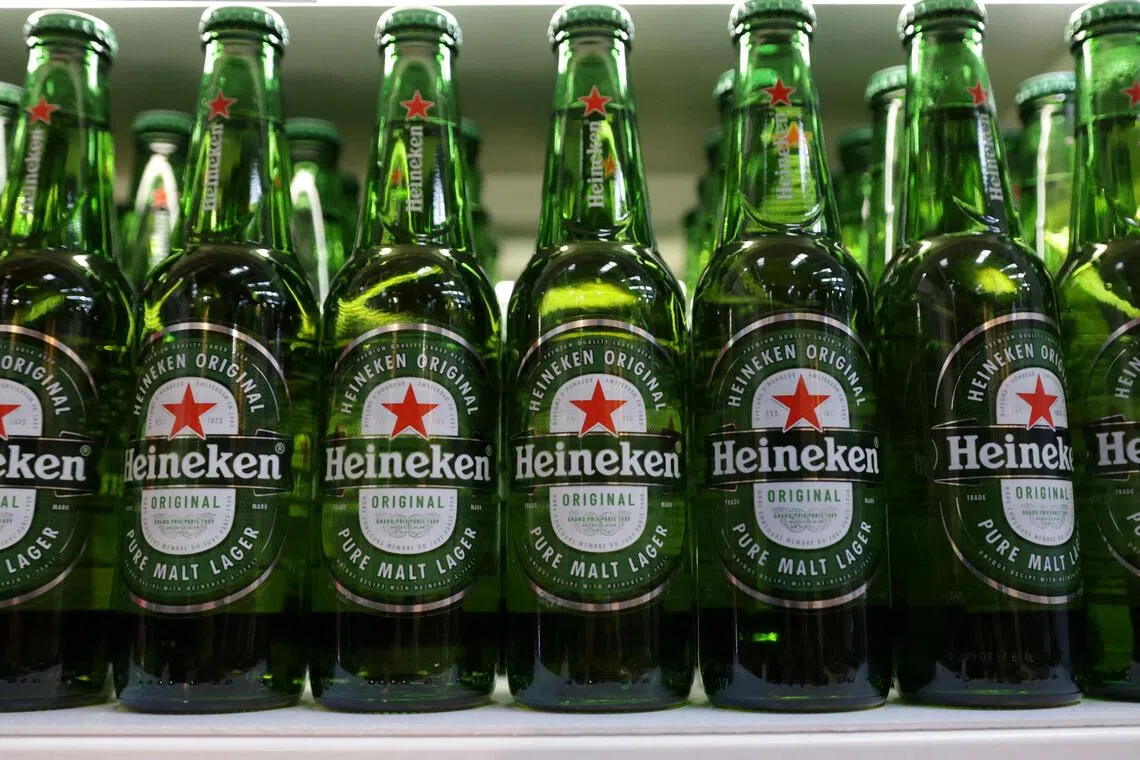
Rising fuel costs triggered by the Iran war are pushing up Heineken’s brewing costs in Asia, according to Asia-Pacific President Jacco van der Linden.
“We see that coming through in our input costs, predominantly in Asia,” he said in an interview with Bloomberg TV on Sept 28.
“In Asia, we’re more dependent on oil coming from the Middle East and the reserves are somewhat smaller.”
The Dutch brewer is passing on around 70% to 80% of inflation to consumers while relying on more efficient productivity to absorb the rest, Van der Linden said.
“Input costs are rising, and therefore productivity and revenue management are becoming more and more important to us,” he said.
The higher costs come as brewers globally grapple with consumers who are drinking less and whose tastes are shifting, including to healthier beverages.
Heineken has lagged rivals InBev and Carlsberg in turning business around after a post-Covid-19 slump.
Incoming chief executive Rafael Oliveira, the first outsider to lead Heineken, will inherit sluggish sales in Europe and the US when he takes the reins in October.
That makes growth in emerging markets increasingly important. Heineken is tapping rising demand in Asia, Africa and other developing economies to offset weakness in Europe and the Americas.
Volumes jumped 13% in Asia-Pacific and 3.5% in Africa and the Middle East in the second quarter, while falling 4.1% in the Americas.
Heineken needs to keep investing in Asia, Africa and Latin America and pushing more premium products to counter weaker sales in its mature markets, according to Bloomberg Intelligence analyst Ignacio Canals Polo. Vietnam and Mexico “show how the strategy can work”, he wrote in a Sept. 10 research note.
The company is focusing on key growth markets – particularly those in Asia, such as Vietnam, India and China, where consumers prefer lighter beers – Van der Linden said. BLOOMBERG

