


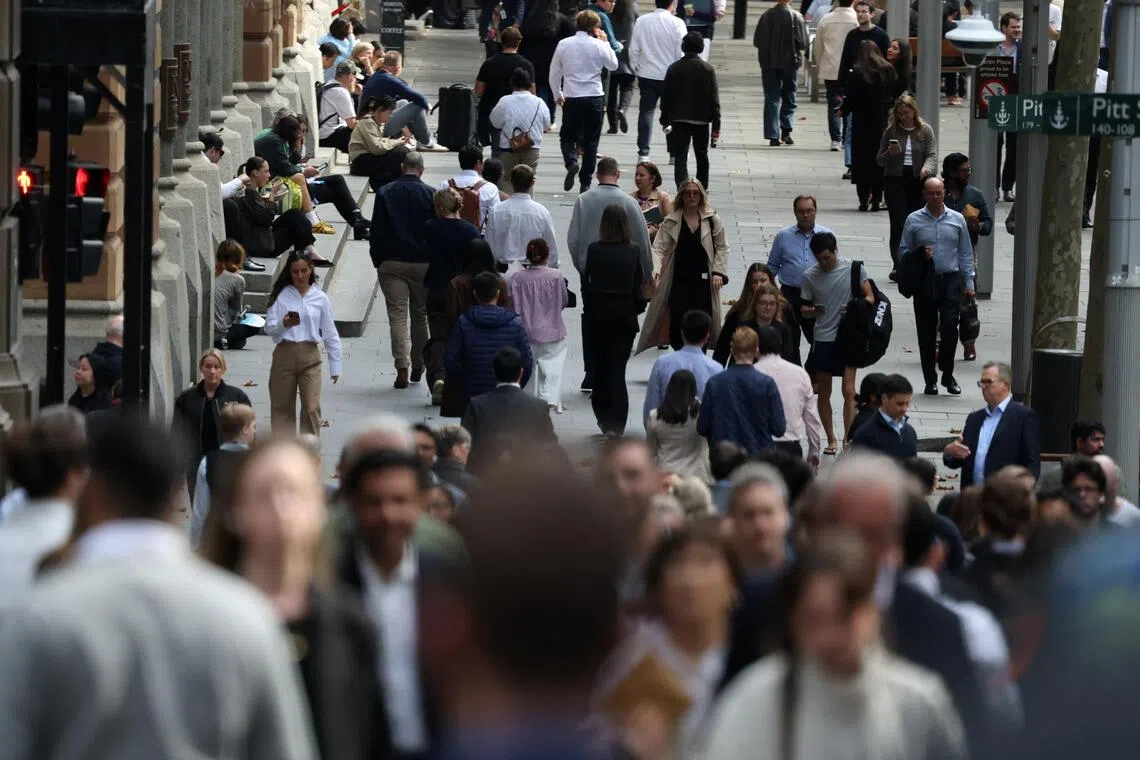
SYDNEY – Australian employment rose more than forecast in August, but the unemployment rate still hit a five-year high as more people went looking for work, data showed on Sept 24.
The mixed report was not enough to shift already firm market bets that the Reserve Bank of Australia (RBA) would raise interest rates next week for the fourth time in 2026.
Markets have priced in a 95 per cent chance the policy rate will rise to 4.6 per cent. The Australian dollar, however, slipped 0.2 per cent to US$0.7026, a seven-week low after heavy losses overnight.
Figures from the Australian Bureau of Statistics showed net employment rose 39,500 in August from July, when it fell 15,800. That was above market forecasts for a 20,000 increase, though full-time jobs dipped 6,300.
The jobless rate rose to 4.6 per cent, above forecasts for a steady 4.5 per cent and the highest level since late 2021, as the participation rate climbed to 67.1 per cent, up 0.2 percentage point. Hours worked rose 0.7 per cent.
“This August, we recorded a higher proportion of people who were previously not in the labour force moving to being unemployed, compared to recent years,” said Sean Crick, ABS head of labour statistics.
“The growth in the size of the labour force resulted in the participation rate increasing,” he said.
The labour market has eased a little but remains tight, according to the RBA.
Governor Michele Bullock said this week unemployment in a range of 4.5 per cent to 5 per cent could help restrain inflation, suggesting some rise might be needed from here.
The central bank has raised interest rates three times in 2026 to 4.35 per cent to tame inflation, matching a post-pandemic high. Yet, core inflation is still running at 3.6 per cent, well above the RBA’s target range of 2 per cent to 3 per cent.
Bullock has warned inflation risks are materialising off the back of the Middle East conflict and a data centre investment boom. With oil back above US$100 a barrel, markets have sharply repriced the global rate outlook, with Australia’s cash rate now seen peaking at 5.1 per cent. REUTERS

