


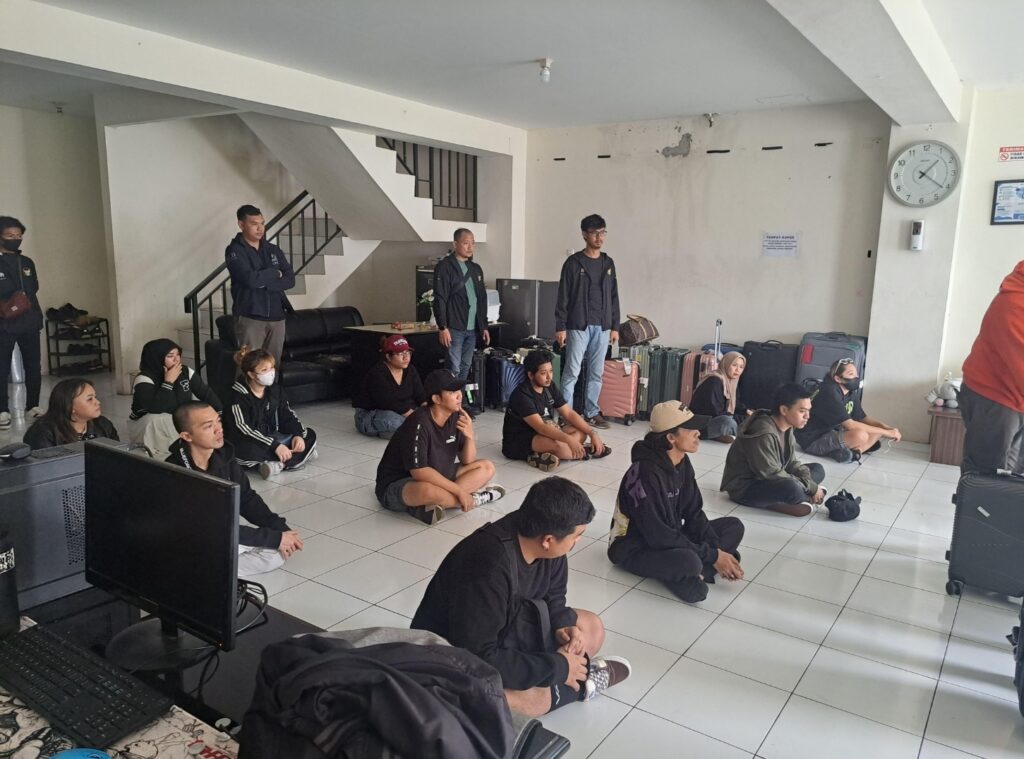
Indonesian authorities have detained 31 foreign nationals suspected of operating an online scam operation from a hotel in West Kalimantan, highlighting the increasingly international nature of digital fraud networks across Southeast Asia.
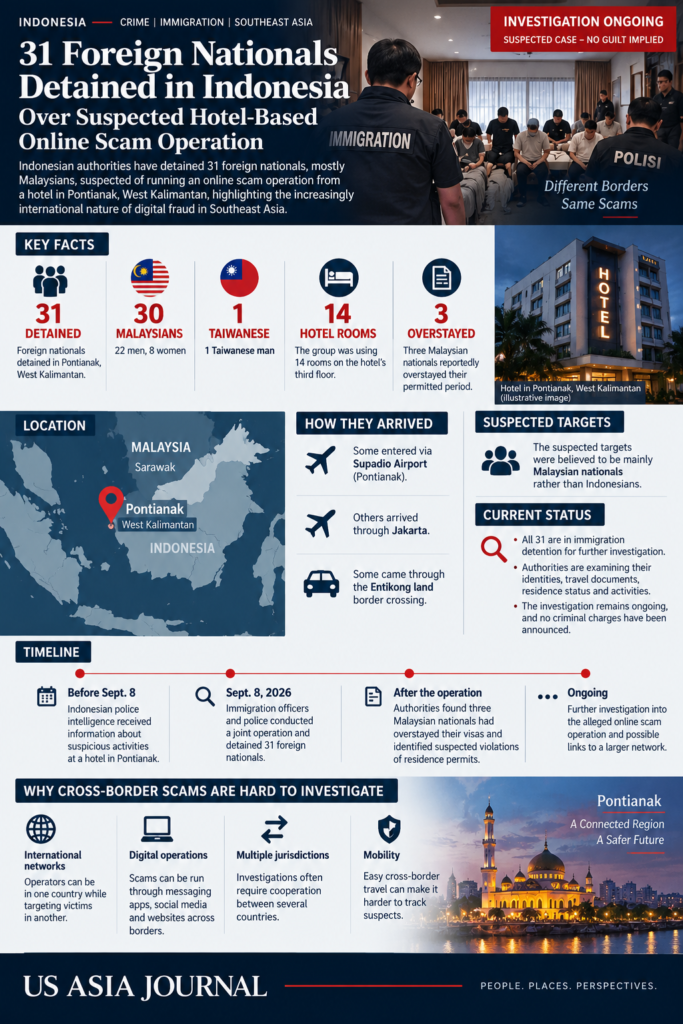
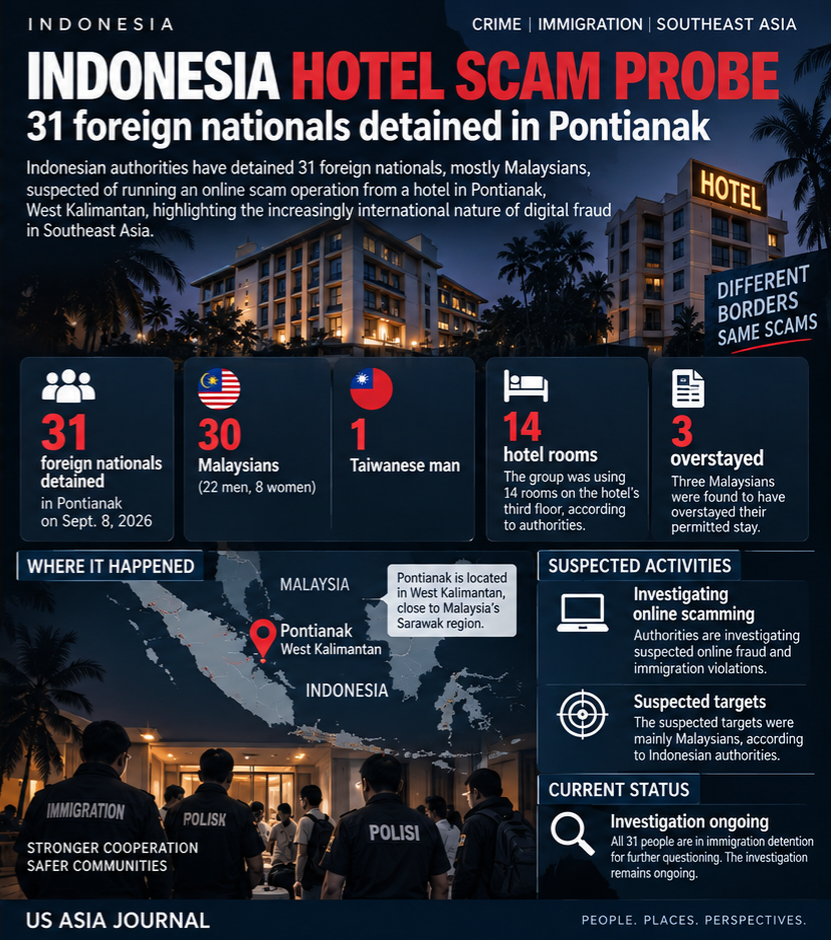
The group, consisting of 30 Malaysian nationals and one Taiwanese national, was detained during a joint operation by immigration officers and police in Pontianak on Sept. 8.
Authorities said the suspects had been staying and conducting activities at a hotel in the city.
The group had reportedly rented 14 rooms on the hotel’s third floor.
Those rooms were allegedly being used both as accommodation and as a base for activities suspected of being connected to online scams.
The investigation began after Pontianak police intelligence received information about suspicious activities involving foreign nationals staying at the hotel.
Immigration officers and police subsequently conducted a joint inspection.
Authorities are still investigating exactly how the alleged scam operation worked.
The identity of any victims, the amount of money involved and the precise methods allegedly used by the group have not yet been publicly established.
That means the investigation remains at an early stage.
Authorities said the suspected targets were likely Malaysian citizens rather than Indonesians.
The fact that the alleged targets and operators were located in different countries illustrates how online fraud can operate across national borders.
The suspects did not arrive in Indonesia at the same time.
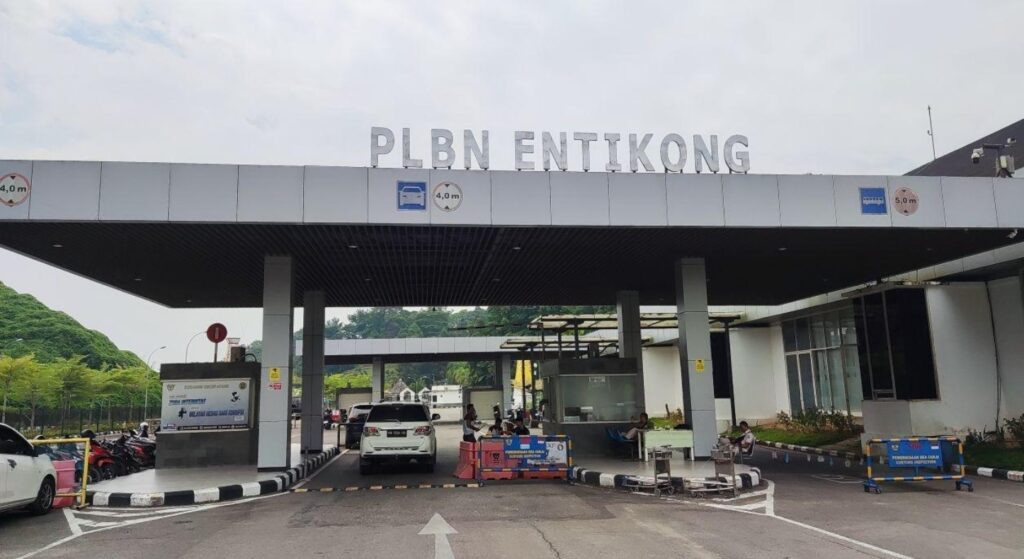
Some entered through Pontianak’s airport, while others reportedly traveled through Jakarta or the Entikong land border crossing.
Their periods of stay also varied.
Some had reportedly been in Pontianak for about two months, while others had arrived only several weeks before the operation.
Immigration officials found that three Malaysian nationals had overstayed their permitted periods of stay.
Officials also identified suspected violations involving residence permits that may not have matched the activities being conducted.
All 31 people were taken to an immigration detention facility while authorities continued questioning and verification.
Investigators are examining their identities, travel documents, immigration status and activities in Indonesia.
Authorities are also coordinating with Malaysian counterparts as the investigation develops.
The case highlights a wider challenge facing Southeast Asia.
Online fraud networks have become increasingly international, allowing people operating in one country to target victims in another.
A scammer does not necessarily need to be physically located in the same country as the victim.
Internet connectivity, digital payment systems and messaging applications allow criminal groups to operate across borders with relatively little geographic limitation.
That makes traditional law enforcement more difficult.
Police investigating a fraud case may need information from several countries to identify operators, trace money and locate victims.
Immigration authorities can also play an important role by identifying unusual travel patterns and violations of residence permits.
The Pontianak case illustrates the importance of cooperation between those agencies.
The investigation began with information gathered by local police and then involved immigration officials who examined the group’s legal status and activities.
Authorities say further action will depend on the results of the investigation.
The case also demonstrates why allegations of online fraud must be treated carefully.
Being detained during an investigation does not by itself establish criminal responsibility.
Authorities must still determine who was involved, what activities were conducted and whether those activities violated Indonesian law.
That distinction is particularly important in international cases involving people from multiple countries.
Nevertheless, the suspected operation has renewed attention on Indonesia’s role in the regional fight against online fraud.
Southeast Asia has become a major focus of international efforts to combat scam networks, particularly as criminal groups seek locations where they can operate while targeting victims elsewhere.
Governments across the region are increasing cooperation, strengthening immigration checks and sharing information about suspicious activities.
For victims, however, the consequences can be immediate.
Online scams can involve fake investment opportunities, romance schemes, impersonation, fraudulent financial services and other forms of deception.
Victims can lose substantial amounts of money before realizing they have been targeted.
The cross-border nature of these schemes can make recovery especially difficult.
Money may move through multiple accounts and countries, while operators can quickly change their locations or communication channels.
For investigators, speed is therefore critical.
The Pontianak operation shows how information sharing between police and immigration authorities can lead to the identification of suspicious activity.
But dismantling a single suspected operation does not eliminate the larger problem.
As long as criminal groups can recruit people, rent temporary workspaces and access digital communication networks, new operations can emerge elsewhere.
The challenge for Southeast Asian governments is increasingly regional rather than national.
Indonesia, Malaysia, Taiwan and other economies are connected through tourism, trade, migration and digital services.
Those same connections can also be exploited by criminal networks.
The Pontianak case offers another warning that Asia’s online scam problem is no longer confined to a single country — criminal operations can cross borders just as easily as the digital money and messages they use to target victims.
SOPHIA KIM
US ASIA JOURNAL

