


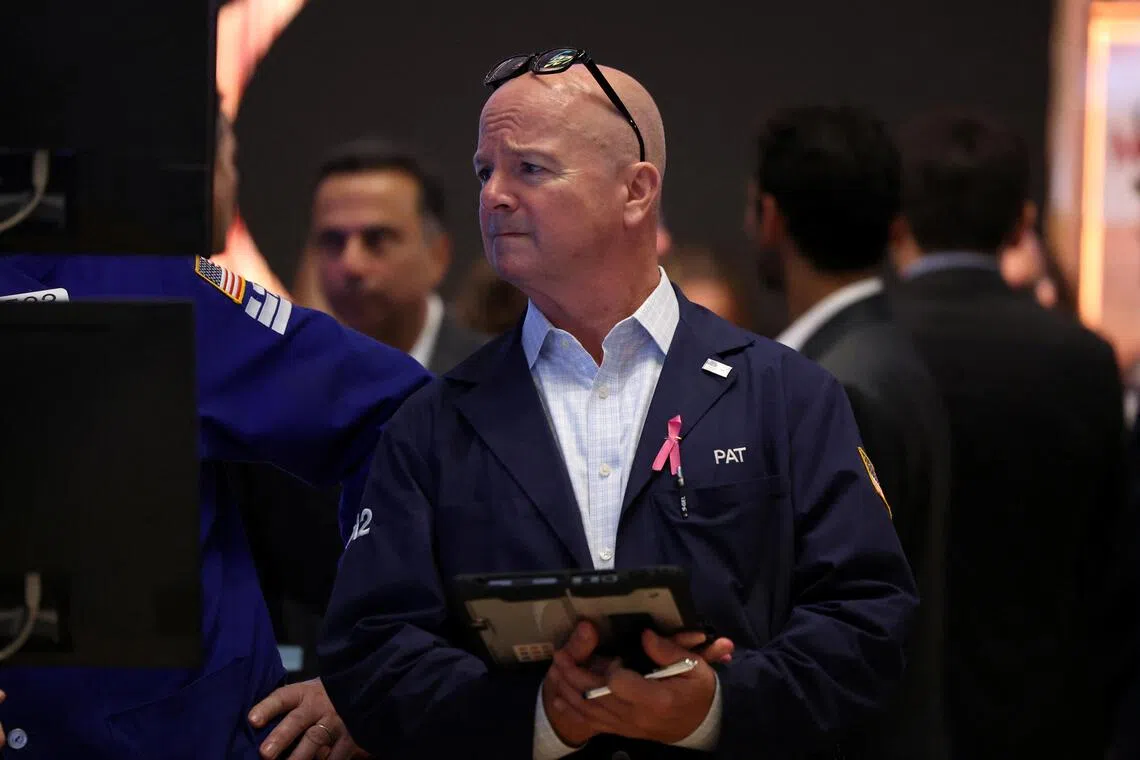
NEW YORK – The S&P 500 ended lower on Sept 8, with Salesforce and other software makers losing ground, while hostilities in the Middle East lifted oil prices and investors awaited inflation data that could affect the chance of an interest rate hike.
Salesforce shares, ServiceNow and Intuit declined. OpenAI’s launch last week of its newest model, GPT-6 Astra, reignited speculation that AI could compete with services now offered by specialised software companies.
The S&P 500 software and services index fell for a second straight day.
“Astra has kind of reignited the software disruption fears and it’s resumed that old trend that we got used to for a while, where semiconductor stocks and data centre capex beneficiaries do well, while software stocks do poorly,” said Jed Ellerbroek, portfolio manager at Argent Capital Management.
Intel jumped and Qualcomm also rose after striking a deal with Amazon to develop custom AI chips.
Traders increased bets on an interest rate hike at the US Federal Reserve’s Sept 15-16 meeting after the Labour Department reported last week that employers added far more positions than expected in August.
This week’s producer and consumer price reports are seen as key data ahead of that decision, with policymakers looking for further evidence that inflation pressures are continuing to cool.
Traders see a 60 per cent chance of an increase in interest rates at next week’s Fed policy meeting, according to the CME FedWatch tool.
Apple fell a day before an event at which it is expected to unveil its latest smartphone under new chief executive officer John Ternus.
According to preliminary data, the S&P 500 lost 44.66 points, or 0.58 per cent, to end at 7,673.94 points, while the Nasdaq Composite lost 83.30 points, or 0.31 per cent, to 26,423.69.
The Dow Jones Industrial Average fell 617.15 points, or 1.16 per cent, to 52,797.10.
S&P valuation down from June
The S&P 500 has gained about 12 per cent in 2026, and it remains down about 1 per cent from its record-high close on Aug 13.
The benchmark stock index is now valued at 19 times expected earnings, down from 21 in early June, according to LSEG data. That lower valuation reflects increased earnings expectations following a strong second-quarter reporting season.
Despite that increased earnings optimism, the US-Israeli war with Iran has remained an overhang on equities.
Oil prices touched a six-week high on Sept 8 after Iran-backed Houthis in Yemen attacked Saudi energy facilities, setting oil installations ablaze and threatening a major expansion of the six-month-old Middle East war.
Shipping traffic through the Strait of Hormuz slowed, with Iran threatening on Sept 7 to retaliate for any new US attacks.
“The conflict between the United States and Iran is beginning to look less like a temporary disruption and more like a longer-term backdrop for markets,” said Jeff DerGurahian, chief investment officer at loanDepot.
The S&P 500 energy index rose, with Marathon Petroleum and Occidental Petroleum both up.
Elevated yields on risk-free US Treasuries have in recent weeks made it less attractive for investors to take on the added risk of buying stocks.
Crypto stocks fell as bitcoin retreated from US$80,000. Coinbase and Strategy both lost ground. REUTERS

