


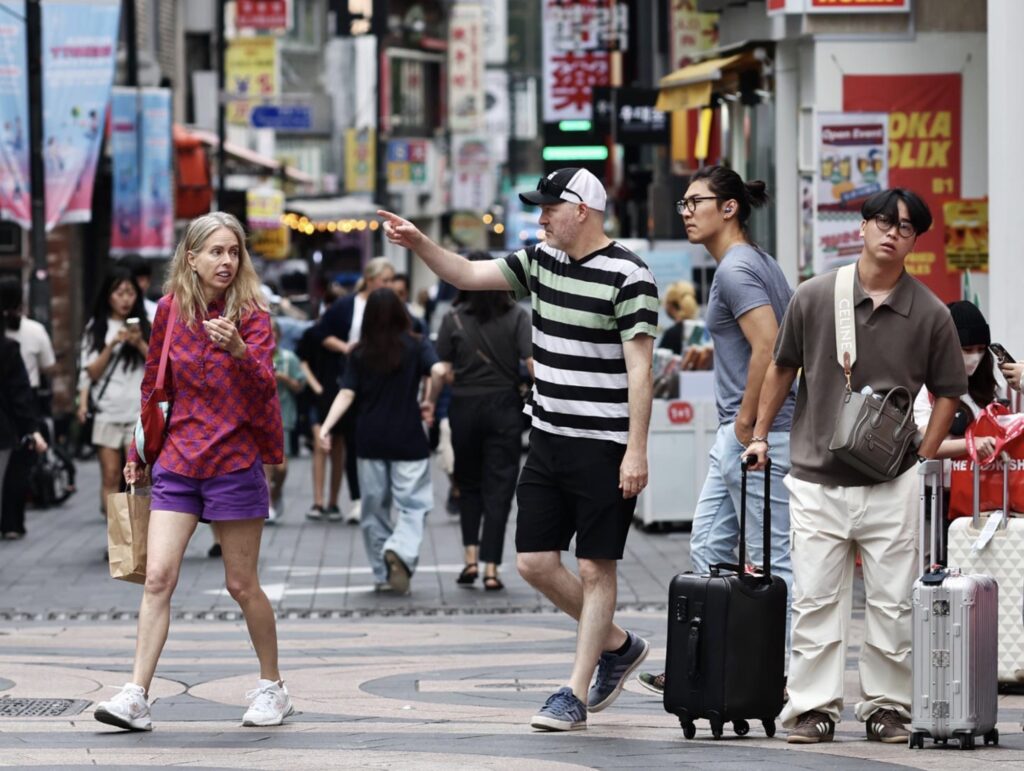
South Korea’s tourism industry is enjoying one of its strongest recoveries in years, but the rapid return of international visitors is exposing growing weaknesses in accommodation, transportation and customer service.
Tourist complaints reached a record high during the first seven months of 2026, according to data compiled by the Korea Tourism Organization.
A total of 1,753 complaints were filed nationwide between January and July, already exceeding the 1,744 complaints recorded during the entire year of 2025.
The increase comes as international tourism to South Korea continues to accelerate.
The country welcomed more than 10 million international visitors during the first half of the year, while July alone recorded more than 2 million arrivals.
The growing number of complaints does not necessarily mean that most visitors are dissatisfied. More tourists naturally create more opportunities for problems to occur.
But the data highlights a growing challenge for South Korea: keeping its tourism infrastructure and services in step with the speed of visitor growth.
Accommodation was the largest source of complaints.
There were 500 complaints involving general accommodation services, including unilateral reservation cancellations and excessive cancellation penalties.
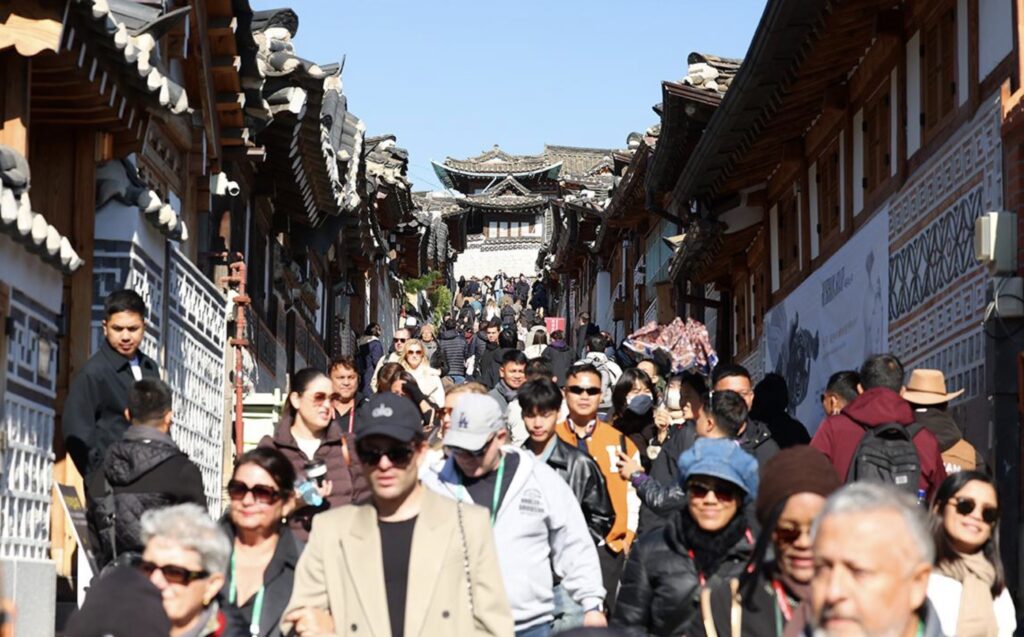
Such problems can become particularly visible when demand suddenly increases around major concerts, festivals and other large events.
Visitors may reserve accommodation months in advance, only to face cancellations or higher prices when demand rises sharply.
Shopping was the second-largest category, with 376 complaints.
Visitors reported issues including disagreements over prices and unfriendly service.
Transportation was another significant source of dissatisfaction.
There were 186 complaints related to airports and airlines, while taxi-related complaints reached 182.
Taxi complaints included allegations of drivers refusing to use meters and reckless driving.
Hotels generated another 146 complaints, including concerns over cancellations, service and hygiene.
The geographic distribution of complaints also reflects where tourism demand is concentrated.
Seoul recorded the largest number, with 665 complaints during the first seven months.
Busan followed with 594.
Incheon recorded 176 and Jeju Island recorded 155.
Busan’s increase was particularly notable.
The city recorded nearly 2.5 times as many complaints as the previous year during the comparable period, coinciding with a major BTS concert in June that attracted about 110,000 visitors.
The event demonstrated both the economic potential and the logistical challenges created by large-scale cultural tourism.
Hotels, restaurants, transportation providers and retailers can benefit enormously when hundreds of thousands of visitors arrive.
But sudden increases in demand can also expose shortages in rooms, transportation capacity and customer-service personnel.
Foreign travelers accounted for the majority of complaints.
Visitors from China filed 680 complaints, followed by South Koreans with 276, Japanese visitors with 263, Taiwanese visitors with 182 and visitors from Hong Kong with 87.
Foreign visitors accounted for more than 84% of all complaints.
The high share of foreign visitors is partly related to the purpose of the reporting system.
Tourist complaints are collected through the Korea Tourism Organization’s complaint center and the 1330 tourist interpretation hotline, services that are particularly useful to international visitors who may face language barriers when dealing directly with businesses.
The complaints therefore provide an important window into problems that might otherwise remain difficult for foreign visitors to report.
For South Korea, the issue is becoming more important as the country’s tourism strategy changes.
The country is no longer simply trying to attract more visitors.
It is increasingly trying to encourage visitors to stay longer, spend more and travel beyond Seoul.
That strategy will require reliable services across a wider geographic area.
A tourist who encounters a serious problem with accommodation, transportation or pricing may share the experience online, potentially affecting how other travelers view the destination.
Social media has made the quality of individual travel experiences more visible than ever.
A single complaint can reach thousands of potential visitors.
This makes customer service part of a country’s tourism competitiveness.
South Korea has several advantages.
Its global popularity has been strengthened by Korean music, television, food and beauty, while improved air connectivity has made travel easier for international visitors.
The country also has a sophisticated digital infrastructure that allows tourists to access maps, translation services, transportation information and online reservations.
But technology cannot completely solve problems involving basic service quality.
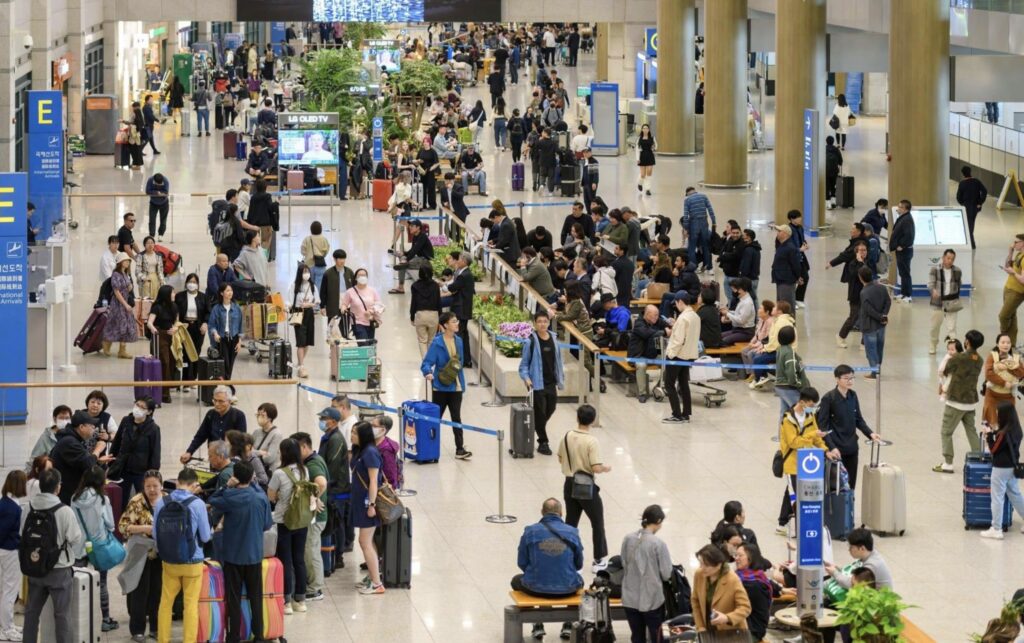
Hotels still need enough rooms.
Taxis still need to provide safe and fair transportation.
Retailers still need transparent pricing.
And tourism businesses need to communicate effectively with visitors from different cultural and linguistic backgrounds.
The challenge is particularly important as South Korea prepares for continued growth in international tourism.
The recent surge suggests that the country’s tourism problem is changing.
For years, the central question was how to attract international travelers.
Now, the question is increasingly whether the country can deliver a consistently positive experience after they arrive.
South Korea’s tourism boom has successfully brought visitors back to the country, but sustaining that growth will increasingly depend on whether its hotels, transportation services and tourism businesses can keep pace with rising international demand.
SOPHIA KIM
US ASIA JOURNAL

