


LONDON – Commodities trader Radiant World is under scrutiny as counterparties have stopped doing business with it, following news the authorities are investigating a report that it provided invalid documents to banks.
The company has called the claims inaccurate and unsubstantiated, and says it “conducts its business to the highest commercial and legal standards”.
Following are details on Radiant World.
What is Radiant World?
Radiant World was founded in the early 2000s by Indian national Pinkesh Nahar, who is 45.
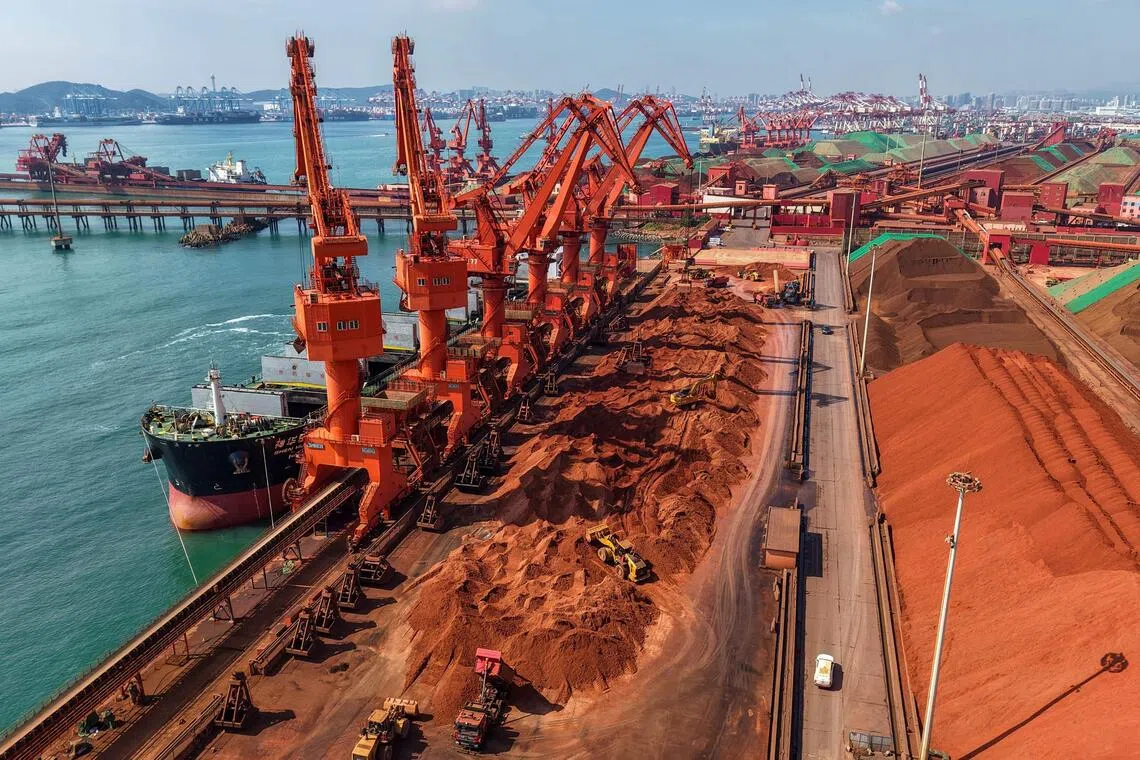
With offices in Britain, China, India, Singapore, Switzerland, the US and the United Arab Emirates, it became one of the world’s biggest iron ore traders, handling more than 80 million tonnes of the steelmaking raw material annually, according to its website. It has also built up its business trading base metals such as copper and aluminium.
Corporate filings in Singapore show its operating entity there had revenue of US$9.6 billion (S$12.2 billion) in the year ended September 2025.
Why has Radiant World made headlines?
In late July, Bloomberg News reported that global trading houses Vitol Group and Cargill stopped trading with Radiant World because invoices or other documents it provided to banks were invalid.
Meanwhile, Deutsche Bank and KBC Group froze some of Radiant’s Singapore bank accounts, while some other lenders have suspended credit lines, Bloomberg News reported.
Trading house Glencore stopped doing new business with Radiant World and said that it had taken a provision related to the firm, while some steelmakers in China, the world’s biggest metals consumer, have ceased dealing with Radiant.
Reuters on Aug 19 reported that US-listed broker Marex froze Radiant’s derivatives trading accounts. The Singapore Police Force said on Aug 20 that it was looking into Radiant, while the US Department of Justice and Commodity Futures Trading Commission is investigating the firm’s trades, Bloomberg reported.
Who does business with Radiant World?
Radiant buys minerals such as iron ore from mining companies and sells them on to customers such as steel plants.
Although the commodities world is intensely competitive, trading houses do business with each other. One merchant may have just the right cargo a rival needs in the right place at the right time.
Banks are another part of the picture, providing letters of credit and loans that allow trading houses to purchase cargoes before selling them on.
Radiant has numerous creditors with registered claims over its assets, filings show, including banking giants such as Societe Generale, Macquarie, Raiffeisen and Barclays, as well as Deutsche. Also among them is Japan’s Mizuho, which petitioned Singapore’s Supreme Court to grant it an injunction against the trader’s operating entity in the city state, the court’s website showed on Aug 28.
Have there been past cases of problematic documents?
In a 2014 case in Qingdao, Chinese trader Dezheng Resources was found to have duplicated warehouse receipts and forged documents.
This allowed the company to pledge single metal cargoes, including copper and aluminium, multiple times as collateral to secure billions of dollars in loans from domestic and international banks. Dezheng founder Chen Jihong received a 23-year prison sentence in 2018.
In early 2023, Indian businessman Prateek Gupta was accused of delivering low-value or worthless cargoes to Trafigura instead of the promised high-grade nickel. The trading house, which booked a US$590 million charge for what it described as a “systematic fraud”, successfully sued him in London’s High Court.
A court refused Gupta permission to appeal in February. REUTERS
Source : https://www.straitstimes.com/business/what-is-radiant-world-and-why-is-it-in-the-news

