


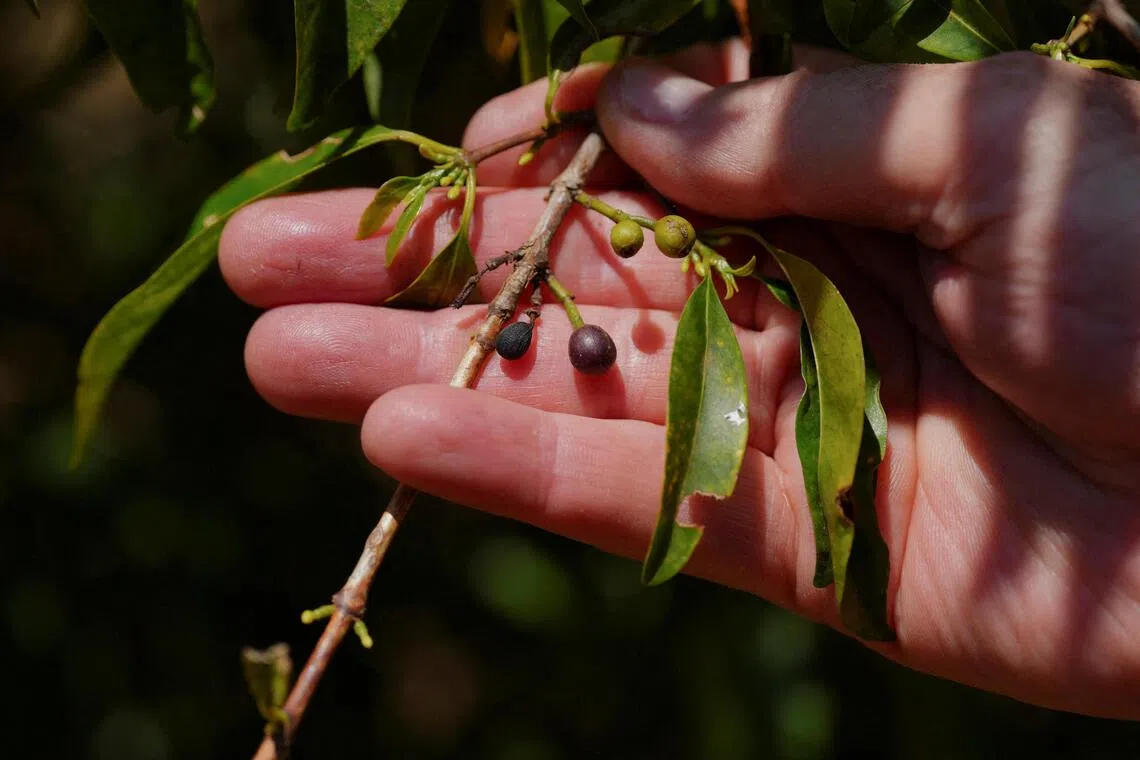
LONDON – Arabica coffee stocks on the ICE exchange hit a 26-year low on Aug 28, as dealers scrambled for scarce supplies amid concerns the physical market will remain tight in the months ahead.
ICE data showed arabica stocks fell to 224,011 60kg bags, their lowest level since May 2000. The drawdown has helped keep benchmark arabica futures above US$3 (S$3.80) per lb over the past couple of months.
Exchange stocks generally ranged between 1 million and 5 million bags from the mid-2000s until early 2022, and dealers see current levels as critically low.
The tight supply has pushed spot, or front-month September, arabica futures to a premium of about 32 cents per lb over December contracts, even though the shortage is widely expected to ease over time.
Brazilian farmers in no rush to sell
“The nearby market has delivered a clear message: coffee available somewhere is not necessarily coffee available here, now, in deliverable form,” said broker and consultant Michael J Nugent in a note.
The global coffee market is expected to post a surplus of 8.2 million bags in the 2026-27 season, up from 1.7 million in the previous season, according to a Reuters poll, as top producer Brazil is widely expected to harvest a record crop.
However, much of that crop remains tightly held. Brazil’s well-capitalised farmers face little pressure to sell as logistics backlogs mount and as the country remains one of the cheapest places to store coffee.
At the same time, El Nino-linked heavy rains in Brazil in June and July delayed the harvest and hurt quality, limiting in the near term the volume of high-grade beans eligible for certification as exchange-tradeable stocks.
“The pace of stock replenishment in destination markets (is key). If the (expected) surplus remains concentrated in origin countries, price volatility could persist as producers retain greater bargaining power,” said Hedgepoint analyst Laleska Moda.
Exchange-certified stocks are closely watched because they are transparent and updated daily. Many algorithm-driven funds are programmed to buy when inventories fall, reinforcing price moves.
Low stock levels can also squeeze traders holding short futures positions, or bets on price falls. With little coffee available for delivery against futures contracts, they may be forced to buy back contracts to close positions, adding further support to prices.
ICE arabica futures serve as a benchmark for pricing physical coffee. REUTERS

