


OHIO – While Ohio remains off the radar for many Asian investors, automotive parts maker Pacific Manufacturing Ohio expanded there for one key advantage: proximity to its main US customers, Japanese car giants Honda and Toyota.
“It is about two hours from here to Honda’s Marysville and Toyota’s Kentucky plants. That is one of the reasons we came to Ohio,” said Takashi Nakagawa, a general manager at Pacific Manufacturing, a subsidiary of the Japan-headquartered Pacific Industrial.
He told The Straits Times the decision was also driven by the presence of the existing Japanese companies and community in Ohio, which made the move easier.
Pacific Manufacturing has been present in Fairfield, Ohio, for almost four decades.
It grew its workforce from 50 to nearly 1,000 to support what is now the company’s largest manufacturing facility outside of Japan, comprising five buildings spanning more than a million square feet.
It is one of more than 1,000 Japanese businesses in Ohio, where Japan is the top foreign investor. And this footprint is expected to grow.
The pressure of tariffs is set to drive hundreds of billions of dollars in additional investment from Japan into the United States.
In July 2025, the Japanese government committed to providing up to US$550 billion (S$703 billion) in support for US projects, while the US agreed to lower tariffs on imports from Japan.
One such project is a US$33 billion natural gas facility in Ohio that is expected to generate 9.2 gigawatts of power – which US President Donald Trump has described as “the largest in history”.
Yet, industry experts told ST it has been challenging to get other Asian investors on board.
Japan accounted for 23 per cent of international establishments in Ohio, followed by businesses from Canada, Germany and the United Kingdom, according to a 2024 report by the Ohio Department of Development.
There was no other significant Asian presence in the state, with Singapore businesses accounting for less than 1 per cent of international establishments there.
Leo Chan, executive director at the Asia Chamber of America, said Ohio simply might not cross most investors’ minds.
“Many foreign investors are already familiar with places like New York, Los Angeles, San Francisco or Boston because they may have studied, travelled or built networks there,” he said.
“Ohio requires more education and storytelling. Investors need to understand why it matters, what types of businesses succeed there, and how it fits into the broader US economy.”
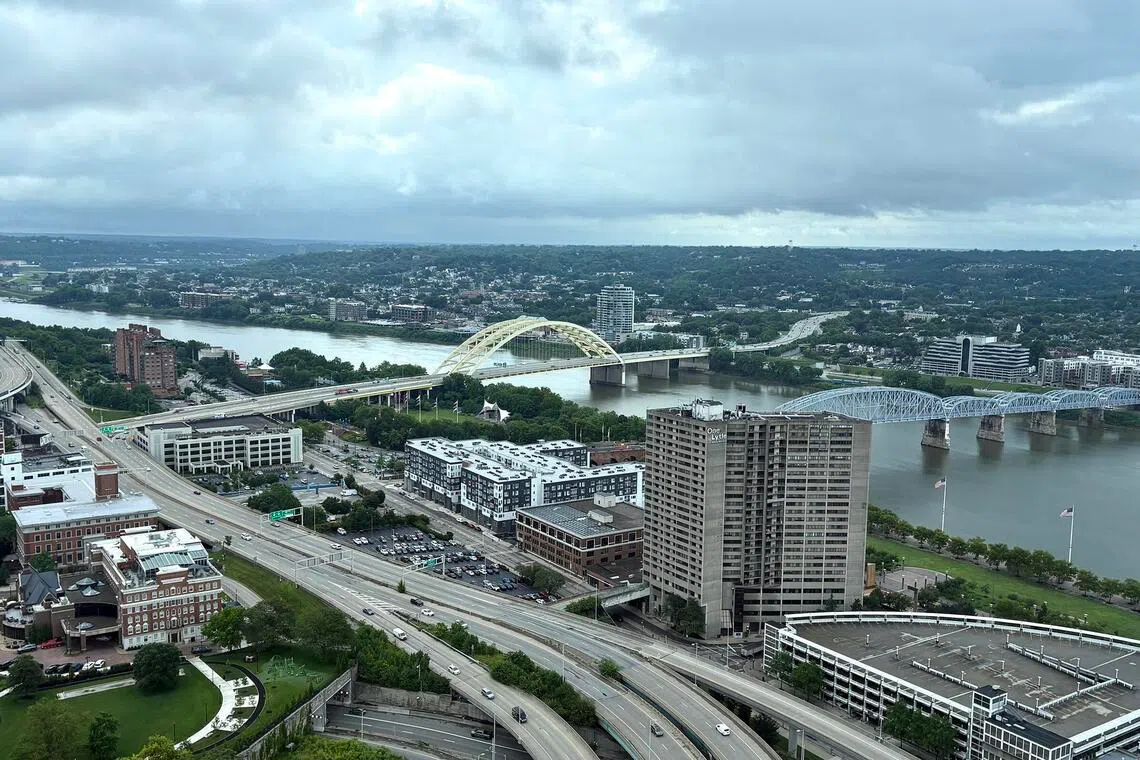
Japan is the top foreign investor in Ohio, a Midwestern state in the US.
ST PHOTO: ANNABELLE LIANG
The Midwestern state has a fabled history. It is at the heart of the “rust belt”, an American region once known for its powerful steel, coal and car-making industries.
But widespread factory closures in the 1970s and 1980s left behind empty buildings that rusted as jobs moved overseas.
Things have since turned around with the help of Japanese investment.
Benedict Park, senior manager of Asia business development at JobsOhio, which supports job creation and investment in the state, said visitors are usually surprised by what it has to offer.
“Friends, family members and potential investors visiting from other US states and Asia are amazed by how different Ohio is from their perception,” he said.
“It is no more a ‘rust belt’, but a dynamic state reconstructing its industrial might.”
The road began with Honda
Honda was pivotal in paving a path for Ohio’s development. It chose the state when it became the first Japanese company to make cars in the US in 1982.
Now, its Marysville factory – which is the size of 47 FIFA-standard football fields – has the capacity to produce 440,000 vehicles a year.
Ohio native Amy Rasmussen, who works for Italian manufacturer Modula, said Honda’s arrival was her “first taste of what a business coming into a community does”.
She experienced “the impact, the jobs and the growth that come when a company like Honda decides to plant their flag in a smaller town like Marysville”.
Park said Honda spurred hundreds of Japanese suppliers to set up manufacturing facilities in the vicinity to support production.
It is where Pacific Manufacturing does a booming business supplying carmakers including Toyota, Subaru and Mazda.
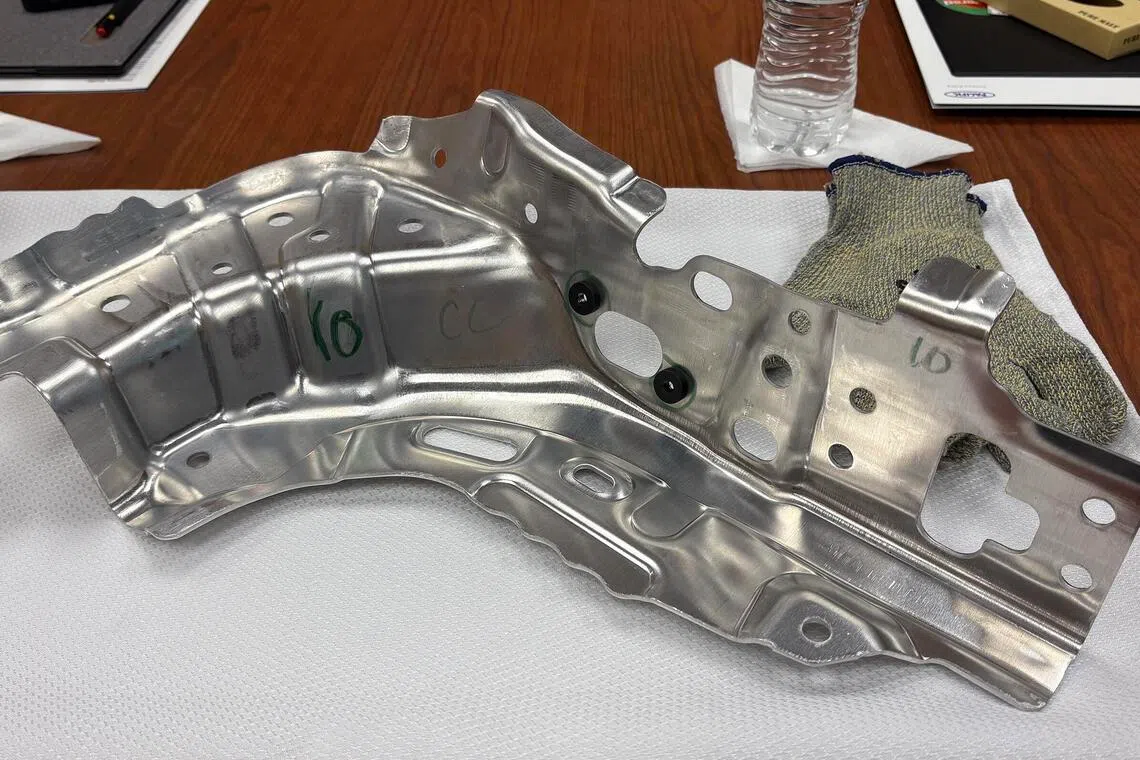
A metal component Pacific Manufacturing Ohio produced for Toyota.
ST PHOTO: ANNABELLE LIANG
During a press tour of Pacific Manufacturing, organised by the US State Department’s Foreign Press Centre, ST spotted finished components for Toyota on the factory floor.
Machines continued to churn out parts even as workers took a break for lunch. “Customers request for lower costs, so we have to operate like that,” Nakagawa said.
He expects the Japanese ecosystem in Ohio to continue to grow. “Our main customers want to localise in order to prevent some trade friction, or simply meet some of the regulations from the US government,” he added.
Japanese investors have also been active in the state of Utah, with involvement in multiple residential projects, Financial Times subsidiary fDi Intelligence has noted.
Eye on Asia
Park knows the pitch to international investors well.
He said JobsOhio has been stepping up its outreach to Asia, including Singapore, where it has established relationships with the Economic Development Board and Enterprise Singapore.
The Ohio economic agency also attended the Singapore Airshow for the first time in February 2026, meeting companies across industries including aerospace and bioscience.
One of the largest selling points for Ohio is location, Park said. Placed between north-eastern and Midwestern states, it is within a day’s drive to 60 per cent of the American and Canadian population.
He pointed to news network CNBC recently ranking Ohio as the top state in the US for business, after assessing metrics such as infrastructure and cost.
It comes after lawmakers in 2024 eliminated a minimum tax on commercial activity, which is now set at a flat rate of 0.26 per cent on taxable income exceeding US$6 million a year.
Also, the Greater Cincinnati region has designated zones where imported goods can be stored, processed and re-exported duty-free, resulting in savings for firms.
Anne Golden, executive director at the Japan America Society of Greater Cincinnati, believes many Japanese professionals who moved to Ohio have enjoyed its liveability.
The state’s metropolitan areas have the infrastructure, including schools running on Saturday, for Japanese families looking to maintain their children’s language proficiency for when they ultimately return home.
Foreign investors are also generally welcomed by locals in Ohio, said Rasmussen.
Modula, which makes automated storage and retrieval systems, took over a former printing facility in the city of Franklin several years ago and turned it into a manufacturing and logistics site.
“Tours are an important part of our business,” Rasmussen said. “The locals come in and cherish the memory of what used to be. They also really appreciate that a global company has made an investment in their region.”

