


SINGAPORE – A holiday to South Korea in early July left me hooked on a new collectible – it now dangles from my phone as a keychain.
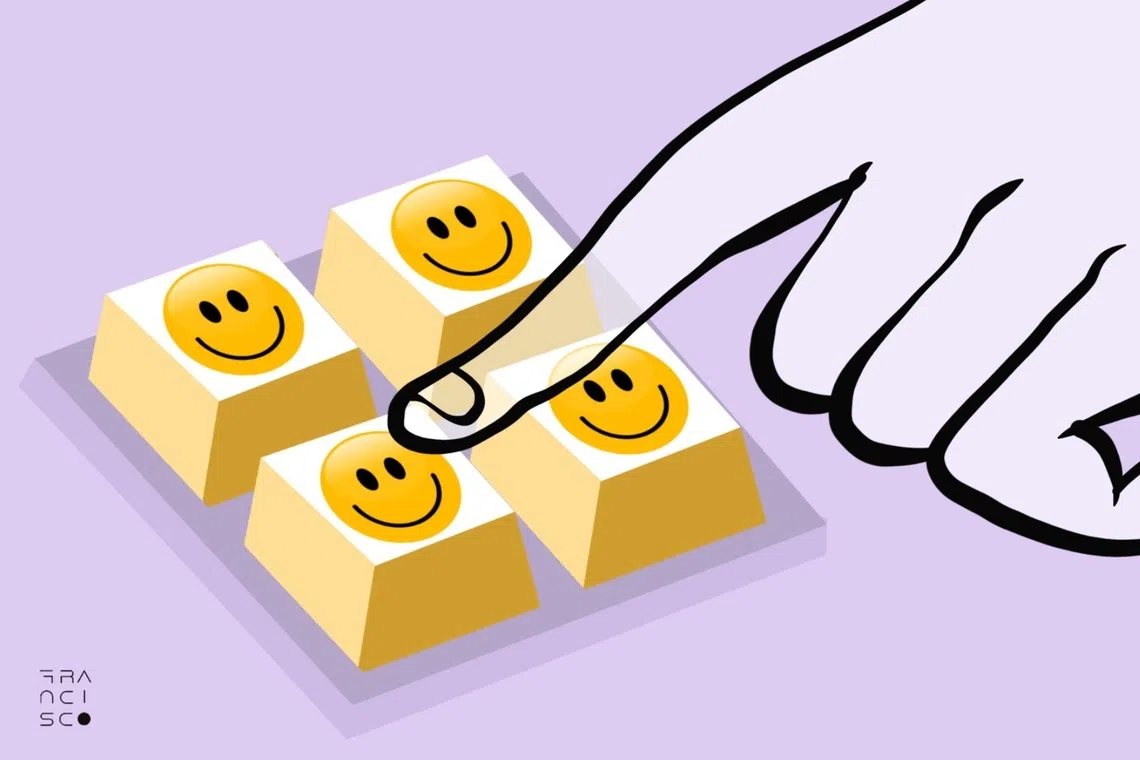
Enter the world of “keycap keyrings” – fidget toys made from mechanical keyboard keycaps, shrunk down into a portable form.
In South Korea, Gen Z and millennials have relied on them as a coping mechanism and stress reliever, at home and in the workplace.
I can understand why. In an increasingly fast-paced and digitalised world, it feels good to unplug, even for a brief moment.
Having lunch at home? Click. Need extra focus to complete a deadline? Click click. Waiting for the bus? Click click click.
It’s also nice to tap something that isn’t a screen. It reminds me of the good old days when I played Snake on a Nokia phone or Tetris on a game console.
As I learnt from Frisca Iskandar, a clinical psychologist at Singapore-based therapy and counselling service Talk Your Heart Out, simple physical actions like holding, squeezing or fidgeting with an object engage the sensory system, redirecting attention away from anxious thoughts and back to the present moment.
She likens this to grounding, a technique used to help individuals manage overwhelming emotions. “In clinical practice, we often talk about the importance of having healthy coping resources, and for many people, these objects become one of those resources,” she says.
It turns out the phenomenon is not new, and takes many forms, such as carrying an emotional support water bottle or clicking a favourite pen. For my mother, it is the satisfying, addictive feel of popping bubble wrap.
Frisca says: “What has changed is how visible these objects have become. Social media has made them part of everyday culture but, psychologically, the underlying need remains the same – people seek small reminders of comfort, familiarity and emotional safety.”
Her colleague at the counselling service, Carmen Yoong, points out that it is the same reason people bounce their leg or twist a ring on their finger.
“It’s actually an old regulation strategy, where the body is trying to discharge something on its own,” says the professional counsellor, adding that there is a rhythmic element to it that many people find soothing.
Novel way to express yourself
What I also find appealing is the experience of customising my own keyring. Those pop-up stores have a way of drawing you in with their extensive keycap designs, from colourful letters of the alphabet to popular Disney characters.
Back home in Singapore, I’ve seen keycap keyrings at department stores and independent retailers, with some creators putting a local spin on the designs – such as kaya toast and mahjong tiles.
I like how some designs take a playful approach to life’s little reminders. The clicker I bought from a South Korean stationery shop called Small Wins Club has keycap designs featuring advice like “save money”, “go out” and “drink water”.
A Hong Kong-based e-tailer called Pretty Useless Club sells sports-related designs such as those involving pickleball, tennis and badminton. “We tried all the tricks – meditation, yelling into pillows – but discovered something cute, like a quirky clicker toy, reminds us life’s still got charm,” say the founders on its website.
Perhaps what this generation craves are subtle ways to show their identity and style through hyper-personalised and exclusive designs.
Yoong says: “Choosing the character and colour is like saying something about yourself without having to explain anything out loud, which for many people, especially younger folks who are still figuring out who they are, feels a lot safer than having to put it into words.
“That’s the clever part of this trend – it’s doing two jobs at once. It’s a comfort object and a little flag that says this is me.”
However, Frisca cautions against overstating the effects of fidget items like keycap keyrings, which offer only a momentary sense of calm.
Rather than viewing the trend as “superficial”, she suggests identifying the emotional need the object fulfils, whether that is wanting to carry a small piece of joy every day, or wanting to express one’s identity.
“A keychain doesn’t reduce anxiety on its own,” she says, suggesting that these objects work best as supportive tools alongside other sources of emotional well-being – such as healthy coping habits and meaningful relationships – rather than as solutions in themselves.
How to avoid compulsive buying
As trends come and go, I am trying to resist buying more collectibles that I don’t exactly need. Just scrolling through Instagram makes it extra challenging to pass on new, limited-editions and exclusive designs.
There’s always something newer, cuter and nicer. But do I really need more?
Even though some designs are less expensive than others, the costs add up – some clicker sets start from $25, depending on the design and the number of additional charms or clickers.
Frisca says that even though collecting can be a healthy hobby, one should be concerned when buying more becomes the primary way to manage difficult emotions or seek temporary relief from stress.
“Am I buying this because I genuinely like it or because I’m hoping it will change how I feel right now? Healthy collecting comes from enjoyment. Compulsive collecting often comes from emotional urgency,” she adds.
She recommends setting a realistic budget for hobbies and allowing for a “cooling-off period” instead of making impulse purchases. If the emotional urgency fades after a day or two, you will have a clearer sense of whether you truly want the item, she says.
She adds: “I don’t think the goal is to stop collecting – it is to make sure we’re collecting because it enriches our lives, and not because we’re trying to fill an emotional gap that requires something deeper.”
As Yoong rightly points out: “Wanting comfort isn’t the issue. It becomes something to look at only when the buying starts outrunning the comfort the object is actually giving you.”

