


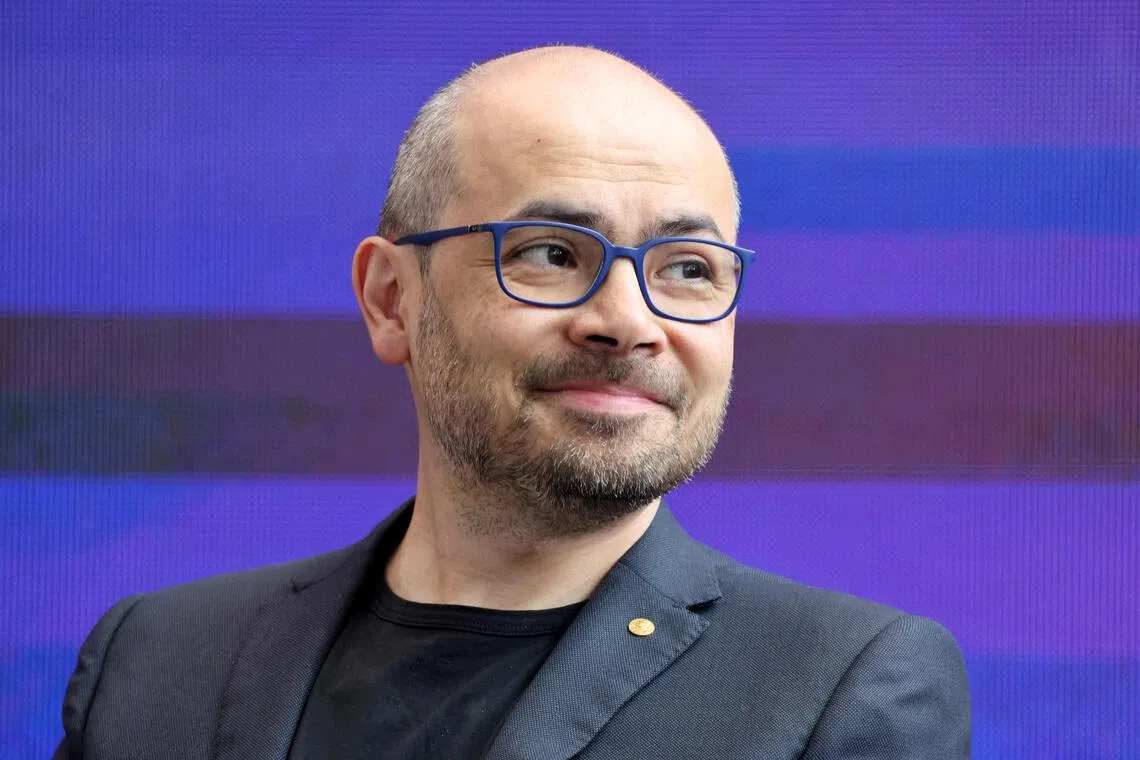
San Francisco – Alphabet’s Google is losing some of its most prominent artificial intelligence veterans in a seismic overhaul that is casting doubt over leadership of a critical area of growth right as competition intensifies.
Jeff Dean, a longtime Google employee central to the development of the company’s AI strategy, is departing to launch a start-up, taking several high-profile colleagues with him. Demis Hassabis, the head of Google DeepMind, is moving into a chairman role at the lab.
In the new structure, Hassabis will assume the dual titles of chairman of Google DeepMind and chief scientist of Alphabet. He is handing over operational control of the lab to Koray Kavukcuoglu, a longtime deputy, who has been promoted to senior vice president of Google DeepMind and will report to Alphabet chief executive Sundar Pichai, the company announced on Aug 5 in a blog post.
For Google, staying at the forefront of the AI race is existential. The rapid advances in generative AI are introducing new ways for consumers to get answers to their questions, presenting real alternatives to Google search and potentially undercutting the company’s advertising business.
The right talent is considered essential to succeeding in the AI race. Only a select few engineers in the world have extensive experience building complex, broad AI models. Historically, Google employed a bulk of them. The changes in leadership may make it harder for Google to recruit top talent and compete with rival labs.
Dean is bringing along at least three other prominent DeepMind employees to his new venture, including Sanjay Ghemawat, Quoc Le and Oriol Vinyals. The start-up, called Discovery Loop, will automate machine learning research to improve its own technology. Google provided investment funding for Discovery Loop and signed a deal to supply the startup with cloud computing resources.
Google had already lost two prominent staffers earlier in 2026 when Nobel laureate John Jumper left to Anthropic and star researcher Noam Shazeer went to OpenAI. One staff member characterised the latest departures of veteran staff as an earthquake for the organisation.
Despite pouring tens of billions of dollars into AI infrastructure and talent, Google has faced criticism that it has been too slow to turn its world-leading research into tangible progress in areas that matter commercially, like AI coding. The shakeup also comes as the flagship version of Google’s latest Gemini model has faced a months-long delay, despite a planned June launch.
Dean’s departure could “intensify scrutiny” of the company’s AI efforts, Bloomberg Intelligence analysts wrote in a note. Falling behind on the company’s most advanced models could make developers less likely to build around Google’s technology and, over time, threaten search, they added.
The personnel changes, including Hassabis’ move away from operational leadership and the departure of Dean – one of Google’s longest-serving and most influential AI leaders – represent the biggest reorganisation of Google’s AI efforts since the company combined its research teams under DeepMind in 2023.
Hassabis co-founded DeepMind, a pioneering artificial intelligence research lab that sold to Google in 2014. He has since become a leading figure in the development of AI technology.
“I’ve decided that now is the right time for me to hand over my day-to-day operational responsibilities at GDM, so that I have the time and space to focus on the big picture and help influence what is to come to the best of my ability,” Hassabis said in a blog post.
A chess prodigy and neuroscientist, Hassabis is one of the most recognisable figures in AI. He reached global fame after the virality of AlphaGo, DeepMind’s algorithmic system that outmatched human champions in the ancient game of Go and demonstrated great leaps in machine learning capabilities.
Google placed Hassabis in charge of its AI efforts in 2023 after merging DeepMind, its London-based lab, with its research efforts based in California. Engineers at Google had helped develop the transformer architecture that powers chatbots like ChatGPT, but OpenAI beat the company to market with the technology, forcing Google to scramble to reset its AI strategy.
In 2024, Hassabis won the Nobel Prize in chemistry – along with DeepMind’s Jumper – for their work on AlphaFold, an AI system that can predict the structure of proteins. Recently, Hassabis has also been leading on global AI policy, and has socialised a proposal with political leaders to create a US-led international self-regulating body for AI safety, similar to FINRA’s function for financial services.
In its blog post on Aug 5, Google said that Hassabis will remain the head of Isomorphic Labs, an Alphabet division spun out of DeepMind that is focused on drug discovery. Since launching in 2021, Isomorphic Labs has formed partnerships with major pharmaceutical companies and recruited several DeepMind researchers.
While Hassabis is one of the most famous AI figures outside Google, Dean is perhaps a larger force inside the company. The computer scientist joined the search engine in 1999, a year after its formation, and had a legendary reputation as a software developer, inspiring memes for his prowess.
After Pichai took over as Google CEO from co-founder Larry Page, Dean rose internally as one of Pichai’s most reliable lieutenants, overseeing the company’s research and AI divisions. BLOOMBERG

