


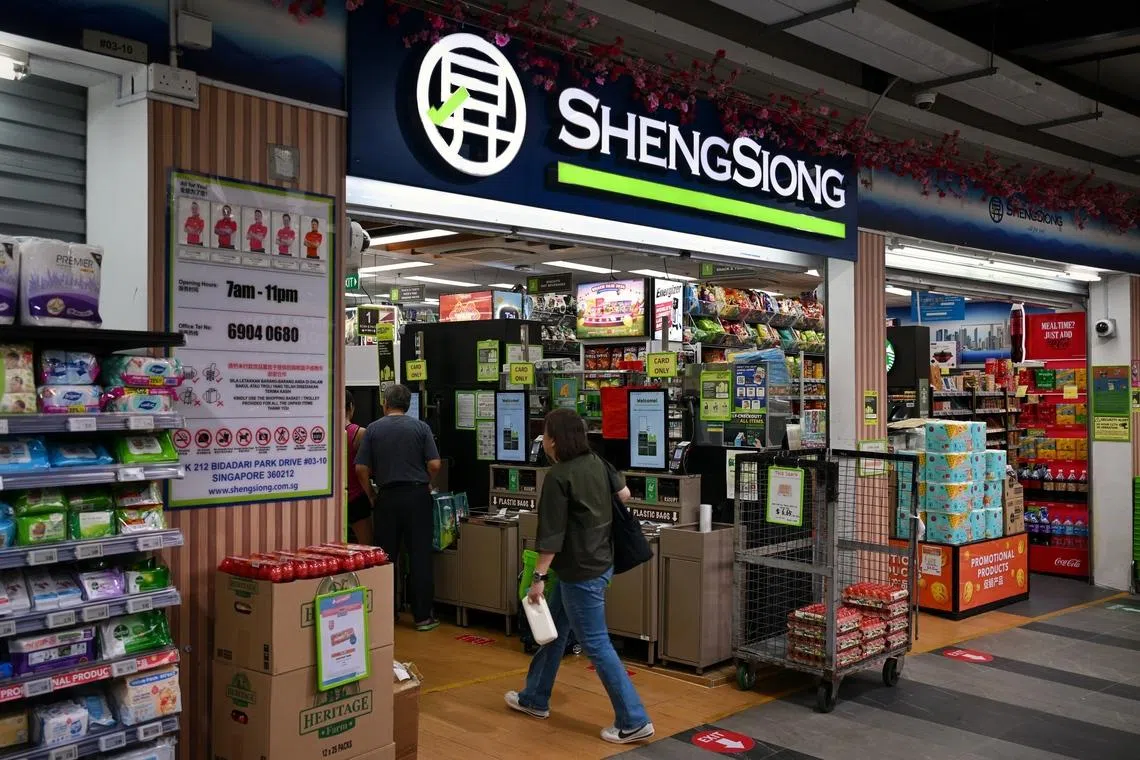
SINGAPORE – Sheng Siong may review its prices and product range to retain shoppers ahead of the opening of the cross-border rail link with Johor Bahru in January 2027, which could intensify competition in Singapore’s grocery sector.
“The retail grocery industry remains competitive, and with the Johor Bahru-Singapore Rapid Transit System (RTS) Link set to open in 2027, we stand ready to adapt our pricing, promotions and product mix as necessary to remain competitive,” Sheng Siong chief executive Lim Hock Chee said on July 29.
The RTS Link may intensify price competition, particularly for selected packaged groceries and household products, Sheng Siong said as it announced its financial results for the first half of 2026, filed with the local exchange after markets closed.
It said the actual impact on the supermarket chain will depend on factors such as fares, travel time, exchange rates, relative pricing, and consumer behaviour after operations commence.
Singaporeans are projected to spend $1.05 billion more across the Causeway once the rail link opens, according to a joint study released on July 16 by the Singapore Business Federation, the Restaurant Association of Singapore and the Singapore Retailers Association.
The study also projected a 51 per cent annual increase in Singapore consumers crossing over to JB in 2027, with groceries, pharmaceuticals, dining and beauty currently topping the list of categories Singaporeans spend on.
In the meantime, Sheng Siong will continue expanding in Singapore, with three new stores in Hougang, Riverdale in Sengkang and Woodlands set to open between July and September.
The company is also awaiting the outcome of a Housing Board tender for another store, while two more tenders are expected to be called over the next six to 12 months.
It added that it has also commenced a partnership with Foodpanda in June to grow its online market.
In the long term, Lim said he expects to see greater optimisation of operating systems and costs from Sheng Siong’s $520 million Sungei Kadut distribution centre, which broke ground on July 13.
Expected to be completed in 2029, the seven-storey facility will house automated storage and retrieval systems, robotics, intelligent warehouse management systems and multi-temperature storage zones to support more than 120 stores.
Sheng Siong now has a network of 90 stores in Singapore, including four which opened this year in Canberra Crescent, New Bridge Centre in Smith Street, Alkaff Crescent and Sembawang Crescent.
Sheng Siong’s revenue rose 11.9 per cent year on year to $855.4 million in the first half of 2026, driven by new store openings and continued consumer spending supported by CDC vouchers and promotions.
The operator’s expenses also rose during the period as it hired to support more stores. It also paid out higher variable bonuses and raised retail workers’ salaries in September 2025.
Nevertheless, Sheng Siong’s net profit still rose by 11.9 per cent over the same period to $81 million.
The company said consumer demand for affordable daily necessities remains strong amid elevated costs of living, and it will continue to optimise its sales mix, efficiency and productivity to manage costs and remain profitable for shareholders.
Sheng Siong’s board declared an interim dividend of 3.75 cents per share for the first half, up from 3.2 cents during the same period in 2025. The dividend will be payable on Aug 28.
Shares of Sheng Siong closed July 29 at $3.29.

