


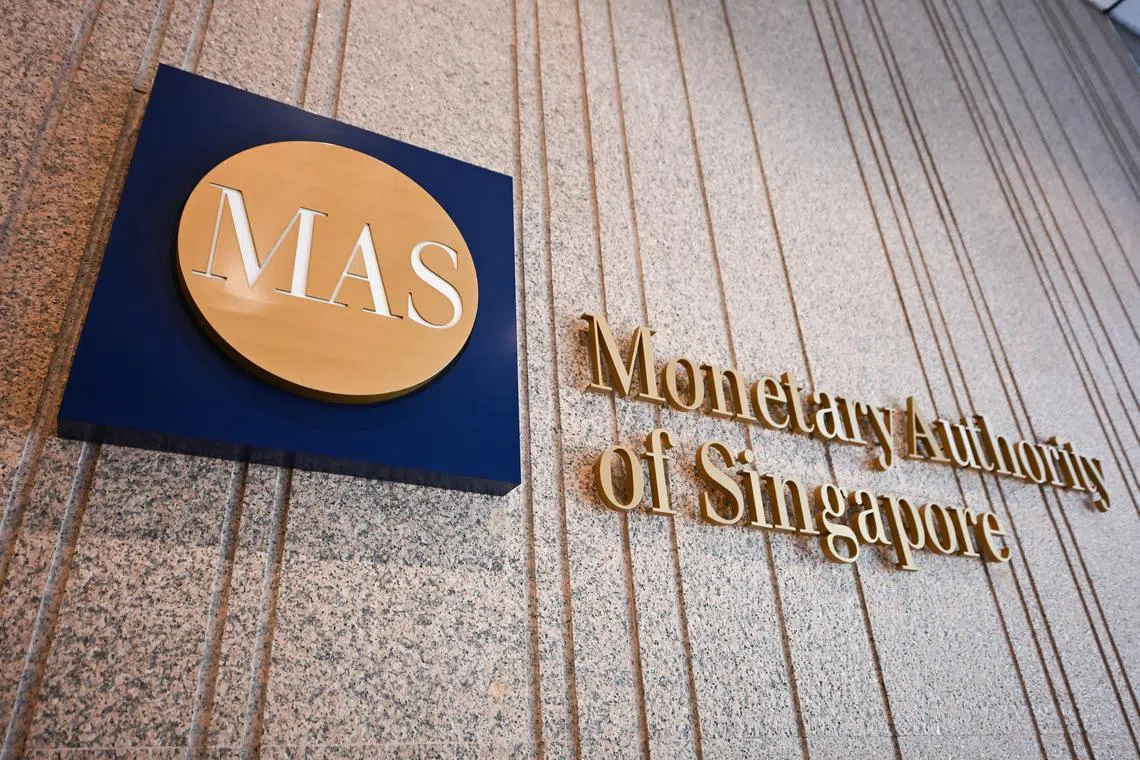
SINGAPORE – The Monetary Authority of Singapore (MAS) reported a net profit of $20 billion for the fiscal year ended March 31, 2026, as investment gains more than offset the drag from a stronger Singapore dollar.
This is up from the net profit of $19.7 billion for the preceding fiscal year.
The central bank’s managing director Chia Der Jiun said at a media briefing on July 28 that it made investment gains of $39.8 billion, buoyed by resilient global equity and bond markets.
In the fiscal year ended March 31, 2025, MAS made investment gains of $31.4 billion.
“Investment gains were strong as the global economy remained resilient to repeated shocks and financial markets performed well,” Chia said.
All asset classes across bonds and equities, developed and emerging markets, posted good returns, he said.
While investment gains vary from year to year, the latest upturn was similar to the previous year’s and above the central bank’s 10-year historical average of $18.3 billion.
The investment gains were partly eroded by negative currency translation effects of $16.4 billion due to a stronger Singapore dollar against the US dollar and the Japanese yen.
The stronger Singapore dollar has helped to dampen the effects of imported inflation, while resulting in negative currency translation effects, he said.
Such effects arise when MAS’s official foreign reserves (OFR), which are held in foreign currencies, are reported in Singapore dollars.
Chia said these effects do not affect the central bank’s ability to conduct monetary policies or support financial stability, which involves the use of foreign currency assets and liquidity.
These costs reflect the volume of money market operations and interest rate levels, both of which moderated over the year, he said. Income from the Reserves Management Government Securities (RMGS) has partially offset this expense, he added.
RMGS is a type of non-marketable security issued by the Government to MAS to facilitate the transfer of excess OFR to the Government for longer-term management by sovereign wealth fund GIC. This allows those funds to be invested in higher-yielding, long-term assets.
MAS incurred $2.4 billion in costs from money market operations to manage banking system liquidity.
It will contribute $1 billion to the Government’s consolidated fund, and return a further $2.5 billion of its net profit to the Government.
The amount to be paid to the Government reflects the offsetting of losses accumulated from previous years.
“MAS financial results reflect the performance of global asset markets after accounting for the costs of money market operations and negative currency translation effects from a stronger Singapore dollar,” Chia said, adding that these effects vary from year to year.
Singapore’s financial sector entered 2026 from a position of strength even as the outbreak of conflict in the Middle East in late February injected fresh uncertainty to the global market.
MAS said in its 2025/2026 annual report released on Jul 28 that the fluidity in the Middle East situation would continue to pose some uncertainty to Singapore’s growth outlook.
Growth across Singapore’s key trading partners is expected to moderate in 2026 from the strong pace in 2025 amid the energy shock and lingering trade policy uncertainty.
However, global demand for artificial intelligence-related technologies remains strong and should continue to support near-term growth, it said.
Overall, the Singapore economy is expected to continue to grow at a firm pace for the rest of 2026, with the positive output gap forecast to widen slightly from 2025.
The Ministry of Trade and Industry has kept its official full-year 2026 gross domestic product growth forecast at 2 to 4 percent.
Singapore’s economy grew by a robust 5 per cent in 2025, underpinned by stronger-than-expected AI-related production and resilient regional trade flows, despite the headwinds of higher US tariffs.
Despite the external volatility, Singapore’s financial system has remained stable.
Deputy Prime Minister Gan Kim Yong, who is also MAS chairman, said in the annual report that growth in the finance and insurance sector was broad-based, with steady performance in the banking, fund management and security dealing segments.
Banks are well-capitalised, liquid, and continue to diversify their exposures, with stress tests confirming their ability to withstand severe global shocks, he said.
The insurance sector is also strong, while investment funds have managed liquidity risks effectively and maintain sufficient buffers. Foreign exchange and money markets are also functioning smoothly, he added.
Amid ongoing uncertainty and volatility, MAS continues to stress the importance of prudent risk management and maintaining strong financial buffers.
MAS has been intensifying efforts to safeguard macroeconomic resilience while reinforcing the republic’s standing as a trusted financial centre.
Gan pointed to strong validation from the Financial Action Task Force, which recently affirmed Singapore’s legal and supervisory frameworks, even as authorities and banks step up anti-scam measures amid persistently high fraud losses.
MAS is also accelerating initiatives to deepen the capital markets, strengthen its position in growth capital and commodities trading, and drive industry-wide adoption of AI – moves aimed at ensuring the sector remains competitive as global financial and technological shifts gather pace.
Recent measures include reforms to boost the equities market – aimed at attracting quality listings, improving investor confidence, and enhancing global connectivity – as well as a new push to grow private markets such as venture capital, private equity, and private credit.
MAS is also expanding Singapore’s role as a gold trading and clearing hub to meet rising regional demand. It is working closely with the Singapore Bullion Market Association and industry participants on new initiatives to meet the growing demand among investors to vault and trade gold in Singapore.
Together, these initiatives are designed to strengthen capital formation across public and private markets and support business growth.

