During a work trip to Bangladesh, Vale Tan found herself crossing a beach on a donkey before standing on a bench to board a speedboat.
She was there to oversee a cargo discharge operation at a sea anchorage, where goods were transferred onto smaller boats called barges for transport to shore.
It was not quite the image most people would have of a maritime career. But for Tan, now 37, moments like these are exactly what drew her in.
Watch this video to find out more about what Tan does.
As a senior chartering manager at ZAG International, she works in ship chartering – acting as a matchmaker of sorts, pairing the right cargo with the right vessel at the right time and price.
Her role focuses on dry bulk cargoes for the cement industry – such as cement, clinker, slag and fly ash that are transported in large quantities around the world to help keep industries and economies running.
Fuel costs shift, vessel availability changes and cargo schedules move without warning. Reading those signals quickly is the job.
More than a decade in, she still enjoys the chase.
Q: What first sparked your interest in maritime?
When I was in primary school, I loved swimming and thought I might join the Navy.
Then one day, my father brought my family to Jurong Hill Park. I ran up the tower and saw these unfamiliar-looking ships and structures. I did not know then that it was Jurong Port, but I remember thinking that a career related to ships would be quite different from others.

Tan (right) with her father during her primary school years. A family outing to Jurong Hill Park sparked her curiosity about ships and eventually led her to a career in maritime.
PHOTO: COURTESY OF VALE TAN
As I grew older, I started reading more about shipping and my curiosity led me to pursue maritime studies at Nanyang Technological University. But it was an internship with a shipowner that convinced me ship chartering was what I wanted to do.
I liked the market dynamics and the human factor – speaking to owners, charterers and brokers, hunting down the best freight rates and negotiating deals for the company. I also could not see myself being trapped in the office from 9am to 6pm every day.
Q: How did your career in ship chartering begin?
I started in 2011 as a junior chartering executive at a commodity trading and ship owning company and gained exposure to different parts of the dry bulk business. My time there taught me how closely everything in shipping is connected – from fuel costs to vessel availability and market timing.
The shipping market was not doing very well then, but the slower market gave me time to build relationships and learn.
In 2018, I joined a commodity trading company to start its shipping desk in Singapore. It was challenging but rewarding because I worked with a wider range of clients and gained a better understanding of their operational challenges.
I joined ZAG International in 2021, where I am now a senior chartering manager.

As a senior chartering manager, Tan closely monitors market trends, vessel availability and freight rates to help move cargo efficiently around the world.
PHOTO: SPH MEDIA
Q: What does a typical day look like as a ship charterer?
For me, it starts with checking market reports and bunker prices before speaking to shipowners and brokers to understand freight rates and vessel availability. Then, we assess which option works best for our traders or clients.
One of the biggest decisions is timing. Do we secure the vessel now, or wait because we think the market or prices may fall? If we wait too long, the right vessel may no longer be available.
The work is also highly international. In a single day, I could be speaking to a port agent in China, a shipowner in Greece, a charterer in Australia and a ship master from India.
Negotiations can take a day or even weeks. Even after a vessel has been secured, charterers may still be called to help resolve issues that arise during a shipment. This could involve working with different parties to settle disagreements or find solutions when operations do not go according to plan.
But that fast-moving nature is also what makes the work exciting.

After more than a decade in maritime, Tan (second from left), pictured with her colleagues, says a healthy work-life balance is essential for thriving in the industry.
PHOTO: COURTESY OF VALE TAN
I also have the opportunity to travel to meet shipowners and clients, oversee cargo operations and attend international conferences. Shipping is a more relationship-driven industry, and while technology and artificial intelligence have made our work more efficient, building trust and understanding our client’s needs remain an essential part of the job.
Q: What do you enjoy most about your role?
I enjoy that the work keeps me close to both the market and the people behind it – from cargo owners and shipowners to seafarers.
I used to board ships to speak to the crew and have lunch with them. Once, a crew member asked if I could arrange the next voyage back to his country so that he could visit his family. That was very emotional for me.
Seafarers leave their families and sail for months before they can see them again.
Moments like that remind me that shipping is not just about cargo and freight rates. There are people behind every voyage.
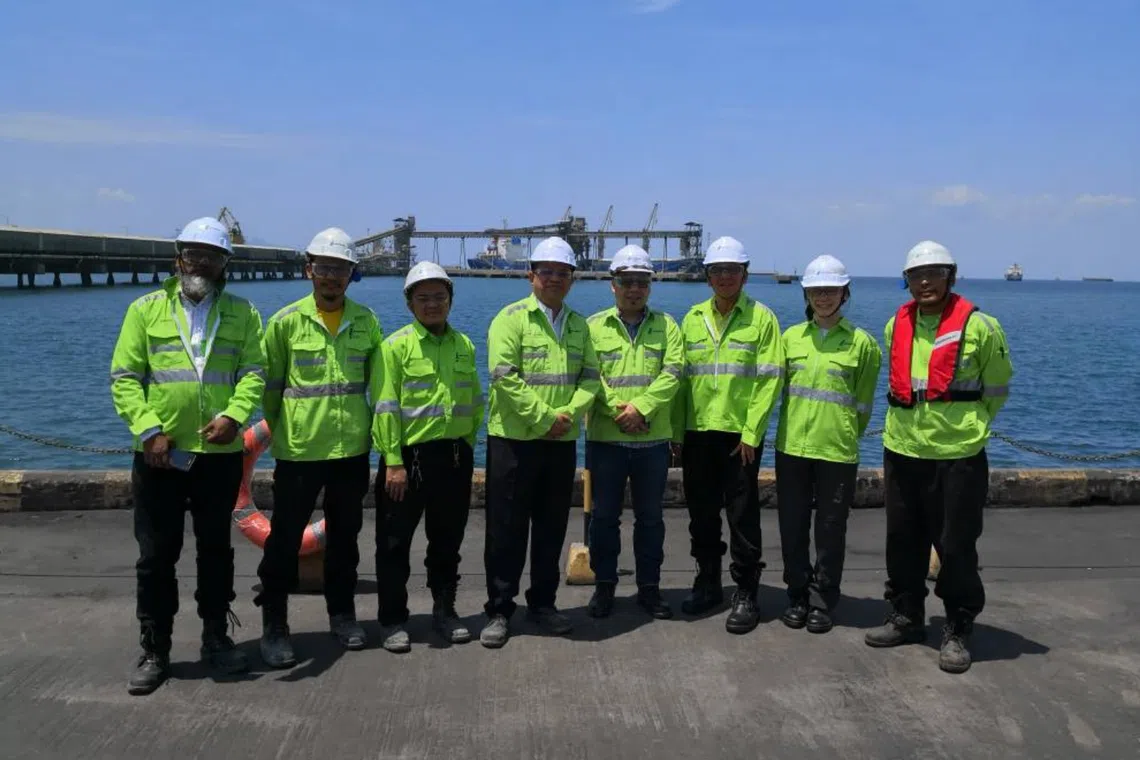
Tan (second from right) at the Langkawi Port with traders, clients and port staff in 2018.
PHOTO: COURTESY OF VALE TAN
Q: What are some misconceptions people have about maritime careers?
Many people think shipping is only about container ships or logistics management. But the industry is much broader than that.
Behind every voyage is a wider network of people working in areas such as insurance, bunkering, ship finance, marine supplies and ship management, alongside sectors like dry bulk, tankers and gas.
People may also think they need a technical or seafaring background to join maritime. That is not always true. It helps to have some understanding of the industry, but there are many roles that require different skill sets.
Depending on the role, skills such as critical thinking, problem-solving, data analysis, communication and negotiation can be just as important.
Q: What advice would you give to those considering a career in maritime?
Most goods are transported by ships, so there are many career opportunities within the industry.
Chartering, in particular, requires strong communication skills, teamwork and the ability to adapt quickly under pressure. You will feel challenged every day, but you will never feel bored at work. Having a positive attitude also makes a big difference.
At the same time, the learning curve can be steep at the start. But once you experience a few shipments and understand how everything is connected, things will slowly begin to click into place.
Find out more about the career opportunities in maritime here.