For decades, Scanteak has been part of many Singaporeans’ first homes.
But when the home-grown furniture brand, which started as a small shop in Joo Chiat in 1974, began expanding into markets such as Japan and Taiwan, it discovered that its reputation for quality was no longer enough.
Overseas customers wanted more than assurance. They wanted proof.
Furniture manufacturers were increasingly expected to meet internationally recognised standards and certifications covering product safety, responsible sourcing and sustainability, including strict limits on formaldehyde emissions.
“We had a goal to scale our business and in order to expand internationally, we adopted the relevant standards,” says Scanteak chief executive officer Jamie Lim.
What began as a requirement to enter new markets soon transformed the business in unexpected ways.
Instead of treating standards as a compliance exercise, Scanteak used them to rethink how it designed, sourced and manufactured its furniture. Along the way, standards also shaped Lim’s own thinking about sustainability.
“When I started having children, that was when I started caring a lot more about what we leave behind for them,” says the 45-year-old mother-of-three. “I became a little more aware of chemicals like formaldehyde in our furniture.”
That shift in perspective complemented the company’s business strategy.
By adopting internationally recognised standards and certifications covering product safety, timber traceability and responsible sourcing, Scanteak not only strengthened customer confidence but also built the credibility needed to compete overseas.

After adopting internationally recognised benchmarks, Scanteak now makes over 90 per cent of its furniture from solid teak, sourced from traceable, responsibly managed timber estates.
PHOTO: SPH MEDIA
Its experience reflects a broader shift taking place across industries. As consumers, regulators and business partners place greater emphasis on sustainability, standards have become an increasingly important way for companies to demonstrate that their claims are verified by independently recognised benchmarks.
Choy Sauw Kook, director-general for quality and excellence at Enterprise Singapore (EnterpriseSG) says: “Scanteak’s journey illustrates how standards can help companies respond to evolving consumer expectations while opening doors to new markets.
“More than a compliance requirement, standards can be a strategic tool for businesses to strengthen credibility, improve products and compete more effectively.”
EnterpriseSG oversees this standards infrastructure through the industry-led Singapore Standards Council, which brings together industry, government and academia to identify new standards and keep standards current as industries evolve.
In June 2026, it launched the Standards and Conformance 2035 road map to help Singapore businesses adopt standards early, innovate faster and compete more effectively in global markets.
Adds Choy: “Consumers today are asking more questions about the products they bring into their homes – from material safety to responsible sourcing. Standards provide a common benchmark, while testing, inspection and certification help show that products meet those standards. Accreditation completes this chain of trust by ensuring these checks are carried out by impartial and competent bodies.”
How sustainability standards opened overseas markets
Meeting overseas requirements meant progressively adopting the California Air Resources Board (CARB) benchmark, which sets strict limits on formaldehyde emissions from composite wood products such as plywood and medium-density fibreboard.
The changes were significant.
Manufacturing costs increased by around 10 per cent as Scanteak switched to CARB-compliant plywood and tightened material requirements across its Indonesian supplier network.
But the company also saw an opportunity.
“We saw that the price of teak was only 2 to 10 per cent more than the CARB-standard plywood, so we transformed over 90 per cent of our products to be made of solid wood,” shares Lim.
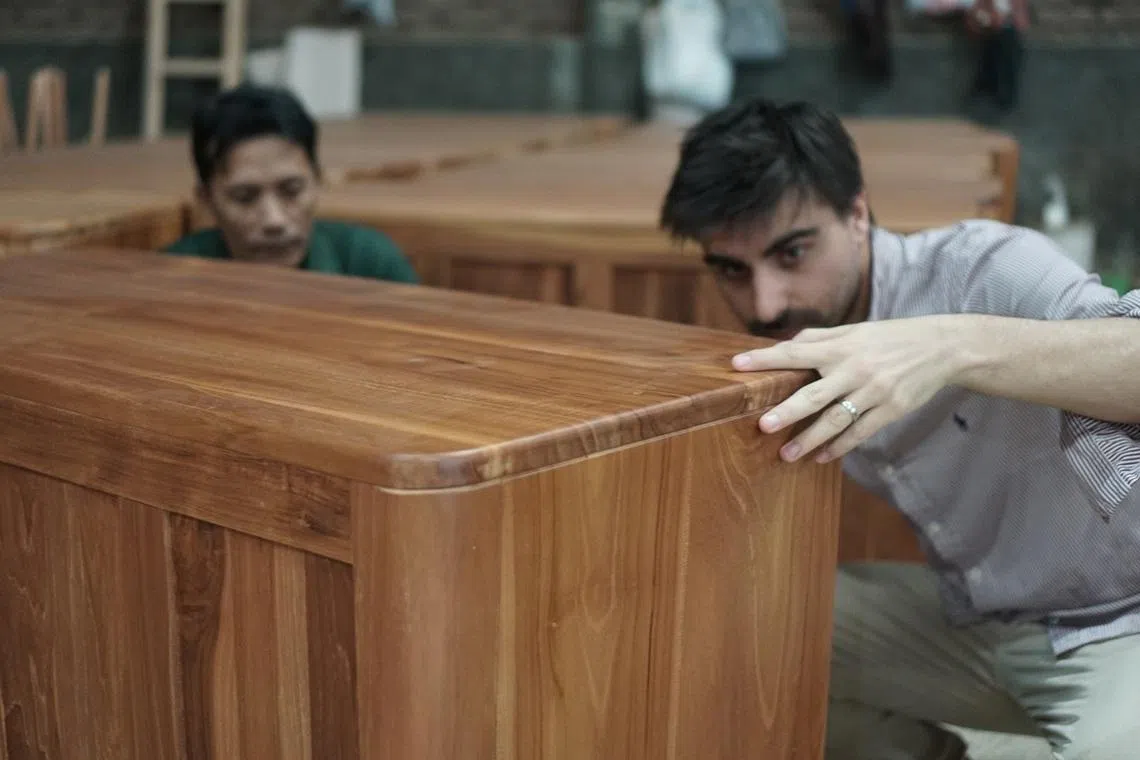
At one of Scanteak’s supplier factories in Indonesia, quality inspectors carry out checks on structural integrity, wood grain, mould and varnishing before furniture is cleared for shipment.
PHOTO: SCANTEAK
The move reduced reliance on materials associated with formaldehyde while reinforcing Scanteak’s reputation for quality and durability.
It also highlighted another challenge.
Teak, a premium hardwood that takes decades to mature, has long been associated with illegal logging in Indonesia, where Scanteak sources most of its timber.
“It wasn’t easy because it’s cheaper to get roadside timber in Indonesia than certified timber,” says Lim. “But if we wanted to grow and scale, we had to find a sustainable, good source of wood.”
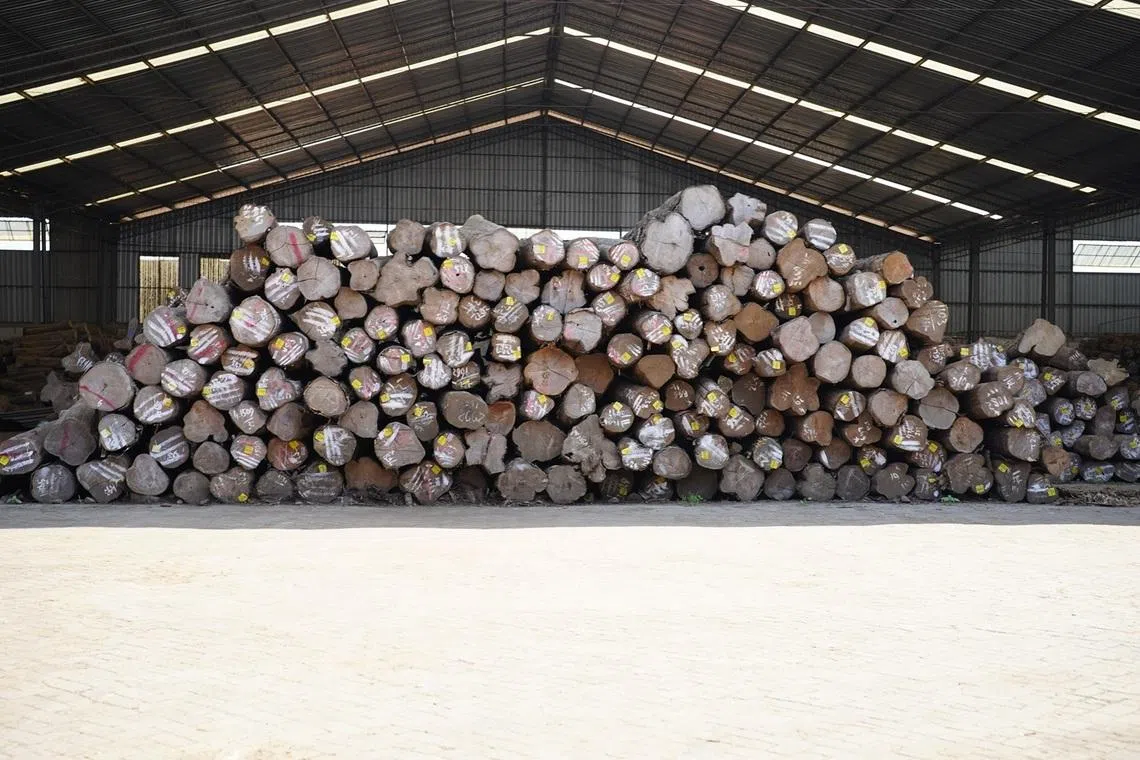
Every log at Scanteak’s supplier facility in Indonesia is serial-numbered for traceability, enabling the timber to be tracked throughout the supply chain under Indonesia’s SVLK certification system.
PHOTO: SCANTEAK
Today, Scanteak sources its timber from Indonesian suppliers that comply with the SVLK legality and traceability framework. It has also stationed 11 quality control officers across its supplier network to audit materials and verify compliance, while every log receives a QR code and serial number so each piece of furniture can be traced back to its source.
As sustainability expectations rose globally, what was once a competitive advantage became a business necessity.
“When we go to different countries, they’ll ask if we are SVLK- and Forest Stewardship Council-compliant, and having these certifications have made it easy for us to scale,” says Lim.
Building trust in carbon reporting
Scanteak’s experience reflects a broader trend.
As businesses increasingly need to prove their sustainability credentials, standards are becoming just as important in industries where the product is not furniture – but data.
PlanetWise founder and chief executive Pavan Sharma saw first-hand how businesses struggled to measure and report carbon emissions consistently, particularly as supply chains became larger and more complex.
“If you can show your sustainability journey and demonstrate progress in reducing your carbon impact, you get a fair chance of winning contracts. It is a tool for improving your return on investment, not just ticking a box,” he says.
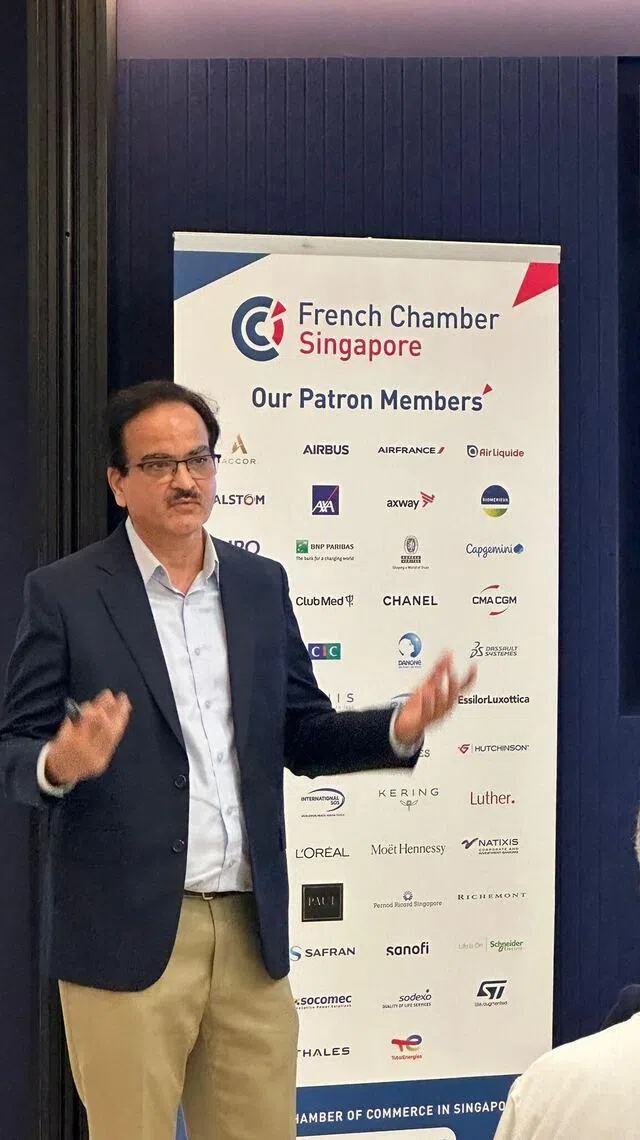
PlanetWise founder and CEO Pavan Sharma built the company’s carbon management platform around ISO standards to help businesses track and report emissions more consistently.
PHOTO: PLANETWISE
PlanetWise developed a carbon management platform built around internationally recognised ISO standards, such as ISO 14064-1, allowing companies and their suppliers to measure, report and reduce greenhouse gas emissions using a common framework.
“You cannot have an effective net-zero strategy unless your suppliers are also onboarded,” says Sharma.
The platform is also a licensed partner of Global Reporting Initiative, the organisation behind the world’s most widely-used framework for environmental, social and governance reporting.
The platform, which is also certified to ISO 27001, is now used by organisations including ST Logistics, for facility-level emissions management; and an institute of higher learning for its carbon management training programme.
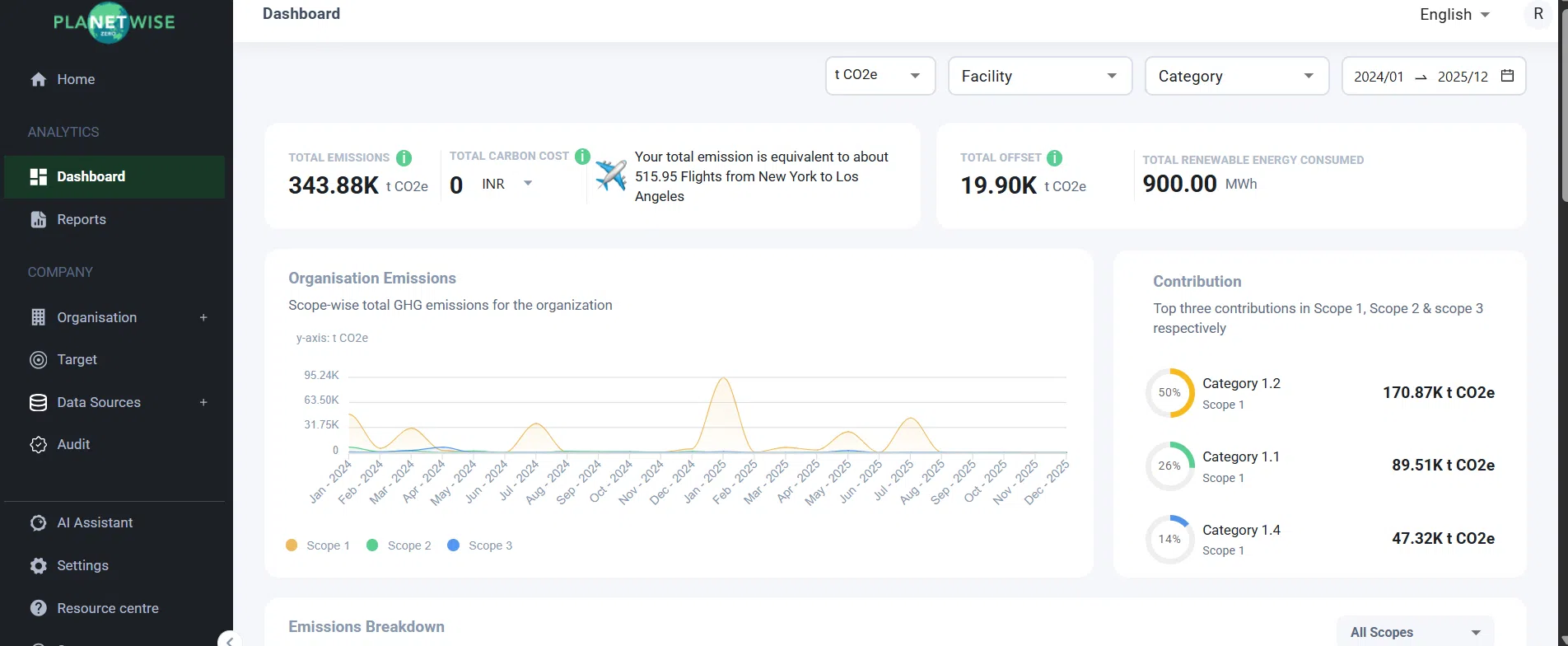
PlanetWise’s carbon management platform helps businesses measure, report and reduce Scope 1, 2 and 3 greenhouse gas emissions.
PHOTO: PLANETWISE
It has also helped PlanetWise expand into India and Sri Lanka, where companies increasingly need credible carbon reporting to remain competitive in global supply chains.
As carbon reporting becomes a growing requirement for businesses worldwide, Sharma believes internationally recognised standards and certifications will only become more important.
“It doesn’t matter whether you’re a user in Singapore, South-east Asia or anywhere in the world,” he says. “We are all speaking the same language.”
This story is part of a series on how home-grown companies stay competitive and are benefitting from the adoption of international standards, with the support of Enterprise Singapore. Find out more here.