


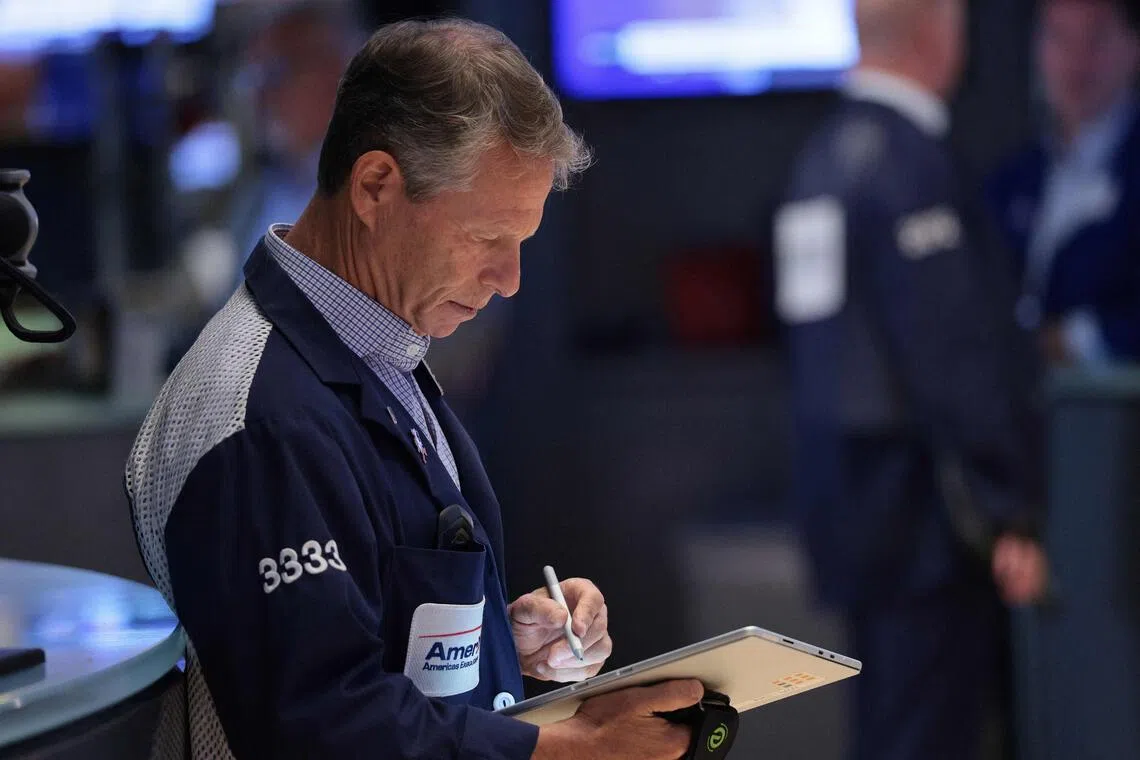
NEW YORK – The S&P 500 ended lower on July 8 after US President Donald Trump said an interim deal aimed at ending the war with Iran was “over,” while Broadcom led gains among recently battered chip stocks.
Speaking at a NATO summit in Turkey, Trump said he had no interest in further talks with Iran and warned that Washington would likely carry out additional strikes on the night of July 8.
Trump’s comments marked the latest setback in the back-and-forth talks that have swung between threats of escalation and hopes for diplomacy, leaving investors wrong-footed by several false starts towards a peace deal.
“Duration is the key here. How long does this go on?“ said Rob Haworth, senior investment strategist at US Bank Wealth Management in Seattle.
“If we see damage to Iranian infrastructure, the market may have to respond more seriously to that because there’s likely Iranian retaliation.”
SpaceX fell 0.8 per cent to US$148.38, the satellite and rocket company’s lowest close since its Wall Street debut on June 12.
Microsoft and Alphabet each fell more than 1 per cent, while Meta Platforms lost 2 per cent.
Helping keep the Nasdaq in positive territory, Broadcom rallied 4.8 per cent after Apple said it plans to spend more than US$30 billion (S$38.8 billion) as part of a chip-supply agreement reached earlier this week with the chipmaker.
“Any time you get an announcement from Apple about using your equipment, it’s pretty positive – especially when you have 2.5 billion Apple devices in people’s hands around the globe,” said Art Hogan, chief market strategist at B. Riley Wealth.
Nvidia rose 3.65 per cent after the Information reported that China plans to allow its top AI firms to buy a limited number of the company’s H200 chips.
The S&P 500 declined 0.28 per cent to end the session at 7,482.71 points.
The Nasdaq gained 0.2 per cent to 25,870.65 points, while the Dow Jones Industrial Average declined 1.09 per cent to 52,348.39 points.
The PHLX chip index rose 2.23 per cent.
Nine of the 11 S&P 500 sector indexes declined, led lower by industrials, down 3.41 per cent, followed by a 2.45 per cent loss in materials.
Oil prices jumped following Trump’s remarks, with Brent crude futures settling up 5.2 per cent.
Treasury yields also rose as the selloff spread to bonds.
The latest escalation in the conflict threatened to unsettle the equities rally that has carried the benchmark S&P 500 up about 9 per cent so far this year, despite sharp declines after the Mideast war started.
A renewed jump in oil prices could revive inflation concerns and further complicate the Federal Reserve’s path.
Energy price-sensitive travel stocks fell as higher oil prices stoked concerns over fuel costs and demand.
United Airlines and Delta Air Lines both lost more than 1 per cent. Cruise operators also slipped, with Carnival down 3.9 per cent and Norwegian Cruise Line losing 1.9 per cent.
The International Monetary Fund on July 8 once again lowered its 2026 global growth forecast to 3 per cent, warning of ongoing risks posed by the war in the Middle East.
Inflation worries mounted at the US central bank’s meeting in June, as officials followed Federal Reserve chairman Kevin Warsh’s lead to a more stripped-down policy statement, minutes of the session showed on July 8.
Traders project a likely rate hike by the Fed’s December meeting, according to CME’s Fedwatch. Declining stocks outnumbered rising ones within the S&P 500 by a 3.5-to-one ratio.
Volume on US exchanges was relatively light, with 17.8 billion shares traded, compared to an average of 23.0 billion shares over the previous 20 sessions. REUTERS

