


Washington – A growing nationwide shortage of high-skilled workers threatens to delay construction of billions of dollars in new semiconductor plants across the United States and constrain future chip production unless the industry pools resources and the government keeps up funding, according to a new report.
The deficit is expected to be most acute in states such as Texas, California, Arizona, New York and Ohio, where many of the new facilities are being planned, according to new analysis including a survey of employers from McKinsey & Co., the chip industry group SEMI and the National Science Foundation.
Altogether, the skilled labour shortage is projected to reach as much as 157,000 full-time workers by 2030, the study released on July 7 found.
The dearth of talent risks stalling plans by Taiwan Semiconductor Manufacturing Co. (TSMC) to invest as much as US$265 billion (S$342.7 billion) in a dozen chipmaking and packaging facilities in Arizona, as well as Micron Technology’s vision to spend US$100 billion on memory chip production in New York and Samsung Electronics’ logic chip facility in Texas. Even Intel’s delayed US$28 billion investment in Ohio is set for shortages once production ramps up, the report said.
The workforce challenges mark the latest hurdle for chipmakers seeking to expand their manufacturing footprint in the US and reverse the migration of production capacity to Asia that unfolded decades ago. Rising prices for a wide range of goods including copper, steel and cement threaten to increase the cost of construction for new facilities billed as a centerpiece of President Donald Trump’s economic agenda.
At the same time the chip industry expects to see a worker shortfall, the AI boom – and companies’ rush to invest in it – has also been blamed for layoffs in other parts of the labour market, including in the tech industry. Challenger, Gray & Christmas, which tracks layoff plans, found almost 102,000 announced job cuts attributed to AI so far in 2026.
Unless addressed soon, the chip industry labour gap risks undermining not only the billions of dollars in planned investment by companies but also the US grants aimed at boosting domestic production under the 2022 Chips and Science Act, according to the report. The authors recommended a range of solutions including, continued government funding, expanded curriculum on semiconductors and earlier exposure to chip industry careers.
“There’s just not enough talent to go around,” said Taylor Roundtree, a partner at McKinsey who helped with the analysis. “Folks are realizing that the potential gap is so large that they collectively do have to solve it.”
By 2030, about 74 per cent of the semiconductor industry’s unfilled roles will be in manufacturing and 60 per cent in engineering, the study found. While Chips Act-funded programmes have helped to increase the number of technicians available to work at new plants, those initiatives have hardly made a dent in addressing the need for manufacturing and hardware engineers.
Already, nearly three-quarters of employers are reporting significant difficulty in hiring engineers, according to the survey, which canvassed semiconductor companies. The root of the problem is that few US engineering students – only about 3 per cent – go on to work in the chip industry, with most opting for more lucrative software-related fields like artificial intelligence.
The Chips Act provided the National Science Foundation with US$200 million through 2027 for workforce development through programs that educate students and train new workers via an organisation called the National Network for Microelectronics Education. The authors recommended keeping up the funding, though the report didn’t elaborate on extending those initiatives.
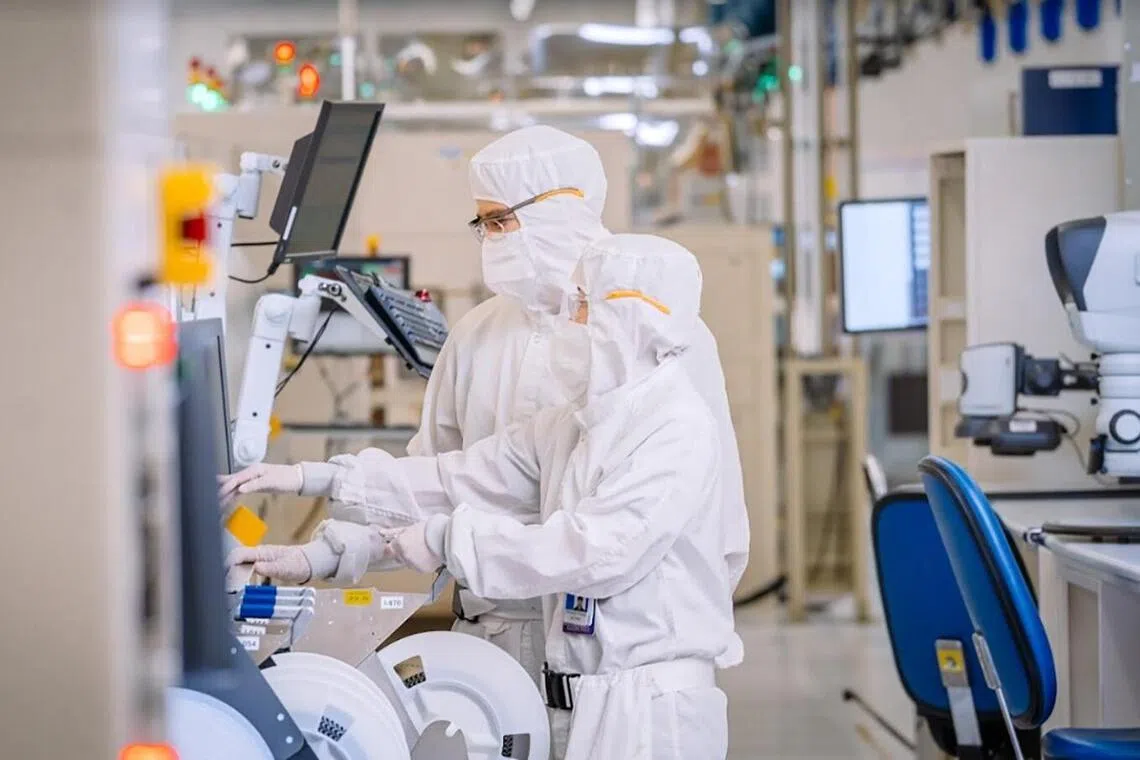
Ongoing efforts to increase interest in the industry have included programs giving elementary school students in Arizona the chance to touch semiconductor equipment and try on a white bunny suit – the full-body coverall fab workers must wear to ensure no microscopic particles ruin the sensitive semiconductor manufacturing process.
“This is an industry that hasn’t been doing a significant build-out in the United States in decades,” Roundtree said. “High school guidance counselors, college professors – this just isn’t a natural career for a lot of them to advise folks to look into.” BLOOMBERG

