


SINGAPORE – Singapore is making a push to deepen its role as a risk management hub for Asia, or the go-to location for companies to mitigate risks and build financial safety nets.
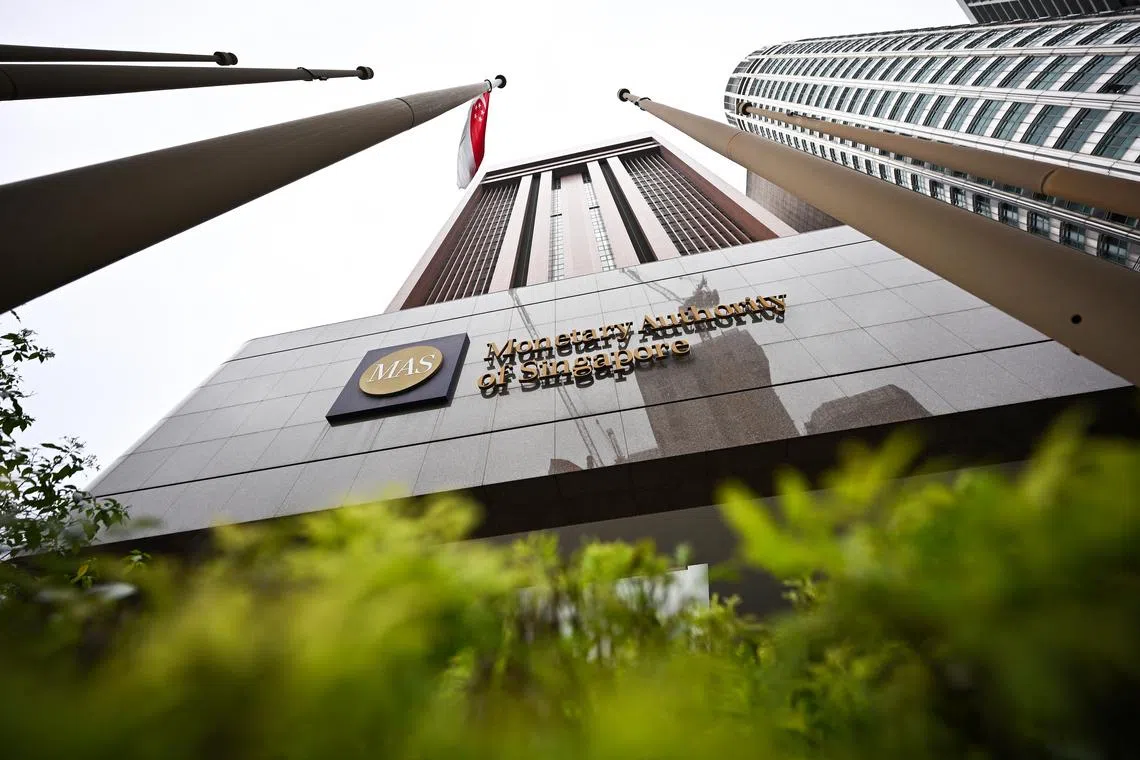
The Monetary Authority of Singapore (MAS) is proposing to establish a legislative framework for a new corporate structure, called the protected cell company (PCC), which is targeted to be implemented in 2028.
The initiative will support the growth of alternative risk transfer solutions in the insurance and reinsurance industry, said the regulator on July 7.
“Companies globally are seeking to retain greater control and flexibility in risk financing and retention or procure risk coverage to complement traditional insurance capacity,” the regulator added.
The proposed framework is set out in a consultation paper on its website, which is open for public feedback until August 7.
The consultation paper follows the announcement of the PCC framework by Deputy Prime Minister Gan Kim Yong at an event by the Association of Banks in Singapore on June 25.
Gan, who is also the MAS chairman and the Minister for Trade and Industry, noted in his speech during the event that “risks today are more complex, more connected and harder to price”, adding that “a single disruption can cascade across multiple sectors and geographies”.
In light of these risks, he said then that “Asia remains significantly underinsured”.
He added that while traditional insurance and reinsurance remain key risk diversifiers, these traditional methods alone will not be enough.
George Ong, regional director of captive & insurance management at Aon, said the proposed framework would expand the range of risk-financing tools available to organisations at a time when businesses are facing increasingly complex risks. These include cyber threats, supply chain disruptions, climate‑related exposures and geopolitical uncertainty.
Currently, companies must set up separate legal entities, such as special purpose vehicles (SPVs), to legally ringfence the capital, assets and liabilities for each risk programme.
MAS noted that the effort and costs required to set up SPVs can deter the broader adoption of solutions that support better risk management and protection.
The regulator added that the proposed PCC structure addresses this concern. Such a company would operate as a single legal entity comprising a central “core” and one or more separate and distinct “cells”.
The assets and liabilities of each cell are legally segregated from those of other cells and the core, MAS said, adding that this ring-fencing allows multiple insurance solutions to be managed independently in individual cells within a single PCC.
The cells share common services provided by the core, such as centralised governance and oversight, resulting in lower cost and more efficient risk transfers.
Ong said PCCs could help businesses manage unexpected events more effectively and build greater resilience.
He added that the legal segregation of assets and liabilities with a PCC could also enhance transparency and governance.
“Over time, a more robust risk‑financing ecosystem can support business confidence, investment and innovation, benefiting the broader economy and reinforcing Singapore’s position as a leading insurance and risk‑management hub,” Ong said.
The MAS is proposing that the PCC framework can support three insurance use cases for a start.
Firstly, in the area of captive insurance, where large companies form their own insurance arm to insure risks facing the firm or its affiliates, instead of buying insurance from a commercial insurance provider.
There are currently 87 captive insurers in Singapore, mostly managed by the big three insurance brokers Marsh, Aon and Willis Tower Watson.
With the PCC framework, the company can establish separate cells for its various affiliates, or for its various risk programmes such as cyber risks or supply chain risks, with all cells sharing some common services.
Smaller firms, which would otherwise find it commercially unviable to set up their own captive solution, can utilise the “rent-a-captive” model, which is typically set up and managed by an insurance manager.
The firm “rents a cell” within the shared facility of the PCC manager to run its own risk programmes, reducing setup and operating costs.
Simon Goh, partner & head of the insurance & reinsurance practice group at Rajah & Tann, said mid-sized companies – positioned between Fortune 100 giants and small businesses – are the ones most likely to adopt this approach.
Possible candidates are hotel property groups with overseas assets, he added.
The second proposed use case for the PCC structure revolves around issuing insurance-linked securities (ILS).
Insurers can issue ILS in the capital markets through separate cells within the PCC, without having to set up a new special purpose vehicle for each ILS issuance.
Insurance-linked securities are financial instruments that let investors take on the financial risk of natural disasters or pandemics, for example, in exchange for attractive returns.
These financial instruments allow insurers and reinsurers to transfer specific risks, such as catastrophe risks, to third-party investors like pension funds or hedge funds, thus providing an additional source of reinsurance capacity to traditional reinsurance.
Lastly, PCCs can support insurance facilities that pool risks across multiple countries.
Such sovereign risk pools are typically set up by participating governments to share and manage risks and secure insurance coverage against catastrophic events such as natural disasters or climate shocks.
The PCC segregates their risk exposures within a single structure. For example, individual countries can pool funds into a PCC as part of a disaster risk financing initiative.
The different countries would have their own cells and can draw on funds in their allocated cell during a disaster, without draining funds in the other cells.
The Southeast Asia Disaster Risk and Insurance Facility (SEADRIF) is the first regional catastrophe risk facility established in Asia by ASEAN member states.
It provides ex-ante climate and disaster risk and insurance financing solutions for these countries.
MAS had mentioned on its website that there is potential to expand SEADRIF into other disaster risk financing instruments such as insurance-linked securities.
While it is still early days, Goh said there could be more job opportunities as Singapore’s status as an insurance hub grows.
New jobs could be created as the Republic develops new capabilities in the insurance space.
“We are moving up the value chain. In the future, job seekers may find themselves in a job interview in a new segment of the market,” he said.

