


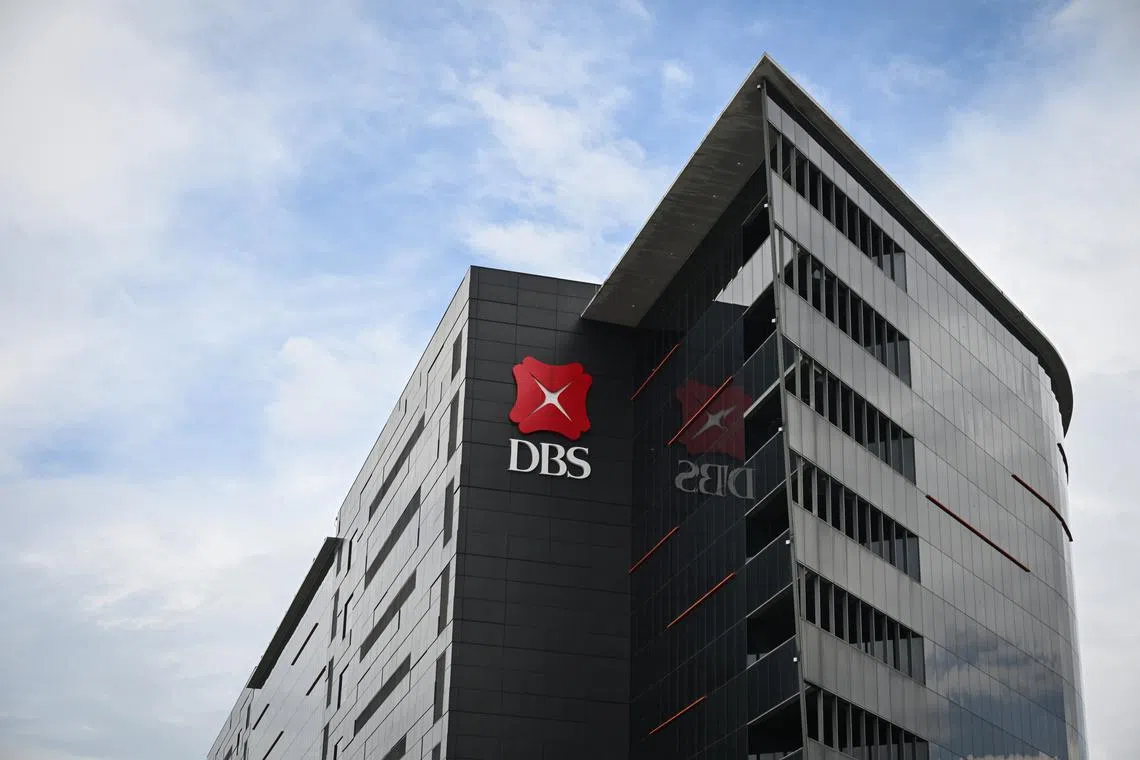
SINGAPORE – DBS Group Holdings is “best positioned” among lenders in Singapore to benefit from China’s sweeping measures to stem capital flight as it leans into banking a broader spectrum of rich clients, according to a report from Autonomous Research.
Actions taken by China, including boosting oversight of outbound investment to explicitly cover individual investors for the first time from July, will likely impact Hong Kong, said Autonomous analysts led by Ivan Ng. The measures may instead enhance the appeal of rival wealth hub Singapore, they said.
Already, Singapore has attracted billions of dollars in capital flows, helping to boost the earnings of its three major banks that have all been expanding their wealth management businesses. A recent rally in artificial intelligence-related stocks in South Korea, Taiwan and the broader regional semiconductor supply chain may have created a new cohort of wealth, sending financial asset flows into Asia ex-China markets including the city-state, Autonomous said.
“Hong Kong’s China corridor is becoming more complex and less predictable, which can push already-offshore high and ultra-high net worth wealth and non-China regional families toward Singapore,” the Autonomous analysts said in a report published in late June.
The city-state’s “more diversified, offshore and policy supported model looks cleaner, leaving Singapore banks, especially DBS, best-positioned to benefit,” they said, citing measures including the authorities’ efforts to ensure private banks open accounts for rich clients more quickly.
The analysts said Singapore’s growth in the sector is increasingly multi-source, spanning Chinese diversification, Indian succession planning, South-east Asian entrepreneurial wealth, Middle Eastern re-booking and global investors. Hong Kong remains the China gateway while Switzerland continues to be the legacy preservation hub, they said.
Singapore banks’ wealth-management model also encompasses the so-called “mass affluent” group of clients with net worth from US$100,000 (S$129,500) up to the multi-millionaire level, said Autonomous, which dubs this the “Ford” approach. The other end of the spectrum is the “Ferrari” model, exemplified by the likes of UBS Group and JPMorgan Chase & Co., which emphasizes those with US$30 million and above.
DBS and its smaller domestic rivals OCBC and UOB have large deposit and lending bases and cross-sell wealth and insurance products to their customers, reaping more fees when clients become millionaires. These established relationships also build trust and source of wealth trails over time, according to Autonomous.
Already this year, share prices of the three Singapore lenders have all climbed to records.
“The Fords have grown faster and moved up the league tables despite the Ferraris’ stronger ultra-high net worth franchises,” Autonomous said, noting the higher profitability and scalability for banks in the less glamorous bucket.
In recent years, DBS’s assets under management have soared to just under US$300 billion as of end-2025, trailing JPMorgan as Asia ex-China’s fourth-largest private bank by assets, according to the Asian Private Banker publication.
“The conclusion is not that Ferraris are broken,” said Autonomous. “It is that Singapore’s Fords are better positioned for the cleaner, more banked and more compliance-heavy growth lane now emerging in Asian wealth.” BLOOMBERG

