


The World Cup is giving some office workers an unexpected perk: permission to stay home.
Employers in host cities are encouraging staff to work remotely on match days to avoid expected traffic headaches and delays, pausing corporate America’s years-long push to get people back into the office.
Wall Street bankers, publicists, government workers and school teachers are among the employees logging in from home across the continent. Even Jamie Dimon, one of the harshest and most vocal remote work critics, is giving JPMorgan Chase employees some flexibility on game days, the Financial Times reported. Federal agencies are offering leniency, too.
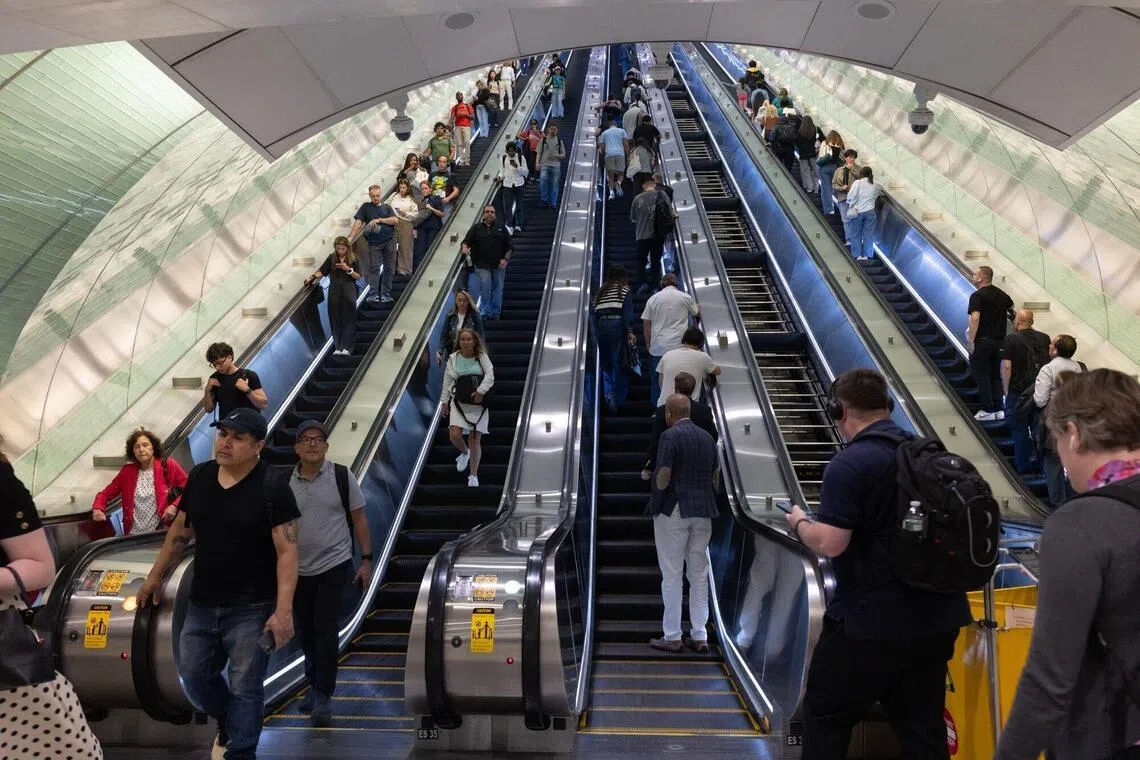
Cities including New York, Seattle, Los Angeles, Toronto and Mexico City have warned of severe gridlock as tens of thousands of fans crowd roadways and public transportation to attend matches.
No matter how much certain chief executives want remote work to die, it just will not. US workers are spending more than a quarter of paid workdays at home, according to a monthly survey by economists at ITAM Business School and Stanford University. The pandemic may not have ushered in a work from home revolution, but it set up workers and workplaces to better allow for it, as needed.
“Avoiding Word Cup traffic is a perfect use case of remote work,” said Emma Harrington, an economist at the University of Virginia who studies remote work. “Sitting in gridlock isn’t a good use of anyone’s time.”
S&P Global told employees at its New York headquarters to plan to work from home on the five business days when matches are scheduled at the nearby NYNJ Stadium in East Rutherford, New Jersey, according to a memo viewed by Bloomberg. The company is waiving its requirement for two in-office days per week “to help you avoid a difficult commute,” it said in an e-mail to staff.
Wall Street firms including Goldman Sachs are also temporarily easing attendance policies, the FT reported. S&P Global declined to comment; Goldman Sachs and JPMorgan did not respond to e-mails seeking comment.
The NYC Department of Transportation said it expects “severe traffic congestion” on match days. The city is closing several roads in Midtown Manhattan’s central business district to create dedicated corridors for shuttle buses to the stadium.
Not all employers told workers to stay home. Amazon.com sent e-mails to employees advising them to leave home early enough on match days to arrive at the office on time, and highlighted transit options to avoid traffic congestion.
Sports mega-events are well known for snarling commutes and disrupting workplaces. London implemented three weeks of remote work when it hosted the Olympics in 2012. But the World Cup’s impact is likely to be more limited because matches are spread across 16 cities, including Boston, Dallas, Houston, Miami and Vancouver, said Nicholas Bloom, an economist at Stanford who studies remote work and commutes. Plus, no city is hosting more than nine games.
“This is much like weather events – snow-storms, storms, tornados,” that might require remote work, Bloom said.
Communications agency Talk Shop Media has temporarily lifted its three-day-a-week in-person policy at its offices in Toronto, Vancouver and Los Angeles, all World Cup hosts cities.
“For Los Angeles this is a good dry run to the upcoming Olympics,” the agency’s co-founder Katie Dunsworth-Reiach said.
In Mexico City, President Claudia Sheinbaum announced special measures ahead of the World Cup’s kick-off match on June 11, including mandating remote work for federal employees and suspending classes in the capital for the day, as officials prepared for traffic congestion from fan events as well as planned protests.
Mexico has called for remote work for government workers on June 17 and June 24 in Mexico City and on June 18 in Guadalajara, where games will be held, and urged private employers to follow suit. It is also suspending public schools on those days.
The measures came as demonstrations by groups including teachers union CNT and collectives representing families of missing persons disrupted mobility across the city. Some of those groups have said they will continue to march ahead of the coming games.
Other host cities have taken similar steps. Guadalajara called for remote teaching and encouraged work-from-home days when matches are held in the city. While Monterrey has so far avoided major disruptions and has not announced comparable restrictions, Nuevo Leon industry group Caintra said 53 per cent of its members were promoting temporary home office measures for administrative roles.
Still, many front-line workers in industries such as hospitality, healthcare and manufacturing, have no choice but to keep going into work. Only half of US workers have jobs that can be done remotely, according to Gallup surveys.
Teneshia Murray, the owner of Atlanta southern inspired restaurant chain T’s Brunch Bar, started hiring extra staff in April to keep her four locations open two hours later on game days. Murray said she and her staff braced for their commutes to triple when Atlanta hosted the first of eight matches last week.
But with so many office workers at home, the roads were unexpectedly clear.
“Surprisingly there was no traffic,” Murray said. “Everybody was tripping out and it’s like nothing. On Monday the roads were clearer than ever.” BLOOMBERG
Source : https://www.straitstimes.com/business/work-from-home-for-world-cup-even-jpmorgan-says-yes

