Singapore biotechnology company Mirxes started life in a research lab, running on notebooks and Excel sheets. Bringing a cancer-detection blood test to market meant leaving all of that behind.
“We went from lab notebooks and Excel sheets to documented and official forms and records,” says Jonathan Ho, associate director of quality assurance at Mirxes. That shift – to ISO 13485, an international standard for medical device quality management – would become the foundation the company built its processes on.
The company’s roots trace back to the early 2000s, when scientists at A*STAR developed a method to detect microRNA, genetic markers that can detect cancer – including at early stages – from a simple blood draw, stratifying individuals into low-, intermediate- or high-risk categories to guide physicians on appropriate follow-up, including gastroscopy, where warranted.
After the technology was patented in 2010, Mirxes was spun out of A*STAR in 2014 to bring it to market.
That commercial journey demanded consistency, regardless of when, where or by whom a test was performed. Certification took about a year and required stress-testing variables most would not think of: shipments sitting for hours on airport tarmacs, temperature fluctuations across the supply chain, intricacies at the molecular level that could not be missed.
“When dealing with the detection of gastric or lung cancer, there are a lot of intricacies at the molecular level that we cannot afford to miss out, because once we miss something or make one wrong move, it could result in a misdiagnosis and emotional anguish for patients,” says Ho.
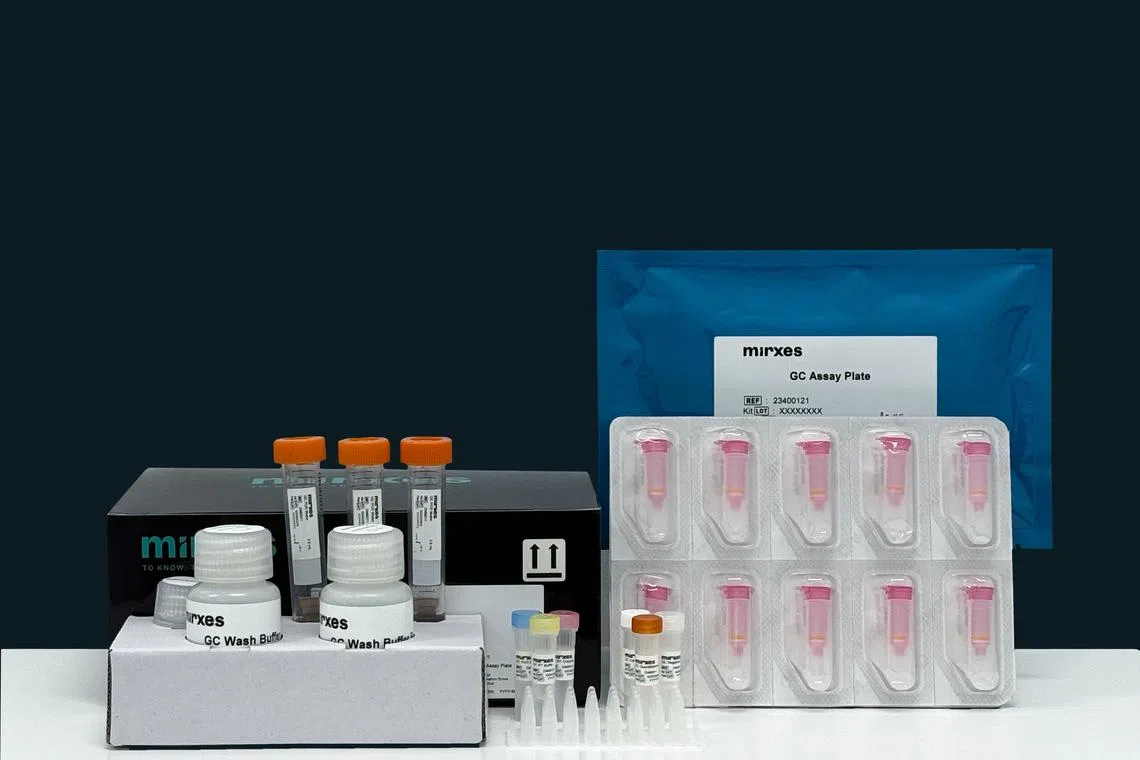
GASTROClear, the cancer detection blood test that Mirxes was able to bring to market faster by building on the quality standards infrastructure it had already put in place.
PHOTO: MIRXES
Commercialising the technology meant moving beyond the flexibility of research environments towards tightly standardised processes.
“We managed to successfully change this mindset by explaining to our team why we had to make changes. For example, for traceability in documents and records,” says Ho. “That’s where the importance of adhering to standards comes in.”
That discipline laid the groundwork for Mirxes’ expansion.
Its flagship product, GASTROClear – the world’s first approved molecular blood test for gastric cancer detection – gained approval in Singapore in 2019.
While developing GASTROClear, Mirxes worked with the Singapore Standards Council, a national body managed by Enterprise Singapore (EnterpriseSG) that develops and oversees Singapore’s standards and quality infrastructure, to create SS 656.
The world’s first standard for validating microRNA-based diagnostic tests, SS 656 was developed to address inconsistencies in microRNA biomarker discovery and in-vitro diagnostic development.
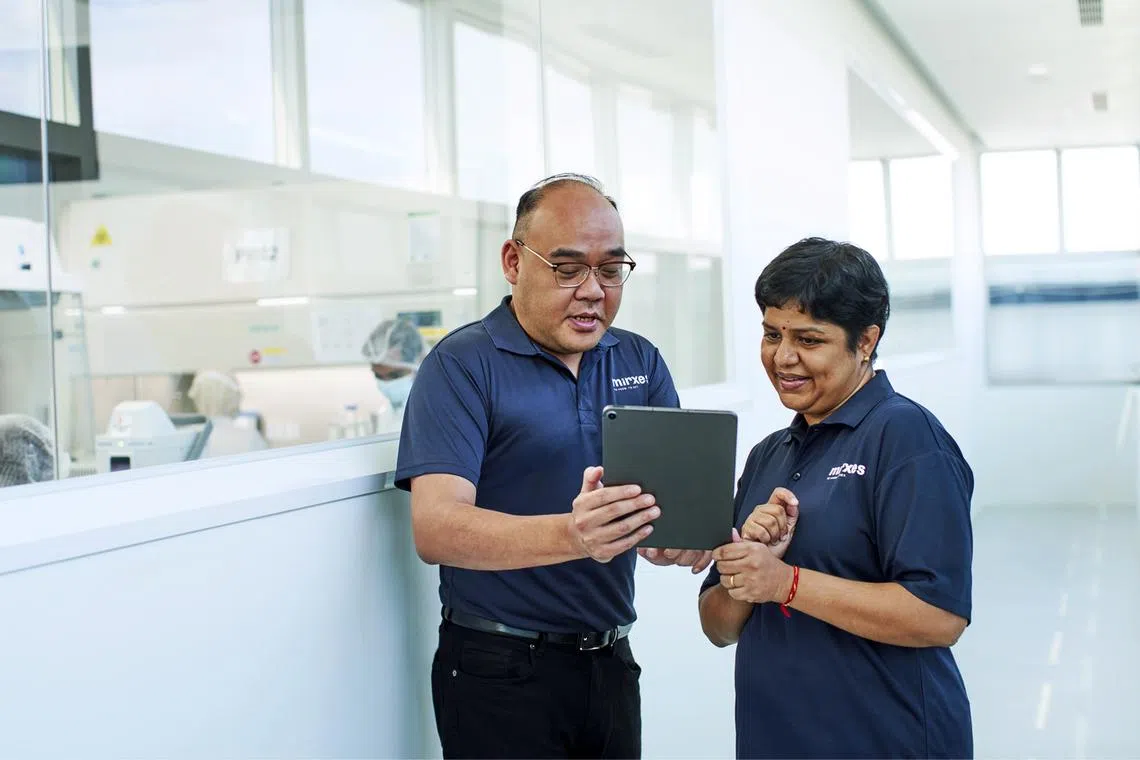
Decosta and supply chain manager Puvaneswari Dhanaraj at Mirxes’ manufacturing facility in Tukang Innovation Grove, where test kits undergo rigorous quality checks before dispatch.
PHOTO: SPH MEDIA
It provides companies with a structured framework for validating such tests, helping them meet regulatory requirements, manage development risks, improve product quality and accelerate the path to market.
For Mirxes, the framework also supported efforts to build regulatory confidence in its technology as it expanded overseas.
In 2023, it received the US Food and Drug Administration’s breakthrough device designation, enabling a regulatory pathway for the test to be used in the country.
The standards framework developed for GASTROClear also became a foundation for future products, allowing Mirxes to apply established validation and development processes across its pipeline.
That agility came from treating standards not as a compliance exercise but also as infrastructure – the foundation that makes pivoting possible.
Jeremiah Decosta, senior vice president of operations at Mirxes, explains: “When it came to pivoting for Covid-19, having ISO 13485 already in place was one of the reasons we could move quickly, because the infrastructure was already there.”
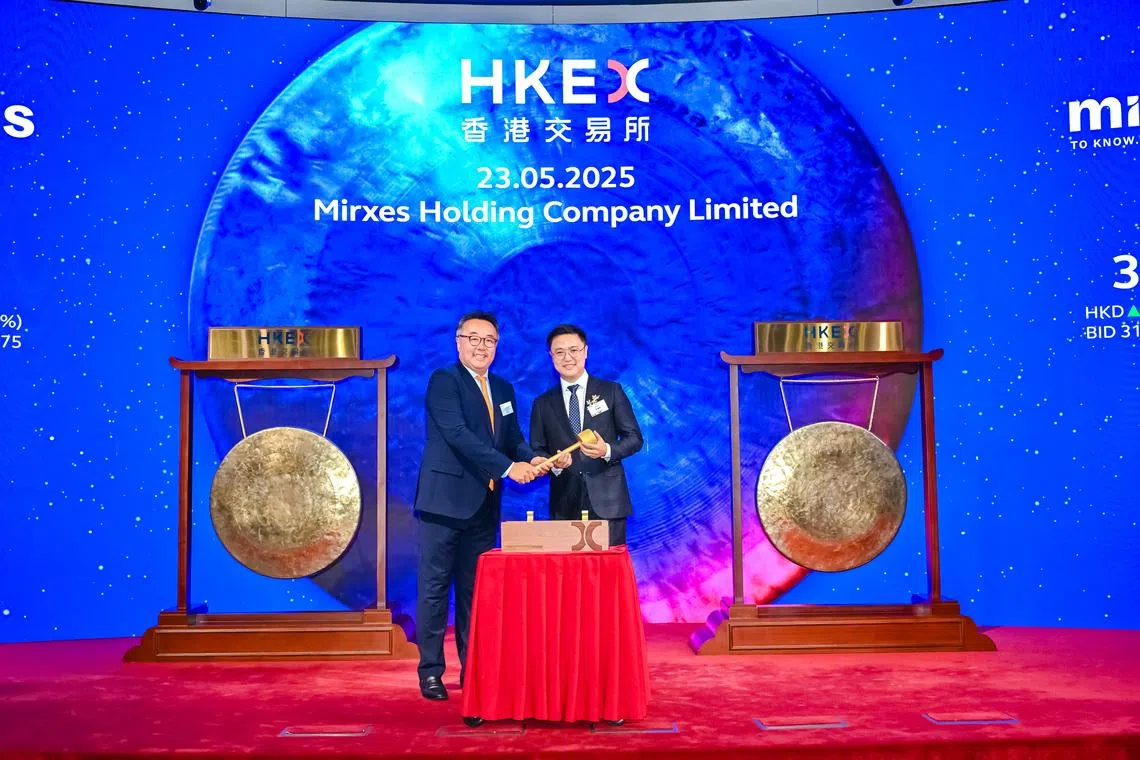
Mirxes’ CEO Dr Zhou Lihan (right) at the company’s Hong Kong Stock Exchange listing in 2025.
PHOTO: MIRXES
As a result of this, a second cancer test, LUNGClear, was developed using the same framework. Drawing on feedback and lessons from earlier products, the company incorporated features aimed at making the lung cancer test kit easier and more practical for clinical use.
Mirxes listed on the Hong Kong Stock Exchange in 2025. For the first half of that year, it reported revenue of $10.5 million, up 9.4 per cent from a year earlier, driven by demand for its cancer detection tests.
“Adopting standards has helped contextualised the framework and processes to develop the product, and support internal works, to recognise this revenue. Having this framework which is compliant to ISO 13485, allowed not only for this level of agility, but also to put in place the structure to design and develop new products,” says Decosta.
“ISO standards are part and parcel of the regulatory requirements of most regional markets – so when we enter a new market, we’re already largely compliant.”
Agreeing, Ho says: “Standards provide the guidelines for compliance, therefore ensuring that you learn how to do things in a certain way.
“At the end of the day, it’s to ensure that the product reaches the end user in the optimal conditions, and to provide accurate results.”
Singapore’s push into standards extends beyond individual companies.
EnterpriseSG, the national standards and accreditation body, works with global organisations such as the International Organization for Standardization (ISO) and the International Electrotechnical Commission (IEC) to develop international standards in areas including sustainability, digitalisation and resilience.
By bringing together industry experts – including regulators, companies, academia and partners – to contribute to standards development, EnterpriseSG helps local companies align with global requirements as they expand abroad.
For home-grown firms like Mirxes, this ecosystem provides both a framework and a pathway – helping local innovations meet international requirements from the outset.
In a very different field, Singapore cybersecurity firm i-Sprint has taken a similar approach as Mirxes – using standards to build trust in its expertise and support its international growth.
Such a strategy has been key to i-Sprint operating in some of the world’s most regulated markets.
The 26-year-old company develops identity and access management mobile application security, enterprise secure workspace, and post-quantum application migration platforms used by financial institutions across South-east Asia, as well as in Japan, Hong Kong, China, the United States and the United Arab Emirates.
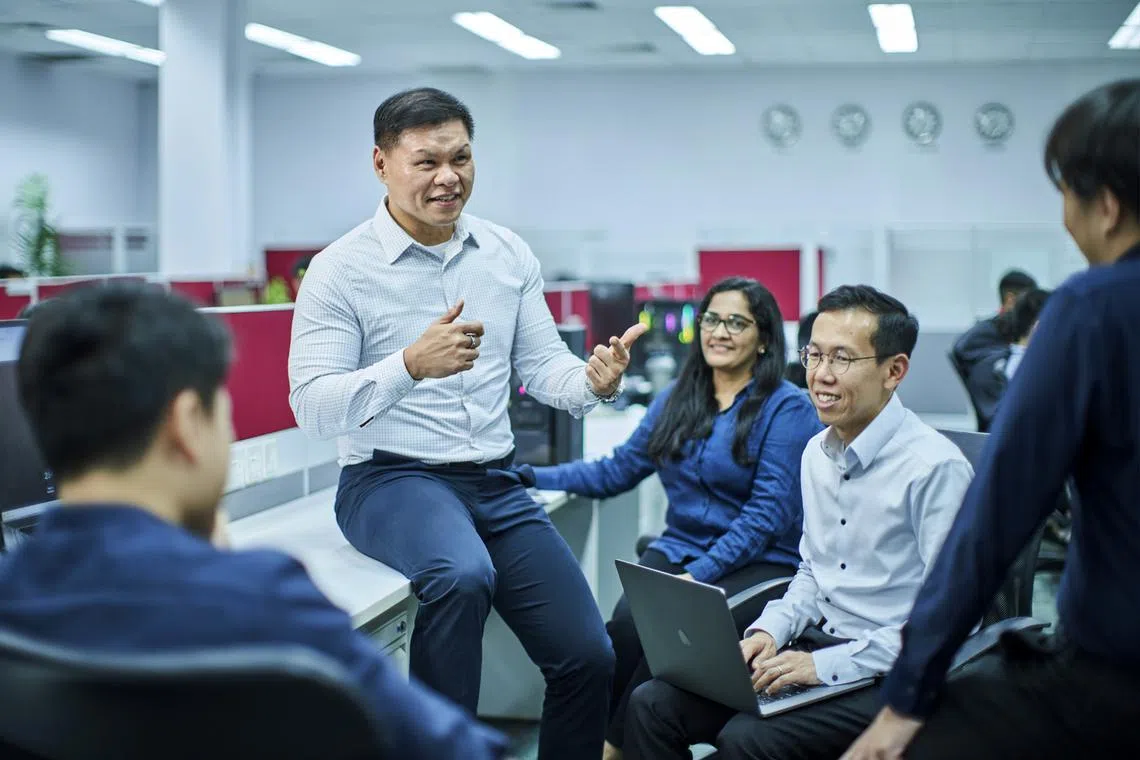
At i-Sprint, recognised certifications have helped CEO Dutch Ng (second from left) and director of product engineering Ong Chin Phek (fourth from left) and their team win trust in some of the world’s most regulated markets.
PHOTO: SPH MEDIA
Its systems are also used beyond finance. In Singapore, a government agency and an educational institution rely on i-Sprint’s technology for internal web single sign-on to provide convenience to staff, and to centralise management and auditing of system access
Operating across such varied environments means standards are not optional. The firm holds certifications including ISO 9001 for quality management and ISO 27001 for information security, while also meeting interoperability standards such as FIDO2 and OpenID Connect.
The company is now pursuing two major certifications to support further overseas growth amid an increasingly complex digital security landscape – the Software-based Mobile Payment Evaluation Process certification awarded by the Europay, Mastercard and Visa Consortium (EMVCo), and Common Criteria (CC), an international framework for evaluating and certifying the security of IT products.
These certifications require substantial investment, with EMVCo certification costing about $100,000 and CC certification amounting to around $250,000, including training, consultant fees and independent lab testing of i-Sprint’s software security codes and processes.
Noting that EnterpriseSG’s programmes have helped offset part of the certification costs, i-Sprint’s director of product engineering Ong Chin Phek says: “We have calculated and done our projections and we’re quite comfortable and confident that we can get an ROI from this.”
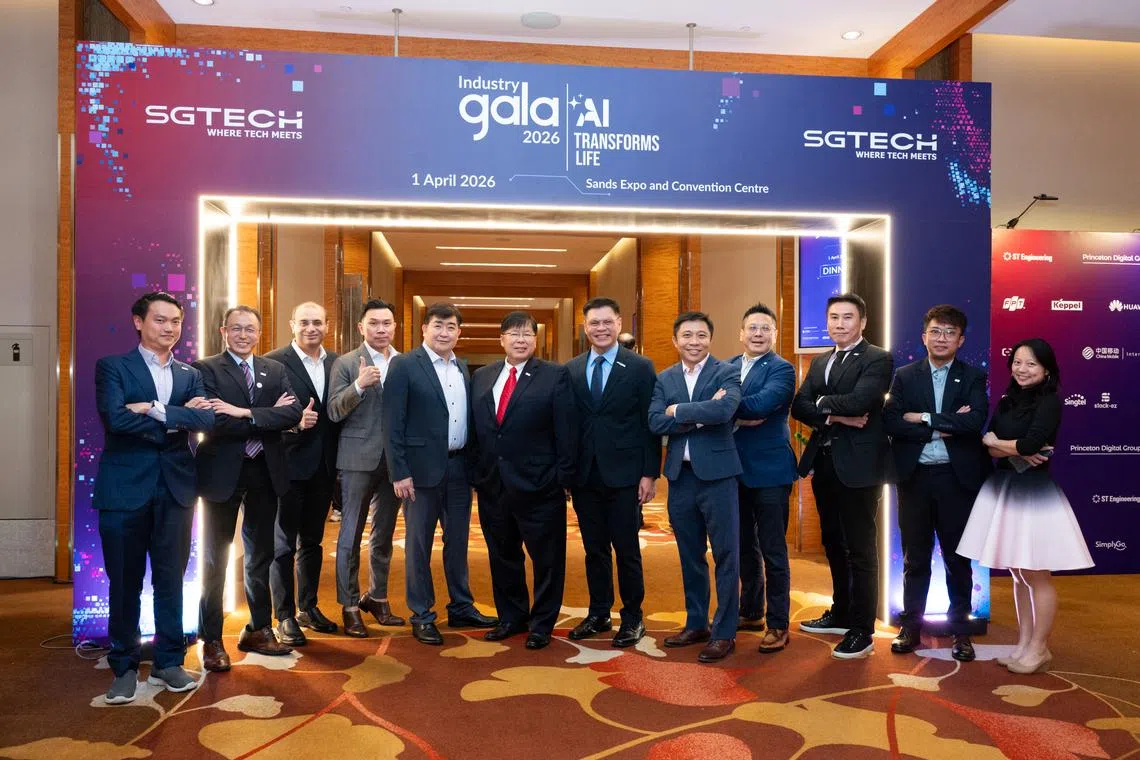
The i-Sprint team at the SGTech Industry Gala in April 2026, where the company showcased its identity and access management solutions to industry peers.
PHOTO: I-SPRINT
While certification costs may seem significant to many SMEs, Ong notes that the returns are tangible.
“Getting the CC certification, for example, helps us to gain the confidence and the validation that our process does work,” he explains. “It has helped us to not just validate what we have, but to identify any gaps that we may have.”
Meeting recognised standards also reduces friction during client security audits, accelerating deployment.
“Especially in banking environments, this results in faster-to-market deployment for our customers,” Ong says, noting that banks typically have stringent security and compliance requirements, making recognised certifications an important way to speed up procurement and approval processes.
In that sense, standards are not just about compliance – they allow companies like i-Sprint to scale trust in an increasingly uncertain digital world.
This story is part of a series on how home-grown companies stay competitive and are benefitting from the adoption of standards, with the support of Enterprise Singapore. Find out more here.