


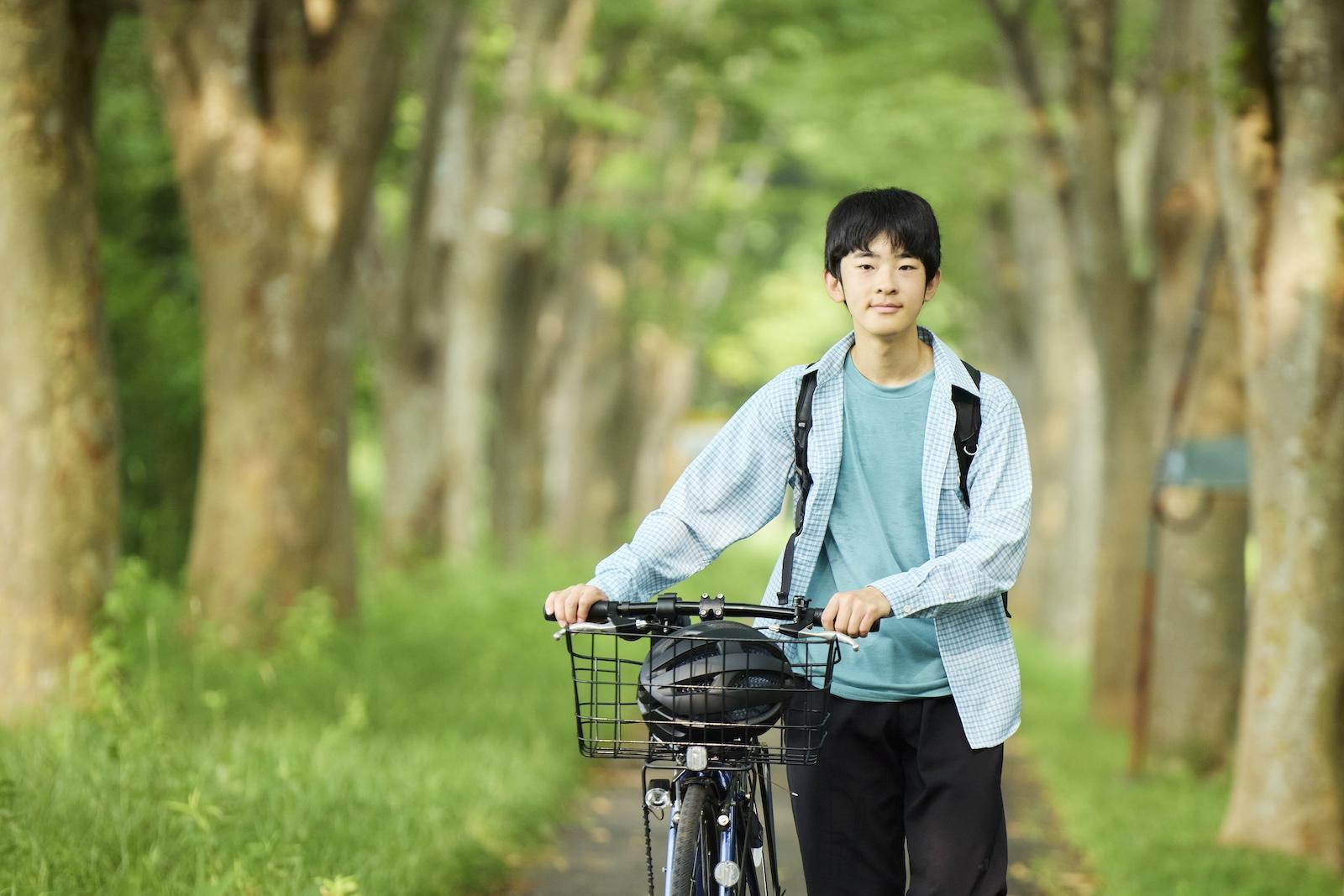
September 6 will mark the 20th birthday of Prince Hisahito of Akishino, second in line to succeed Emperor Naruhito.
Currently, the list of potential successors to the throne is down to three: the emperor’s younger brother, Crown Prince Fumihito, who turns 60 this November, his son, Prince Hisahito, 19, and 90-year-old Masahito (aka Prince Hitachi), the younger brother of Emperor Emeritus Akihito.
While Japan’s parliamentarians debate the ways to address a potentially disastrous shortfall, Shukan Post (June 19) notes that the easiest way would be to open up the monarchy to females. Opinion surveys have shown that up to 80% of the public would favor such a move; but current law deems an imperial successor must be male. The Diet is also deliberating expansion of the number of eligible males through restoration of imperial status to members of sub-branches of the family that had been divested of their status after World War 2.
Hisahito — currently in his second year at Tsukuba University — is said to have settled into an active life at school, enthusiastically taking part in the badminton circle. Last November he was reported to have won the mixed doubles championship when paired with a female member. Following attendance at a ceremony at the palace in mid-January, he headed for a retreat on the ski slopes in Gunma Prefecture.
To safeguard the prince’s privacy, the circles in which he participates have implemented restrictions on what could be posted on their social networks, with members warned that violations might result in expulsion from the circle.
“Since no such restrictions were in place up to last year, I suppose this was done out of consideration to Hisahito,” an unnamed circle member related to the magazine.
The same club frequently holds drinking parties, but out of deference to Hisahito, even students over 20 years old are said to refrain from imbibing alcohol, suggesting that an atmosphere of moderation is becoming established in the circle.
This summer he’s scheduled to take part in a 5-night, 6-day outdoor retreat organized by the university’s Department of Biology, School of Life and Environmental Sciences.
“Activities will involve capturing insects and mounting them as specimens, and other activities such as performing dissections,” a source was quoted as saying. “These studies cover such basics as classification, evolution and so on.”
Elsewhere, however, concerns are being raised in various quarters over a lack of mentoring for Hisahito’s future role as emperor.
“It seems he’s been prioritizing his university life over preparations for succeeding to the throne,” said Yuji Odabe, professor emeritus and former professor at Shizuoka University of Social Welfare. “Since his coming-of-age ceremony, he has occasionally attended official duties with his family, but he appears to have less experience compared to the emperor emeritus and the current emperor when they were at the same age. One possible reason for this is that he has not received the same level of ‘imperial education’ that the emperor emeritus and the current emperor received.
“When the present emperor was small, he received training for becoming crown prince. Every Saturday evening he would engage in a Teirei Gosannai (regular visit to the imperial palace) where he took dinner together with his grandfather, the late Emperor Showa (Emperor Hirohito),” journalist Shuichi Kanda was quoted as saying. “He would listen to Emperor Showa talk about ‘Moving forward together with the people,’ which described the basic formula for continuance of the imperial family.”
Hisahito has paid visits to the Ise Grand Shrine and battlefields, as has been the practice among Japan’s royals, but palace watchers have observed a difference in the quality and quantity of his imperial education, particularly as it relates to the transmission between father and son.
“From the differences between the father and elder son, in terms of the presumed means of royal continuity, and those between Akishino, the second son, may render the process of transmission from father to son more difficult,” Kanda opined.
While Akishino has been circumspect in terms of his public pronouncements, palace watchers are of the opinion that he is less bound by tradition.
“The Akishino family has a deep understanding of ‘gender equality,’ said historian Akinori Takamori. “Within the Imperial Household Agency, reforms have been implemented to abolish distinctions between male attendants and female court ladies, unifying the titles of both men and women as ‘court officials.’
“Perhaps he sees a future in which the emperor’s daughter, Princess Aiko, becomes empress as a natural progression.”
Finally, Shukan Post inquired to the Imperial Household Agency, which characteristically didn’t have much to say.
“We are not familiar with the details of what constitutes ‘imperial education.’ His Hhighness attends classes at university and is also involved in various other activities,” was all the spokesperson for the agency had to say.
Time and tide wait for no man. Or monarch either.
© Japan Today

